Saturday Stories: Jessi’s Scarf

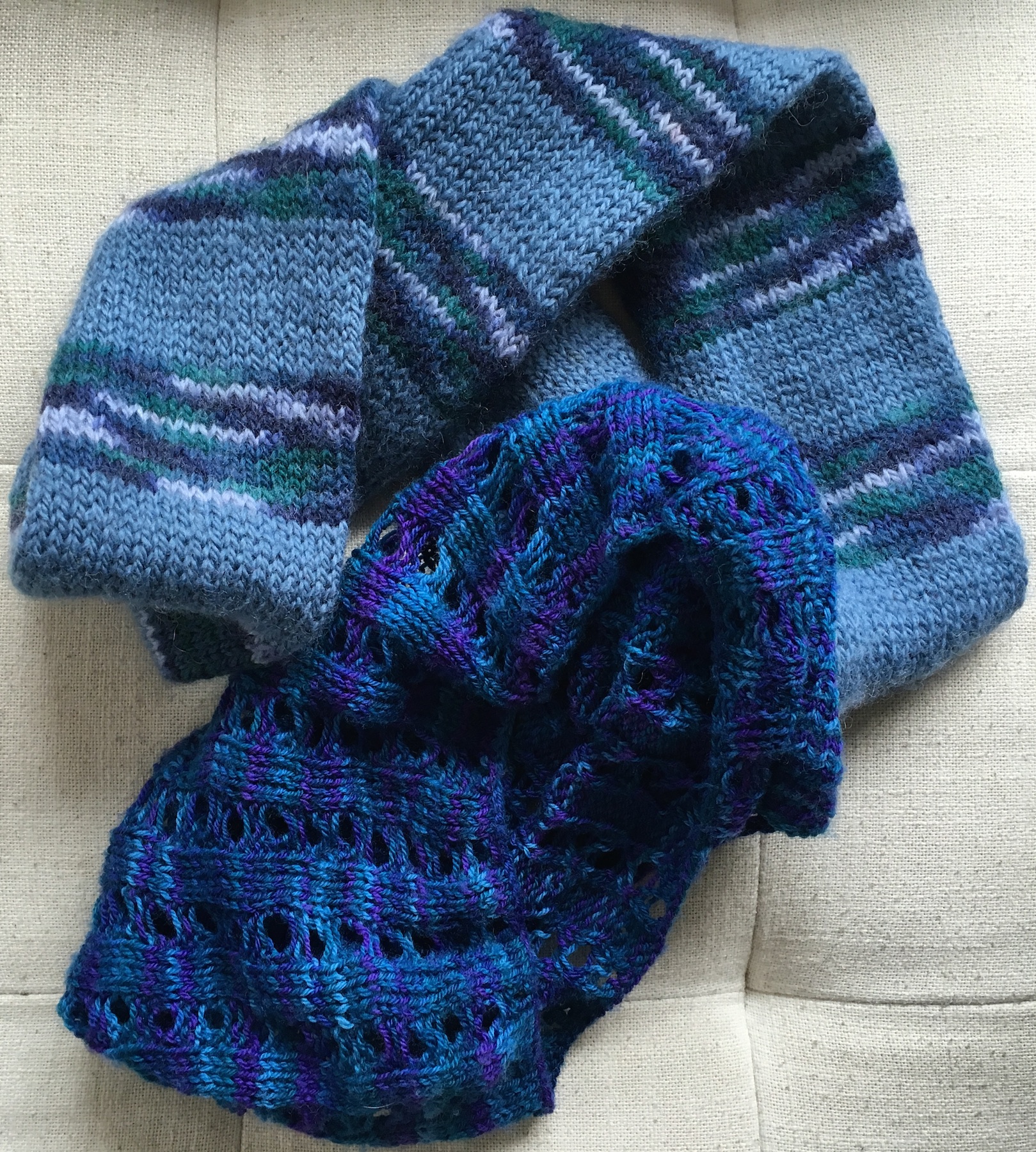
2016-08-13 12.57.50Jessi knotted the scarf around her neck, checking it in the mirror before stepping out onto the street. She walked briskly—the morning was cold, and she was running late. It wouldn’t do to be late for work. With unemployment at forty-three percent, her employer could fire her at nine in the morning, and have a replacement for her before ten. She was lucky to have a job, and meant to keep it.

She passed a boarded-up restaurant—Dominique’s—and thought about the last time she’d gone there. It had been her last date, and it had been a disaster. She and Michael had been seeing each other for a month, and things were looking good. They had met at Dominique’s on a Friday after work. Dinner and a few drinks had ended with them walking to her apartment. That’s where it all fell apart. Kissing her, Michael had unwound her scarf from her neck.

“What is that?” he said.

Jessi snatched the scarf back from his hand and wrapped it around her neck again.

“It’s a birthmark.”

Michael left soon afterwards, and hadn’t asked her out again. That’s how most of Jessi’s relationships had ended. She had yet to meet a guy who could overlook the angry red splotch that wrapped its arms around her neck from chin to collar bone. Like her employer, they could always find another girl—one whose neck didn’t look like it had been peeled.

Jessi turned the corner onto Bond Street, leaving the restaurant and her memory of Michael behind.

She walked even more quickly now. The Bond Street Detention Center filled much of the block, and it wasn’t a place she enjoyed passing. The economic crisis had led to all sorts of ridiculous policies aimed at ‘making America great again’, most of which were misguided and based on fear, not facts. The government had gone on a campaign to round up illegal immigrants, homeless people, the disabled…anyone who was even slightly different or who spoke up against government policies or big business. The Bond Street Detention Center had opened less than a year ago, and it was already overcrowded. Most of the detainees had done nothing wrong, and none of them deserved to be housed in such miserable conditions. Detainees lived in tents. They were given scant food rations, foul water, and no legal assistance. On top of that, they were billed for every last expense the government incurred to house them there. When they couldn’t pay, all their assets were confiscated.

Jessi hated the policies that put innocent people behind bars, but what could she do about it? If she spoke up about it, she would end up a detainee herself, or worse. Just two weeks ago, a group of twenty protesters had been gunned down by police officers claiming they threatened national security. The protesters had been completely unarmed, participating in a sit-in against mandatory micro chipping of immigrants.

As she passed the high chain-link fence of the Detention Center, a clamour arose. Arms reached out through the fence, and voices called for her to stop, to help. Above the din, a high voice reached Jessi’s ear.

“Just your scarf, please. I’m cold.” A young girl wearing a flannel shirt much too big for her as a coat, and with no shoes stood gripping the bars, looking at Jessi. Jessi shook her head and carried on.


Jessi took the long way home, so she didn’t have to pass the Detention Center. She had been distracted all day at work. She hadn’t made any mistakes, but her boss had noticed.

“Pay attention, Jessi,” he’d said. “If you’ve got other things you’d rather do, someone else would be happy to do your job.”

She had forced herself to focus for the rest of the day, but now that she was home, her mind replayed the morning’s walk.

Just your scarf.

Just her scarf. Jessi hadn’t been out in public without a scarf since she was a baby. Her scarf was part of her. Her scarves, that is—she had dozens. Without a scarf, she felt naked, vulnerable. People stared, pointed. She couldn’t go without her scarf.

Please. I’m cold.

Jessi opened her dresser drawer. She pulled out a scarf—tomato red silk with a blue border—her sister had given it to her four years ago for Christmas. She lay the scarf gently on her bed and pulled out another—fine cashmere dyed deep green—she had bought that one herself, with money from her very first job out of high school. She laid the cashmere scarf on the bed with the silk one. She drew a third scarf from the drawer—sunny and yellow—her mother had worn it when Jessi was a girl, to make her feel like she wasn’t the only one wearing a scarf.

One by one, Jessi pulled every scarf from her drawer. Each had a story. Each brought back memories. She laid them out on her bed, the story of her life, told in scarves.

That night she slept under them.

In the morning, she woke early. She chose her favourite scarf—a soft merino knit in shades of deep pink and purple that her parents had given her for graduation—and tied it around her neck. Then she gathered the rest of her scarves in her arms and stepped out the door.

She walked quickly, for fear of losing her resolution before she got to the Detention Center. She clutched her scarves to her chest, blinking tears out of her eyes.

On Broad Street, the arms reached out through the fence. Jessi stopped and pressed a scarf into the first hand. Then the next and the next. In a minute, her arms were empty.

“A scarf for me?” It was the young girl who had asked for a scarf yesterday. She hadn’t gotten one.

“I’ve given them all away,” said Jessi, opening her hands to show they were empty. “I’m sorry.”

“That one?” the girl asked, pointing at the one wrapped around Jessi’s neck.

“But I need this scarf,” said Jessi.

The girl looked stricken, and Jessi imagined how unfair her words must have seemed to this girl who didn’t even have shoes or a coat. The girl turned to leave.

“Wait!”

As the girl returned to the fence, Jessi unwound the scarf from her neck. She was ashamed to find her fingers trembling. She bent down to push the scarf through the fence for the girl.

The girl looked up at Jessi and smiled. Then her smile froze, and Jessi shut her eyes, waiting for the exclamation of horror she knew was coming. Instead she felt little cold fingers on her neck.

The girl gasped. “You have a flower. A beautiful flower on your neck!” Then she was gone in the crowd.


Jessi arrived at work, still dazed. As she stepped into the office, her boss looked up.

“Morning.” Then he did a double-take. “What the hell happened to your neck?”

Jessi blinked at him, as though she’d only just noticed he was there.

“It’s a flower. A beautiful flower.”
Going bananas

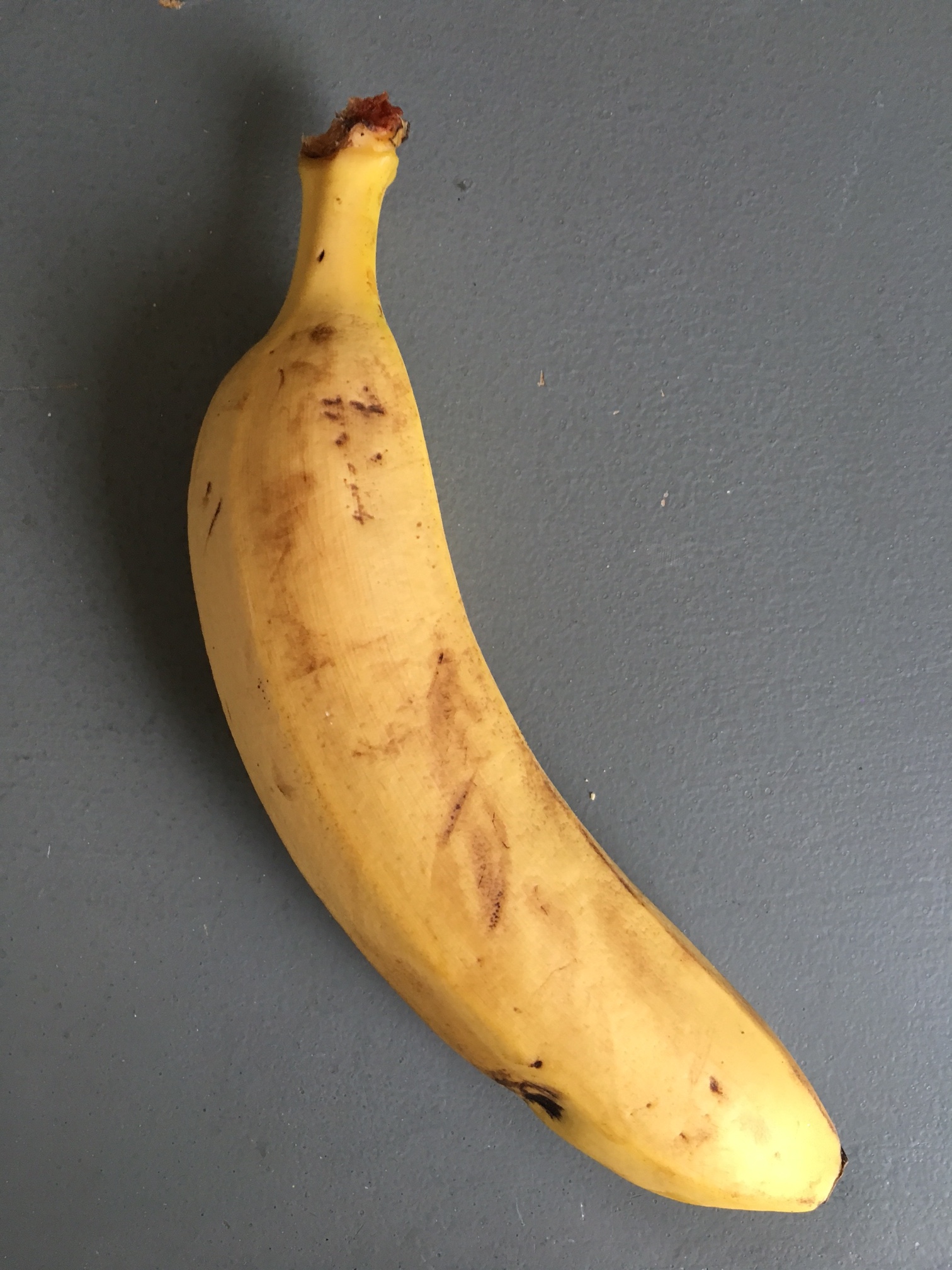
bananaOver 100 billion bananas are eaten globally every year, making bananas the fourth most important food crop in the world. Most bananas are consumed locally—only 15% are exported. Almost all the bananas grown for export are a variety known as Cavendish. New Zealand is said to have the highest per-capita consumption of Cavendish bananas in the world, at 18 kg per person per year.

The Cavendish was named for the Duke and Duchess of Devonshire—whose family name was Cavendish. Their head gardener imported a plant from Mauritius in 1830 and grew it in the family’s hothouse. The banana flourished and provided the duke’s guests with fresh bananas to eat. The Cavendish banana grew so well, the duke was able to supply two cases of plants to a missionary in Samoa. Those bananas were the start of the banana industry in Samoa.

Missionaries spread the Cavendish throughout the Pacific, but it wasn’t until the 1950s that the variety became popular commercially.

Until the 1950s, the most important banana for export was the Gros Michel, but in that decade, it was almost wiped out by a fungus known as Panama disease.

The Cavendish—smaller and not as flavourful as the Gros Michel—was immune, so growers switched largely to the Cavendish.

Almost all commercially grown bananas today are Cavendishes—clones of the plant grown by the Duke and Duchess of Devonshire.

Panama disease didn’t sit idly, though. By 1992, a strain evolved in Southeast Asia that was able to attack the Cavendish. And since the plants are all genetically identical, they are all susceptible to the new strain of the disease. At least 10,000 hectares of Cavendish bananas have been destroyed, and more will certainly fall as the fungus spreads.

For many of the nations that export bananas, it will be an economic disaster. For those of us who enjoy bananas…who knows?

There will likely be a time in which bananas become more expensive, even hard to find in our grocery stores.

But having lived in Panama, I know there are many banana varieties (about 1000, worldwide). And every single one I’ve eaten is better than the Cavendish. The Cavendish’s main selling point is its ability to survive transport, not its flavour.

In our village in Panama, everyone grew bananas. They came in many sizes, shapes, and colours. Some were more starchy, some were sweeter. Some tasted so much like banana, they seemed almost fake. Others tasted like a fruit salad, with tangy citrus overtones to the banana flavour.

I have to believe that as growers develop a replacement for the Cavendish, they will naturally end up with something more flavourful than the bland Cavendish. If we’re really lucky, they’ll develop more than one variety, providing greater insurance against the future evolution of Panama disease and more variety in our supermarkets. That has to be a good thing in the long run.

Want to know more? Visit the Panama Disease website.

Writing By Hand

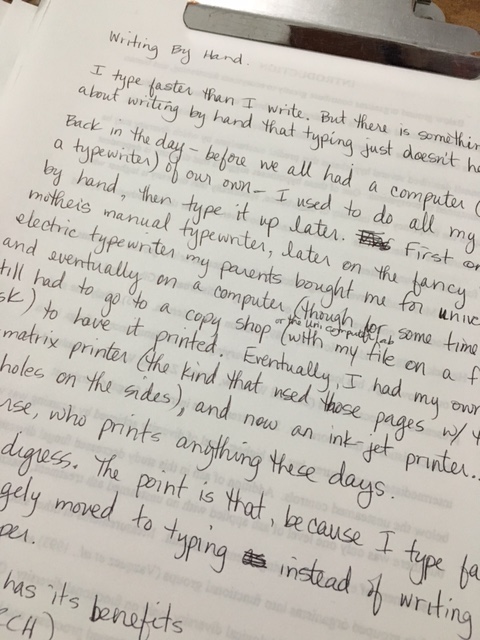
IMG_1739I type faster than I write. But there is something sensual about writing by hand that typing just doesn’t have.

Back in the day—before we all had a computer (or even a typewriter) of our own—I did all my writing by hand, then typed it up later. First on my mother’s manual typewriter, later on the fancy ‘portable’ electric typewriter my parents bought me for university, and eventually on a computer (though for some time I still had to go to a copy shop or the university computer lab with my file on a floppy disk to have it printed). Eventually, I had my own dot-matrix printer (the kind that used those cool pages with the feed-holes down the sides), and now an ink-jet printer. Of course, who prints anything these days…

But I digress. The point is that, because I type fast, I’ve largely moved to typing instead of writing with pen and paper. It’s just more efficient.

But writing has its benefits.

Educational researchers have studied the role of writing in learning, and have found that when we write notes out on paper, we actually think about what we’re writing, and we tend to rephrase things in our own words—we process the information, and learn it. When we type notes, that doesn’t happen—we tend to type verbatim, and it essentially goes in one ear and out our fingertips, bypassing the brain altogether. We don’t learn the material.

That’s fine, but when I’m writing, I’m not learning, per se. I’m expressing what’s in my head already, so it shouldn’t make any difference whether I type it or write it.

But it does.

Writing is slower for me than typing, so I spend more time considering each word as I write it.

I can pack more meaning into each word when it’s written by hand. How I write something is a reflection of my meaning. When I’m typing up a handwritten document, the typed words are often different—trying to capture in the barren lines of Times New Roman what an extra-loopy ‘y’ means, or the precise emphasis meant by an aggressively crossed ‘t’.

When I write by hand, I not only see the words, but I feel them. They have more substance than when I type them. They are more intimate. And if I’m writing something that is emotionally charged, or personal, I need to caress the words—make sure they are just right and formed correctly. I can’t do that through a keyboard.

So I often step away from the computer, pick up a pen and paper, and write by hand. It keeps me in touch with words in a way the keyboard cannot.

Frozen

2016-08-10 10.08.08 smFive degrees below zero.
Grass
stiff with frost.
Pipes
frozen.
Pond
iced over.
Broken tap
paralysed mid-drip.
Nothing moves in the pre-dawn darkness
Except the stars,
shimmering in a black-ice sky.


Library Complaints

100_3972 smThe interesting thing about working in the public library is watching the people who come in.

Today, one of the notable visitors was a woman who arrived with her husband. As they walked in, they were arguing.

To be more accurate, she was complaining about something to him. He gave monosyllabic answers to her long rants about their plans for the day, and how they were inadequate.

She left him reading the newspaper near the entrance while she descended on the library to plague the librarians with passive-aggressive questions about why they did or did not have the titles she was looking for. When she found a CD she wanted to check out, she complained that the CD wasn’t held in its case well enough—it threatened to fall out when she opened it, she said at great length and with much demonstration to the ever-patient librarian.

As she moved further into the library, I lost track of her, but I’m convinced she complained her way through the shelves, because she was still grumbling when she returned to collect her husband and leave.

I felt sorry for the librarians, who handled her complaints with grace and polite smiles. But I felt more sorry for her.

She was not young—easily in her mid-eighties. She complained with the skill of someone who has made it her life’s work to be unsatisfied, her goal to find fault with everything.

She can’t have had a very nice life.

Not that I think a hard life turned her into a complainer. On the contrary, I expect that complaining made her life hard.

That internal dialogue we play in our heads can colour everything we experience. It’s easy sometimes to let that dialogue turn to complaints.

The library never has the book I want.

Someone ate the last cookie again?

Why can’t people be quiet in the library so I can focus?

I’m not suggesting no one should ever complain. Pointing out problems to those who can do something about it, and standing up for yourself are important things that complaining can sometimes accomplish.

But when every thought becomes a complaint, the complaining turns toxic. Sometimes it pays to turn those complaints around. It doesn’t necessarily solve the problem, but it changes how you feel about it, and that can make all the difference.

The book I want is already checked out? Maybe the librarian has a suggestion for a similar book.

The cookies are gone? What a good excuse to make my favourite kind!

People are distracting me in the library? Maybe I what they do can inspire today’s blog post?

Life never gives us what we want. That’s probably a good thing. If we can remember that, it makes life much better.

Risk

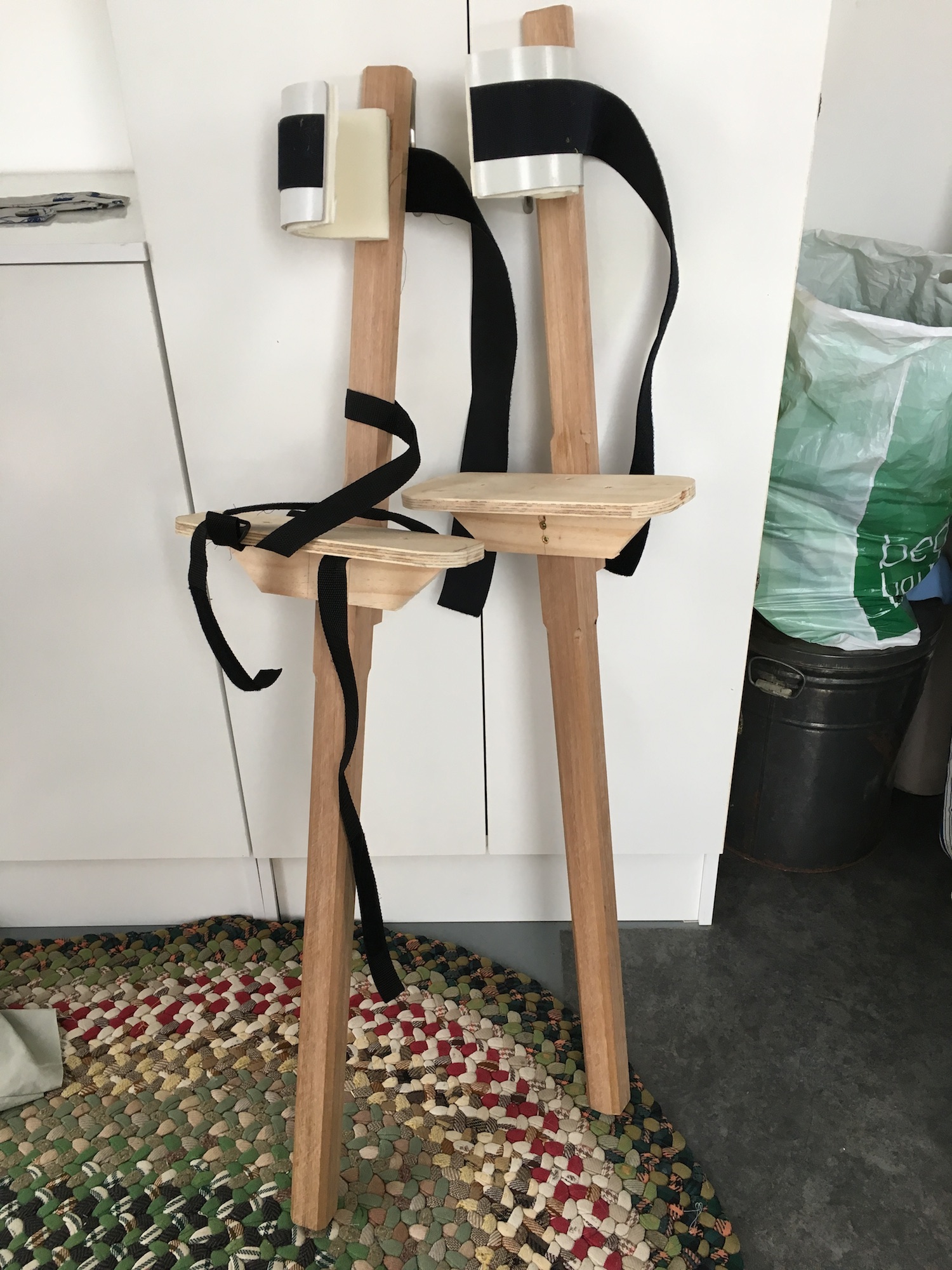
The stilts nearing completion.

The stilts nearing completion.

When I was about ten, my dad built me a high bar in the back yard so I could practice gymnastics at home.

My mom hated it. She refused to watch as I flipped and swung and tumbled through the air, with no crash mat below me. I used that bar a lot. Never once did I injure myself or even come close (the blisters don’t really count).

What mom didn’t know was that before the bar, I did my aerial work in the woods across the road—flipping and swinging around tree branches that bounced and swayed under me, with branches below to whack into if I should fall. I once found two branches that were the perfect distance apart to serve as uneven parallel bars. I couldn’t resist, though the branches were a little to big around for me to get a great grip on them. And they were at least twice as far off the ground as a real set of bars.

I stuck to moves I was comfortable with, but one involved being completely airborne and catching the upper bar.

But that upper branch was just too big. My hands slipped. I only just managed to dig the nails of one hand into the bark and hold on while I scrabbled around with my feet to find the lower branch (at this point, my mother, who reads my blog, is cringing and thinking she should have just locked me in my room instead). I admit that I clung to that branch for five minutes before I could bring myself to let go enough to climb down.

I write this as one who is now the mother of an equally adventurous daughter, not to scare other parents into locking their children away from trees, but to point out that children will find adventures. They will find ways to challenge themselves. By enabling our children’s adventures, we have an opportunity to manage those adventures.

Maybe mom didn’t like the high bar, but it was a heck of a lot safer than the tree branches.

My daughter is currently building herself a set of strap-on stilts, with the help and advice of both her parents. These stilts will replace the ordinary stilts we helped her make years ago, when she felt her first pair of (rather short) stilts weren’t challenging enough anymore. I was terrified by the tall stilts when she first got up on them. She fell again and again, but soon had them on their tallest setting and was playing soccer in them.

Now she wants to be able to juggle while walking on stilts. Her first idea was to tie her regular stilts to her legs. Not a good idea. Her father suggested she make purpose-built strap-on stilts.

I’m worried about the strap-on stilts—the only way to get off them is to fall—but because we are helping her address her need for more physical challenge, we are managing the risk. Elbow, wrist, and knee pads and a helmet will reduce the damage when she falls. Parental guidance on construction will ensure the stilts are strong enough to take the forces she’ll put on them.

It will be tempting to close my eyes the first time she gets up on them. But I owe it to the girl on the high bar to watch.

Heavenly Hash Browns

2016-08-07 17.28.05 smSunday is usually a day for cooking an elaborate dinner. But the kids and I were in the city all afternoon, and came home late. After scones for breakfast and leftovers for lunch, none of us really needed a big dinner anyway.

So we had breakfast, instead—fried eggs and hash browns.

They were the first really good hash browns I’d ever made. In the past, my hash browns have been a bit too gummy, a bit too soft.

But thanks to the Internet, I had many hash brown recipes at my fingertips today (yes, it’s been that long since I made them—I had only cook books before).

So, I tried a new method today, and hit it just right.

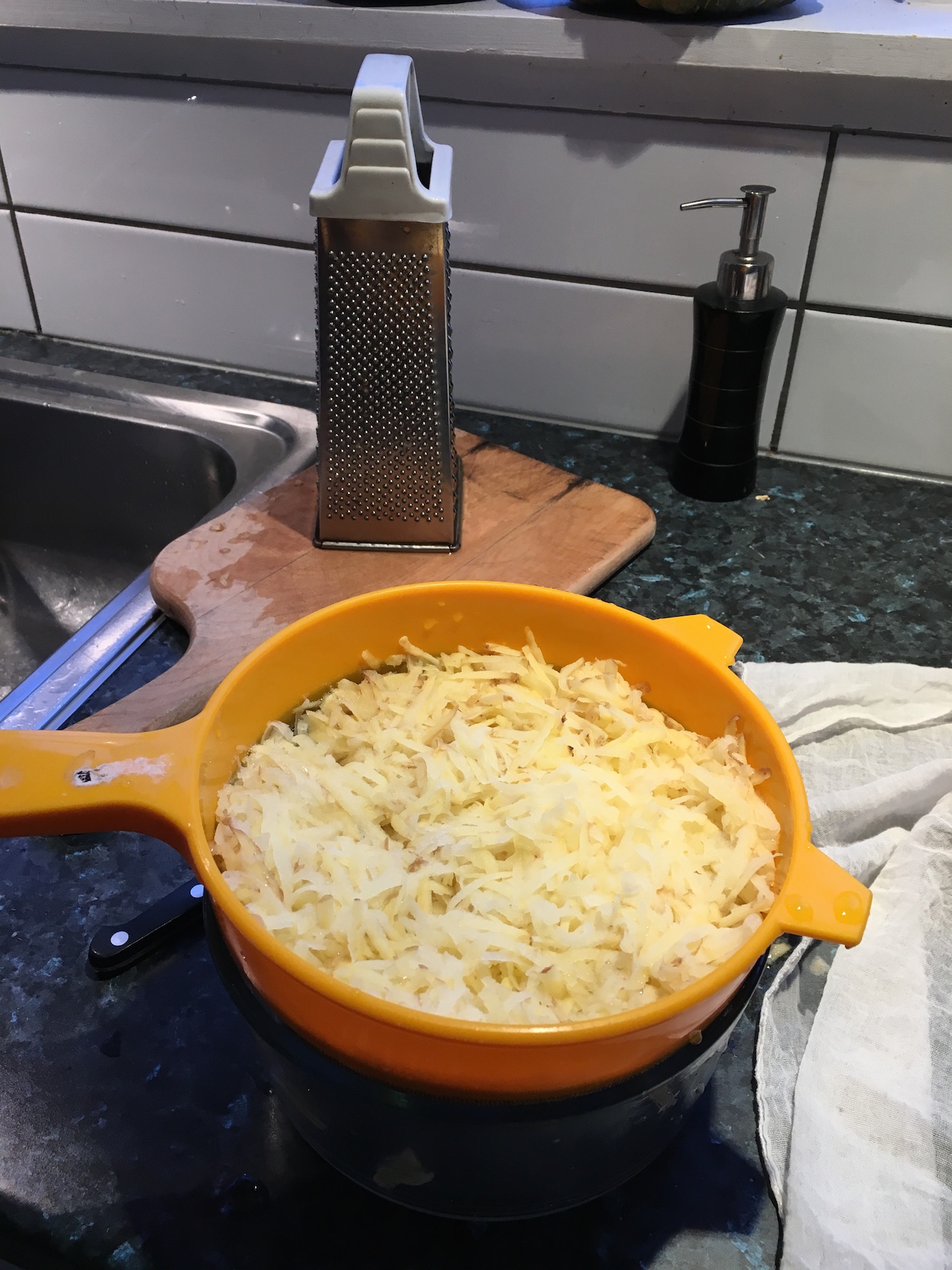
After grating my potatoes, I rinsed them well, and squeezed the excess water out of them. I tossed them with salt and pepper and fried them in a non-stick skillet with a generous quantity of clarified butter.

They were everything a hash brown should be—salty, crispy, and greasy.

Looks like hash browns are back on the menu!

The Dog Ate My Homework

2016-05-31 13.41.32First, there was a pair of pants to be made. Zip-offs. A bit tricky. Time consuming.

Then, there were animals to feed. An ornery goat to convince to take her medicine.

Two loads of laundry followed.

Next was a trip to the airport to drop off my husband. And while I was out, a stop at the store to pick up some hardware for the stilts my daughter is making.

When I got home, there was helping to make those stilts.

Next thing I knew, it was time to give the goat her medicine again.

And by the time I finished that, it was time to make dinner.

After dinner, there was a movie to watch.

In the middle of the movie, a dog leaped in through the living room window (which was, unfortunately, closed).

The dog was followed closely by the elephant, who didn’t exactly fit through the window. The elephant sort of took out the wall.

Which naturally let the herd of wapiti in. That was okay. They just wanted to watch the movie. It was the elephant who caused trouble.

She wanted a bath, so I had to pause the movie and go fill the tub for her.

But she needed bubbles, so there was the quick trip to the store for bubble bath.

By the time I got back, she had flooded the bathroom floor.

Which of course, meant the dining room got flooded, too.

When the water started spilling into the living room I got worried, but thankfully it was able to drain out the hole in the wall.

But it’s a cold night, and what, with the hole in the wall, it got chilly indoors. All that water froze, and the wapiti decided to have an ice skating party.

Well, partying wapiti are nothing but trouble. They got into the wine, and next thing you know, the police were knocking on the door—something about a bunch of animals doing burnouts on the road outside?

That took a while to sort out. I had to take the car keys from the wapiti. They were pretty annoyed by that, but by that point, they were all drunk. I drove them all home, including the elephant.

When I got back and assessed the mess, I found that the elephant had not only flooded the house and used an entire bottle of bubble bath, but she had used every single bath towel in the house to dry herself off. There’s a mountain of laundry to do tomorrow.

I did get the hole in the wall boarded up, sort of—the wapiti had broken the kitchen table anyway, so I figured, why not use it?

I’d just hammered the last nail in, when the dog came into the room with a sheaf of papers in his mouth.

It was the story I was writing for today’s Saturday Story! I tried to snatch it from him, but he ran off. I tried to follow, but slipped on what was left of the ice. I fell and broke my arm on an empty wine bottle the wapiti left behind.

Getting the cast on didn’t take too long, I suppose, but by the time I got home three hours later, there was nothing left of my story but a mass of soggy pulp the dog had vomited back up. Guess it wasn’t a very good story.

And now it’s terribly late and I’m struggling to keep my eyes open.

That’s why I’ve got no Saturday Story for you today.

Sorry. It really wasn’t my fault.

The dog ate it.


Spinning House, Spinning Life

Photo: OMI International Arts Center; http://artomi.org/page.php?Alex-Schweder-Ward-Shelley-233

Photo: OMI International Arts Center; http://artomi.org/page.php?Alex-Schweder-Ward-Shelley-233

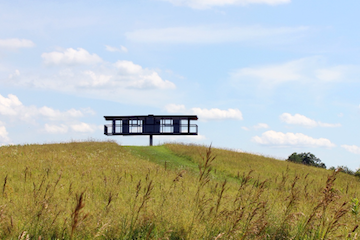
In looking for something in the news that wasn’t depressing on this rainy Friday, I found an article about this delightful piece of art by Alex Schweder and Ward Shelley—a house that spins in the wind and tilts as it occupants move around in it. They built it, then moved into it for five days.

The article about the house in the New York Times includes observations written by the artists during their time living there.

Shelley’s final observation: “We’ve stayed spinning most of this breezy day. Four-and-a-half days in, I can’t say something definitive about this spinning. It is the prime feature, and joy of life inside this machine. I know it could become too much of a good thing. For now, though, it is what I like best.”

Isn’t that a great encapsulation of life?

The spinning is the prime feature and joy of life–the crazy every day whirlwind of school, work, family, friends, sun, snow, and rainbows. The emotional highs and lows as we spin in and out of the metaphorical sunshine are what give life spark and colour. The spinning keeps us on our toes and interested, because the view is ever-changing.

But spin too fast, too out of control, and we’re liable to get dizzy and fall. We won’t know how to step to go in the direction we want to move. We might lose track of where we are altogether.

I would love to see this house in action, and maybe even spend time in it. Alas, I’m unlikely to find myself at the OMI International Arts Center in Ghent, New York in the next two years while the house is on display there. I suppose I’ll have to remain in my own spinning life instead.

Bean Bag Wars

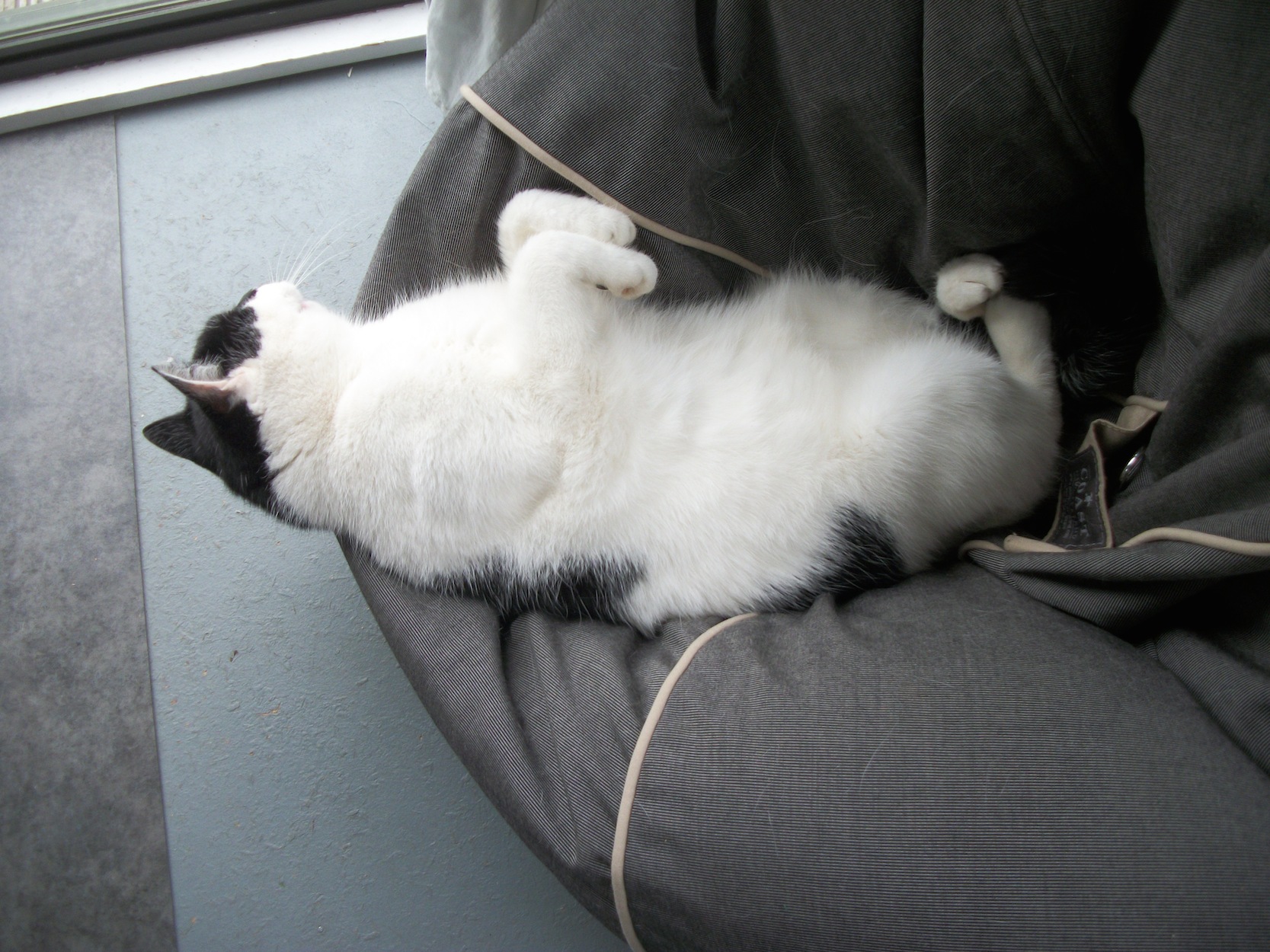
In the chair.

In the chair.

My husband got me a bean bag chair a couple of years ago. I suppose he wanted to encourage me to sit down now and again.

The chair ended up in my office, where the cat claimed it as his own. The chair grew hairier and hairier. After a while, no one else would sit on it.

A few weeks ago I needed the chair out of the office because I needed the floor space for a project. I took it as an opportunity to clean the chair.

Once it was clean, I moved it to the living room, thinking it might be welcome there over winter, when we spend more time indoors.

I expected the cat to use it too. But he scoffed at it. Instead, he spent weeks in his pre-bean-bag favourite spot on my daughter’s bed.

We’ve used the chair heavily in the living room, and it’s remained delightfully cat hair free.

Until two days ago.

That’s when the cat decided it was time to reclaim ‘his’ chair.

Yesterday, I noticed my cat allergies kick in when I sat in the chair. I did my best to occupy the chair long enough that the cat chose to sleep elsewhere.

This morning I was sitting on the floor when the cat came in. He made a beeline for the bean bag chair. I moved to block him. He attacked with an angry hiss—ears back, claws out.

He backed off, but I couldn’t’ guard the chair all day, so eventually he gained it, and added another layer of fur to it.

This evening I am in the chair, and I intend to stay in it.

The bean bag wars have begun.