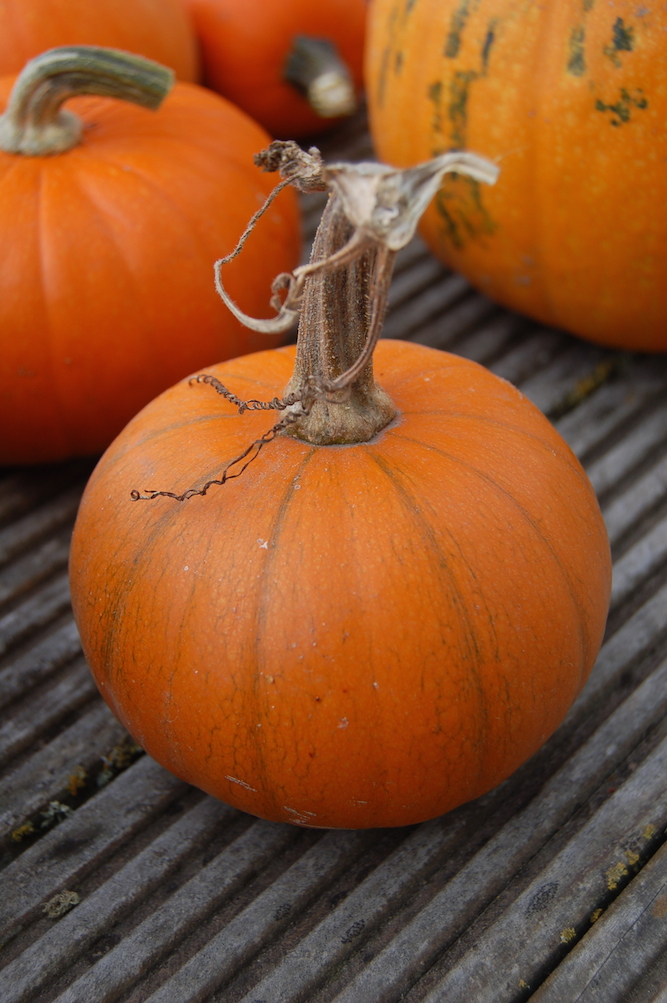
 The most beautiful crop of all…
Baby bear
Kurinishiki
Winter sweet
Wee be little
Orange dawn
Austrian oil seed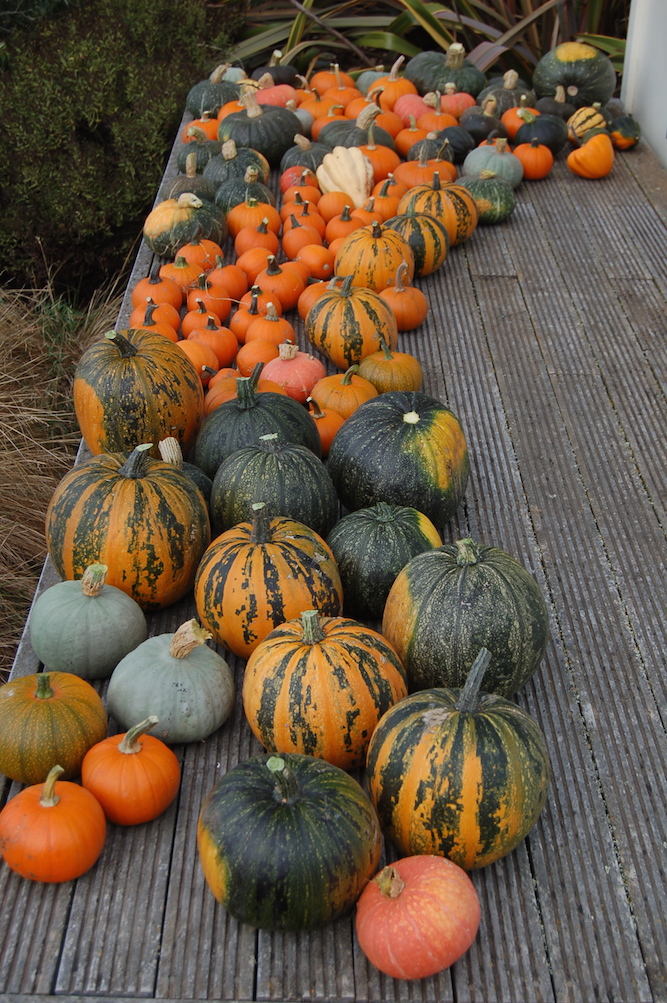
Table Princess
Table Gold
White Ace
Mardi Gras
Marina di chioggia
Did I plant too many?
The most beautiful crop of all…
Baby bear
Kurinishiki
Winter sweet
Wee be little
Orange dawn
Austrian oil seed
Table Princess
Table Gold
White Ace
Mardi Gras
Marina di chioggia
Did I plant too many?
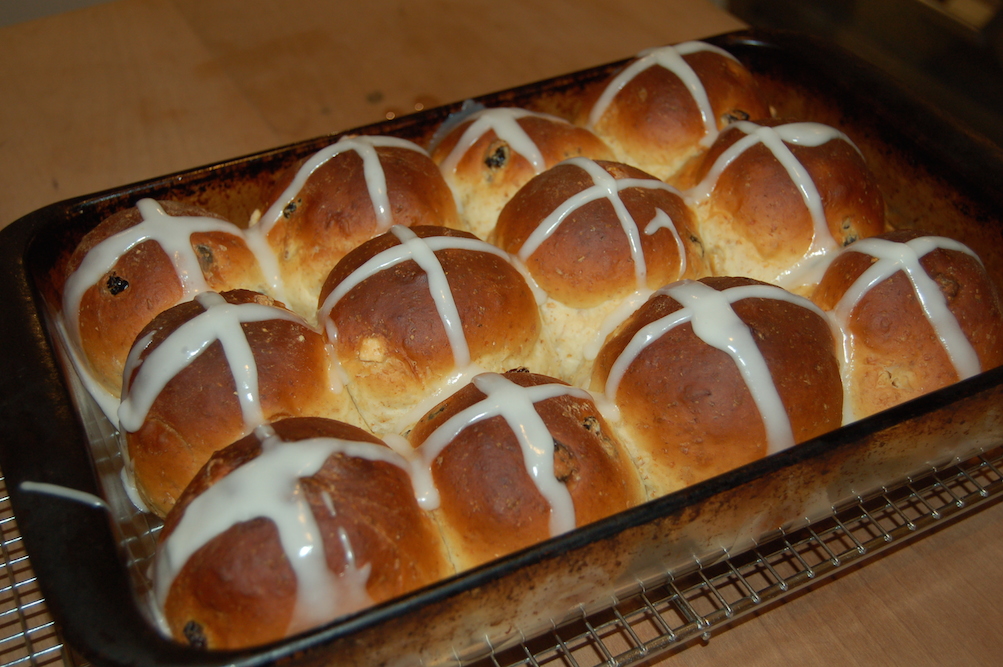 I know it’s not fashionable to appreciate gluten these days, but our household thrives on bread. No holiday celebration is complete without at least one bread. Holidays are an excuse to bake something different, something extravagant. Today rated two special breads. I made hot cross buns for breakfast, and Ian made a challah the size of a toddler, which we enjoyed with home made goat cheddar for lunch.
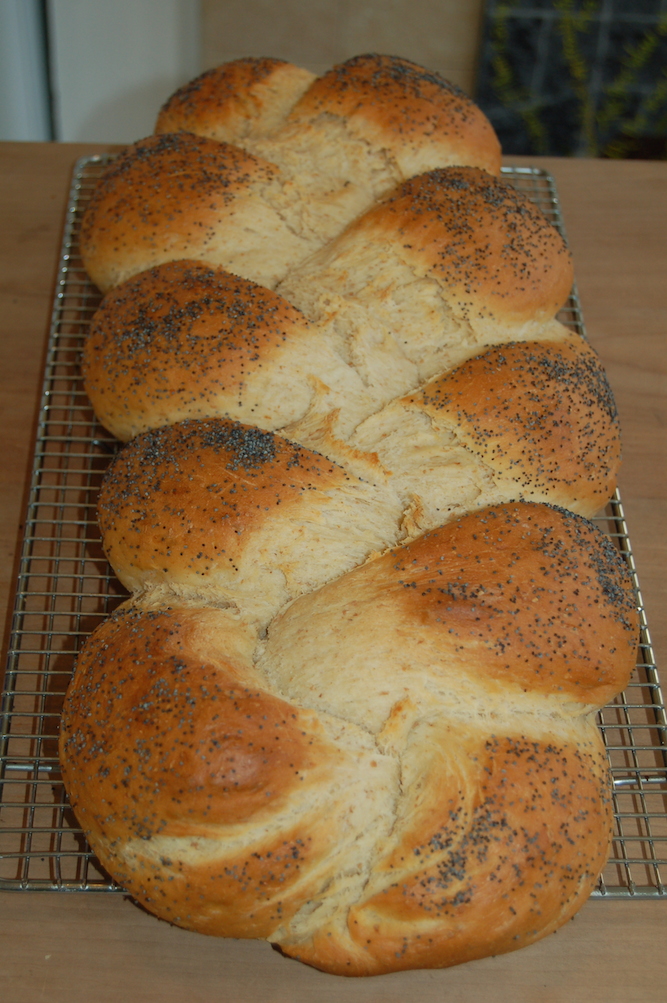 Enjoy your day, whether you are celebrating Easter, Passover, or just a beautiful day in April! May it be full of bread!
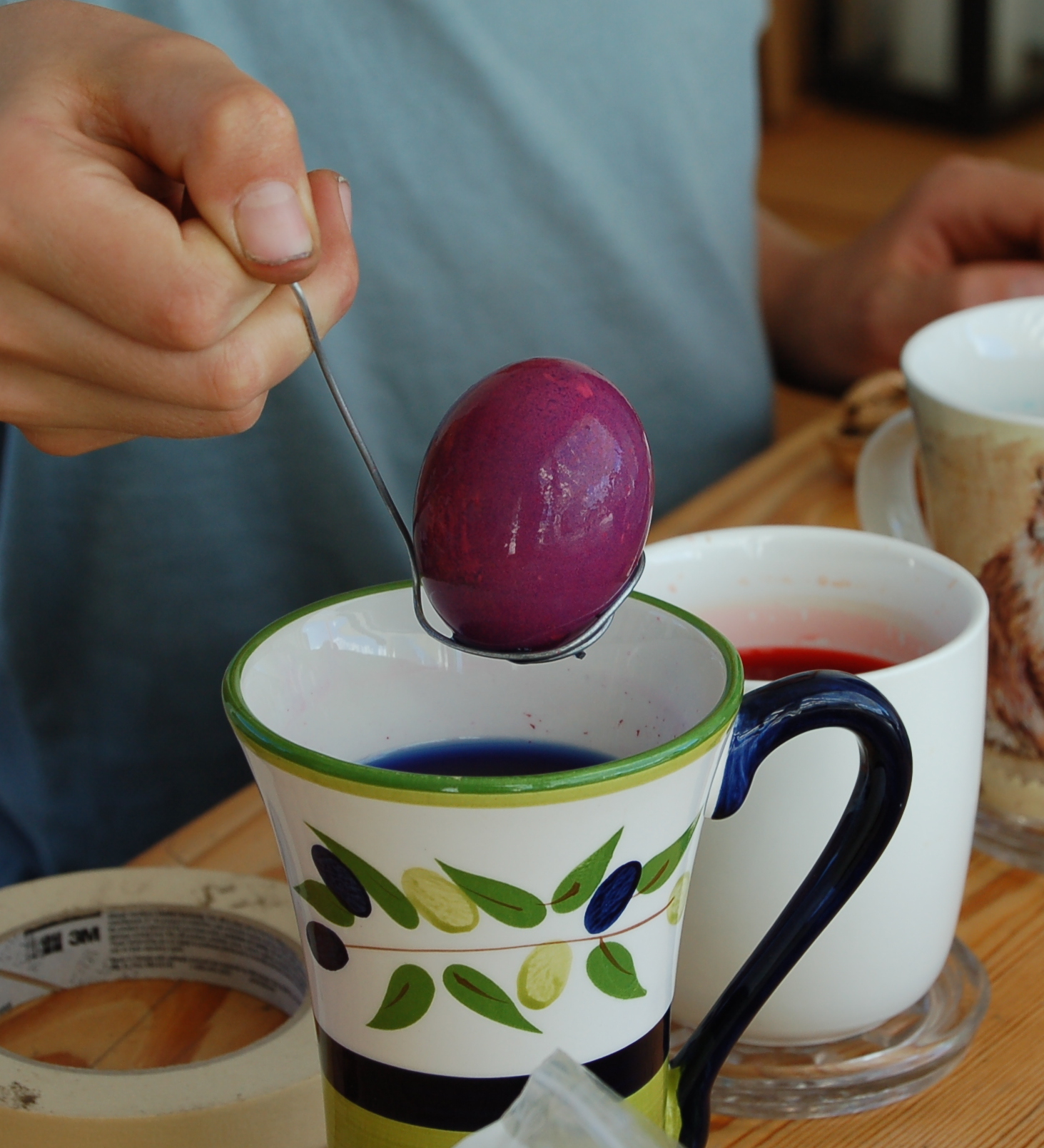
First, they dyed the eggs.
The annual glut of hard-boiled eggs is about to begin. The children dyed eggs this afternoon. This year I challenged them to create Lego machines that would allow them to paint designs on their eggs. They took on the challenge with enthusiasm! One created a remote-controlled machine to rotate the egg. The other created a machine that rotated the egg, and moved it up and down, and held a cotton swab soaked in food colouring, all at the same time. The results were pretty impressive.
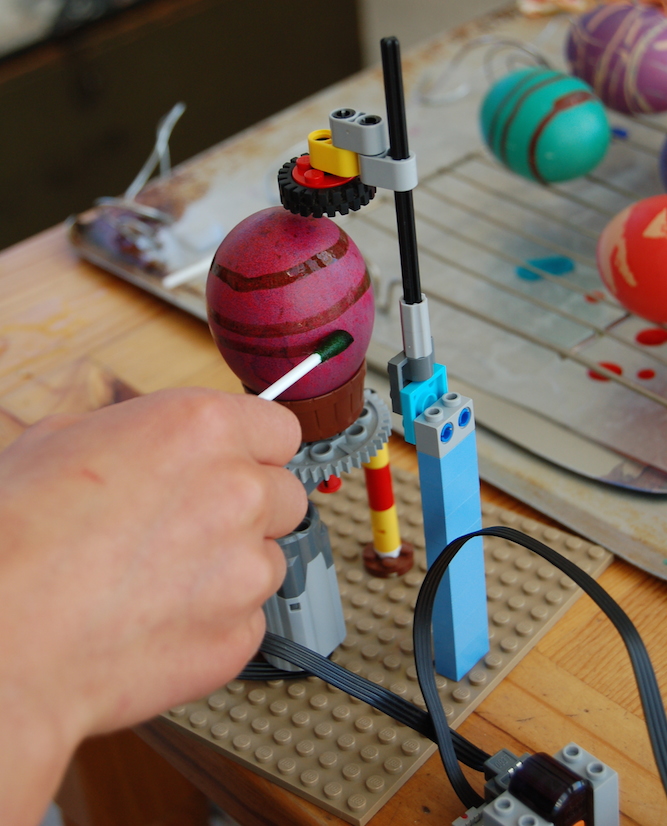
The remote controlled model.
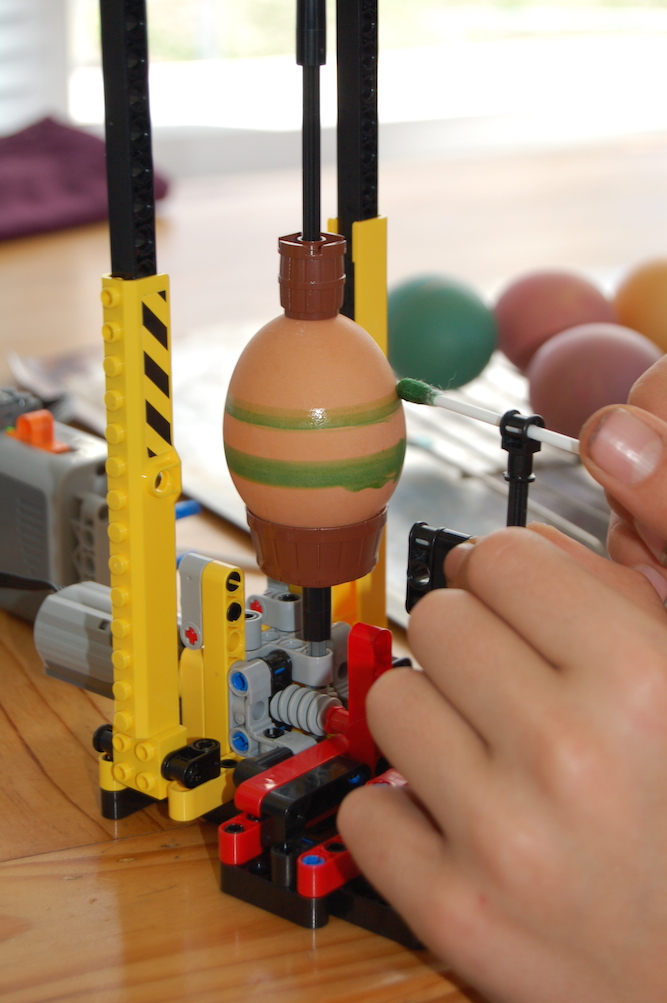
The deluxe model, complete with cotton swab holder.
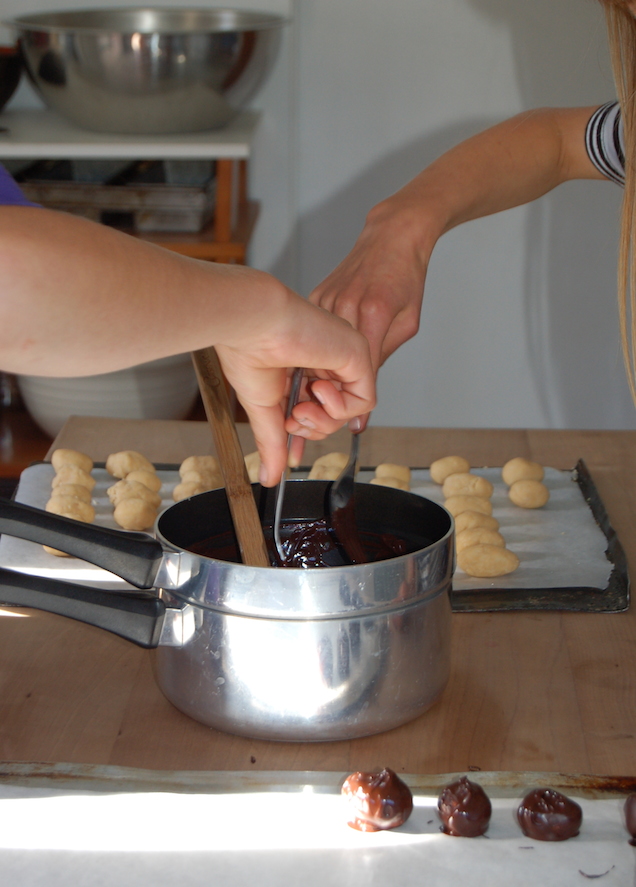
With older kids, now, I didn’t even need to do anything–they did it all (except the dishes).
I don’t go in much for Easter candy. Waxy chocolate rabbits and creepy marshmallow chicks? Ick! I do, however, have in inordinate fondness for homemade peanut butter and coconut eggs, made with good dark chocolate. Years ago, one of the secretaries where I worked made them and sold them every Easter, and I had no resistance whatsoever. They were a daily treat for me until her supply was gone.
Thankfully, I don’t have that temptation any more, but last week my son asked me to pick up smooth peanut butter and chocolate for peanut butter eggs. What could I do, but comply?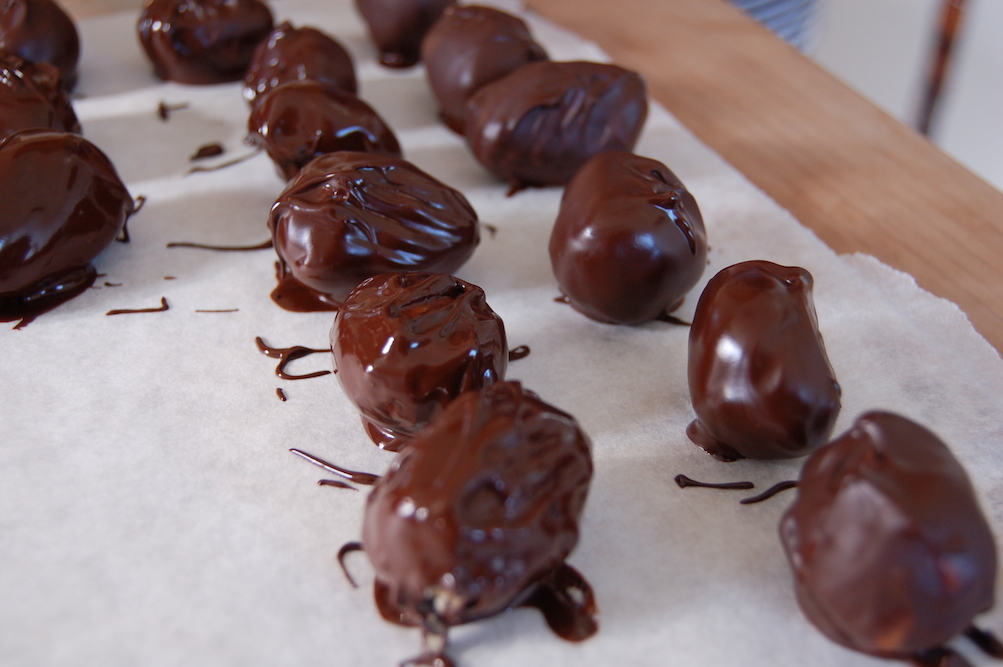
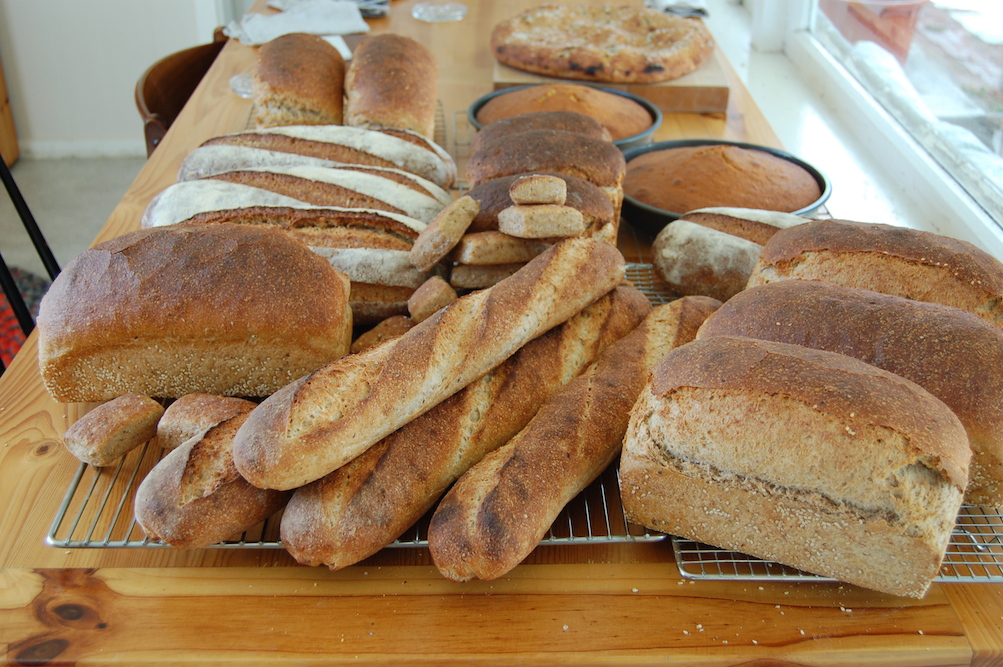
My bread can’t compare to these beauties of Ian’s.
Last night when I put another four quarts of peaches in the freezer (still working through those 40 kg!), I noticed we were nearly out of bread.
Ian is under a crunch of deadlines at work and is unlikely to take the Easter weekend off, and if he does, he has a huge DIY project underway at home, so there is no way he will be making bread this weekend. That leaves it up to me to fill the gap.
I’m always a bit nervous baking bread. I make a fine loaf, but I don’t have the practiced skill Ian has at bread. Imagine drawing a picture for Picasso—that’s a bit what it’s like to bake bread for Ian.
He is kind, and says nice things about my bread, gives me advice. We both know that putting up with my bread occasionally is part of what it means to live in our family. Just as sometimes he does the milking for me, we both take responsibility for just doing what needs to be done. We’ve tried to teach this to our children—the skill of walking into a situation, seeing what needs doing, and doing it without being asked. It is one of those skills that makes a person stand out as an employee, a roommate, a co-worker, and a friend. People who have this skill are the ones who walk into the kitchen at a party, see the pile of dishes in the sink, and wash them. They are the co-workers who empty the staff room dishwasher, the children who clear their plates from the dinner table, the students who tidy the classroom bookshelves as they look for something to read. We love these people. They make everyone’s lives better.
So I know it is okay that my loaves are not as beautiful or well-made as Ian’s. Part of being on this family team is sharing responsibilities, accepting help, and recognizing that we all need to pitch in and do what we can to keep the whole family operation running smoothly.
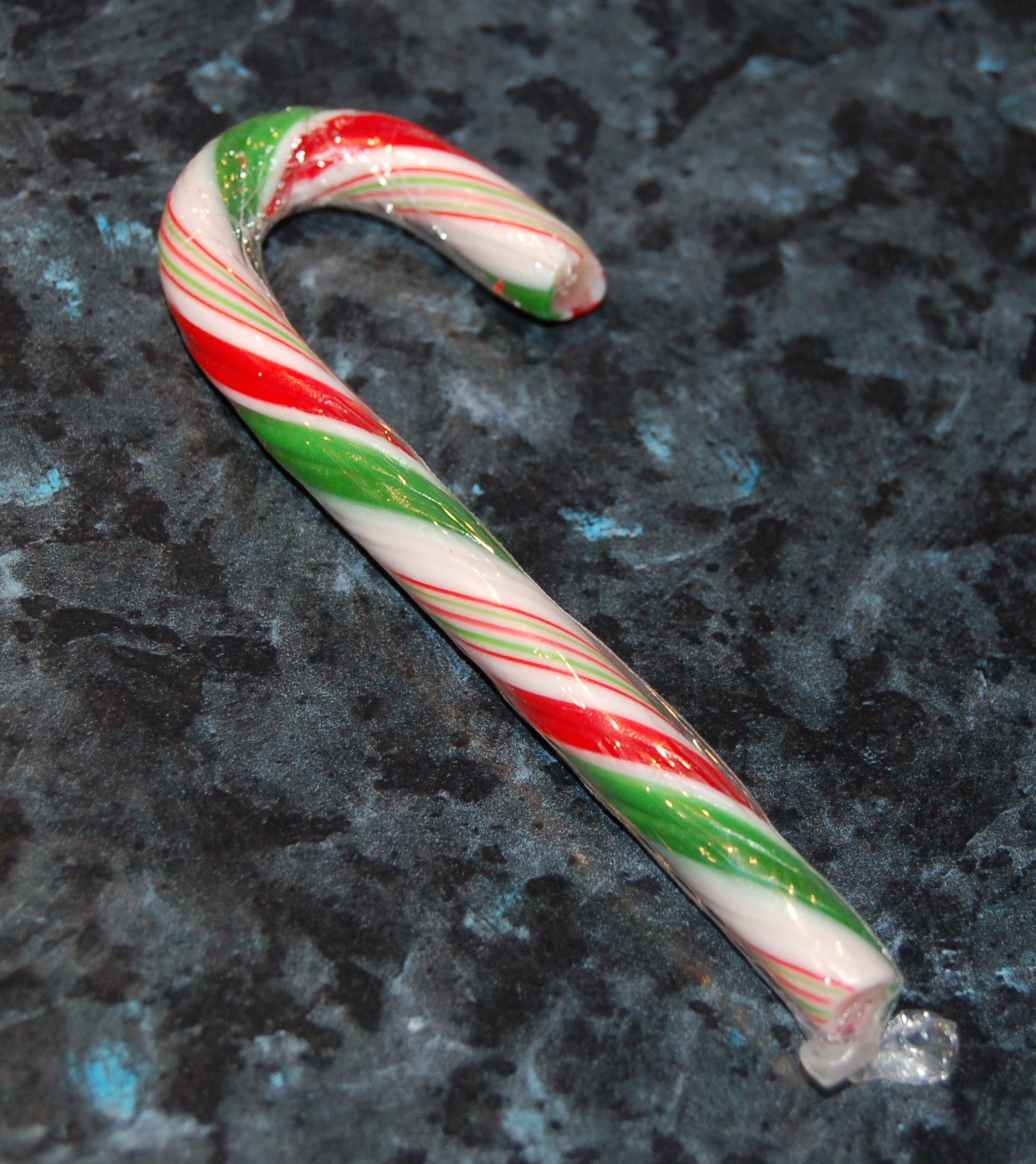 As I tidied the kitchen the other day, I noticed a candy cane hanging forlornly from the fruit basket. I thought it was time to toss it out, being nearly Easter.
It happens almost every year, the leftover candy canes. None of us really likes them, but Christmas isn’t Christmas without them. Candy canes in the stockings are like milk and cookies for Santa—you’ve got to do it, even though you know it’s silly (Santa really wants beer and chips, after all). I buy as few as possible, but the smallest box they come in contains six of them. That’s about six more than we really want to eat. The kids, being kids, manage to eat theirs eventually, though they are the last of the Christmas treats to go. The rest get hung on the tree for decoration, then tossed into a cupboard (or this year, hung on the edge of the fruit basket).
When I start thinking about Easter, I know it is time to ditch the candy canes. Time to make way for the confections of Easter.
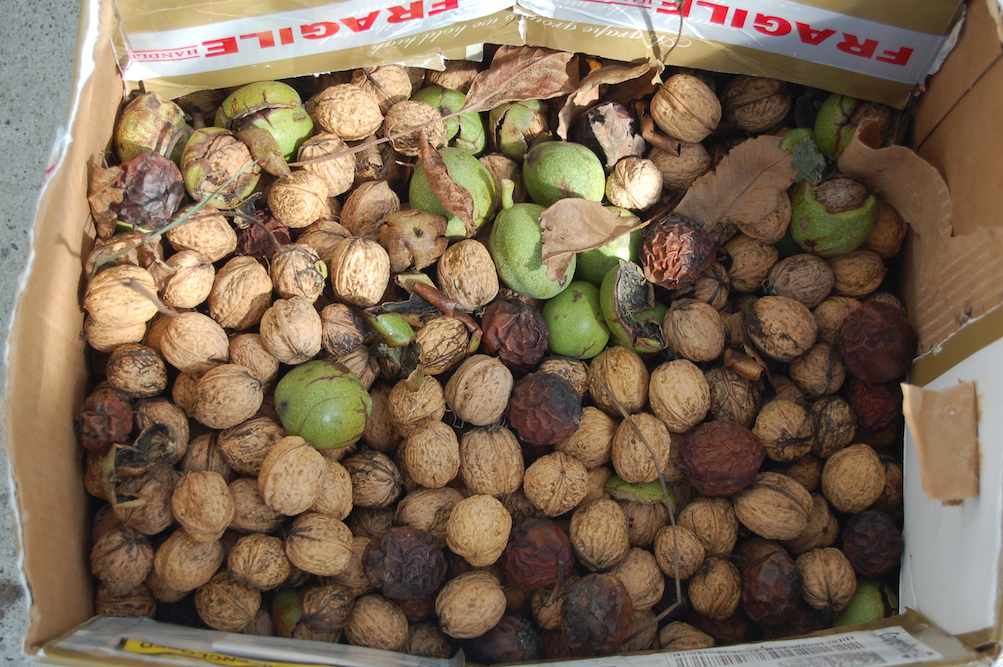 In addition to peaches, we foraged for walnuts at the dentist’s house on Sunday. Even more than the peaches, the walnuts illustrate what I so like about the dentist. He and his family don’t like walnuts, and they don’t have a walnut tree. The walnuts at his house come from the neighbour’s tree, planted on the fence line and hanging over into his paddock. He won’t use them himself, but every year he collects them and gives them away. As a well-paid dentist, he has no reason to be concerned about a little food waste, but he cannot bear to see good food rot. Even if it is food he won’t eat himself, he takes the time to gather it up and make sure it is eaten by someone.
If every person in the developed world just cared as much about the people and resources around them, imagine how much less waste, less pollution, less strife there would be. To care and to share…wouldn’t it be lovely.

There’s more to life than the kitchen!
“I don’t know what is more terrifying…that your blog makes you seem like this insane woman who spends all day in the kitchen, or that you really are an insane woman who spends all day in the kitchen.”
I just want to make it perfectly clear that I do not spend all day in the kitchen. I may be insane (indeed, I’m pretty sure I am), but not in that way.
For example, I spent all afternoon Saturday in the garden, and Sunday morning I cleaned the house and payed a social call to the dentist. I just finished editing a resource management plan for a client, and soon I will move on to the main task of each week day, writing and selling (well, trying to sell) my books (which have nothing to do with food, though sometimes characters do eat).
Have I spent an inordinate amount of time in the kitchen lately? Yes, at least on weekends. But it is harvest time, and extra work now means I can spend winter evenings sewing, or curled up with a book. I intend to enjoy every one of the frozen and canned meals I’ve been working so hard on lately, and I will take full advantage of the extra hours I gain later, spending them out of the kitchen.
 Every crack in my hands is stained purple. My fingernails have turned a dark grey. The floor, walls and cupboards in the kitchen are splattered magenta. There is a sticky splotch on my big toe that looks remarkably like a terrible wound.
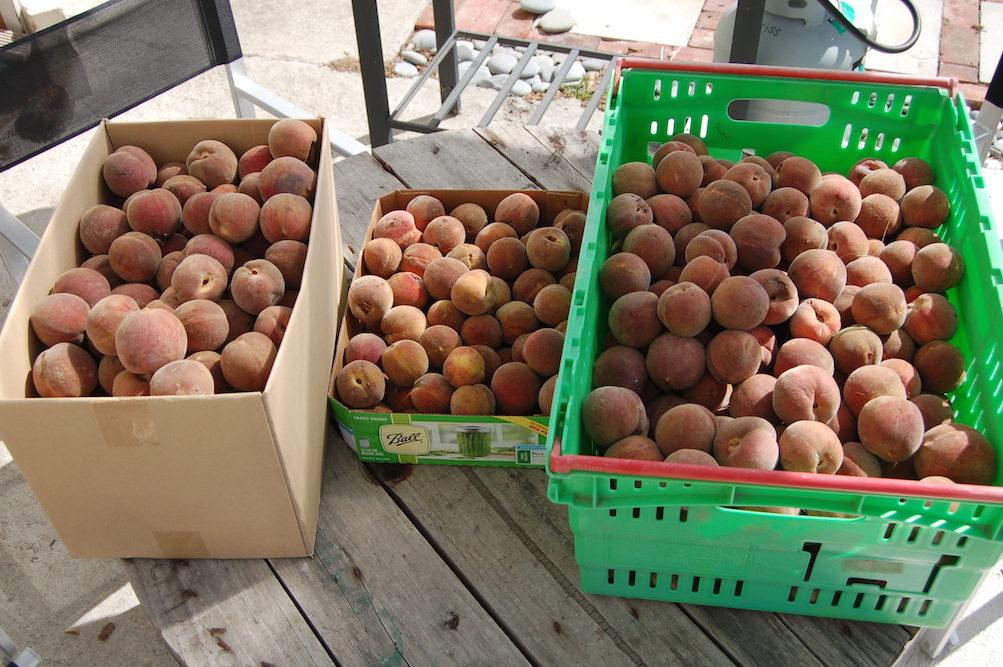
These are the inevitable result of working my way through the better part of 40 kg of black boy peaches.
The dentist called mid-week to say he had a box of peaches for me; I should call in at the office and pick them up (this is the gardening dentist I mentioned in a previous blog). Along with the 10 kg box of peaches was an invitation to coffee (and more peaches) this morning. We came home with a veritable carload of peaches (more than 30 kg, though I haven’t weighed them all). The first 10 kg became 10 pints of spiced peach butter. Then I filled up my remaining quart jars (14) with canned peaches, and made enough peach crisp for a generous dessert tonight and breakfast tomorrow morning.
There are still about 12 kg left. I’m out of jars, out of freezer boxes. Hmm…I suppose that means we’ll have to eat peach pie, peach cobbler, peach shortbread, peach muffins, peaches on granola, and just plain old peaches all week. Darn. 🙂
I step out of the light and steam of the kitchen,
Away from the hum of the fridge,
From the smell of cake and jam.
Orion hangs overhead in the cool still air.
The moon
Floats with him.
Light, noise and steam are shut in.
Night is out.
One breath.
Two breaths.
The night whispers.
Memory of the day fades
Into inky black sky.
I am caught.
Held.
Soothed.
By velvet silence.
 Robinne Weiss