Pumpkin Ravioli

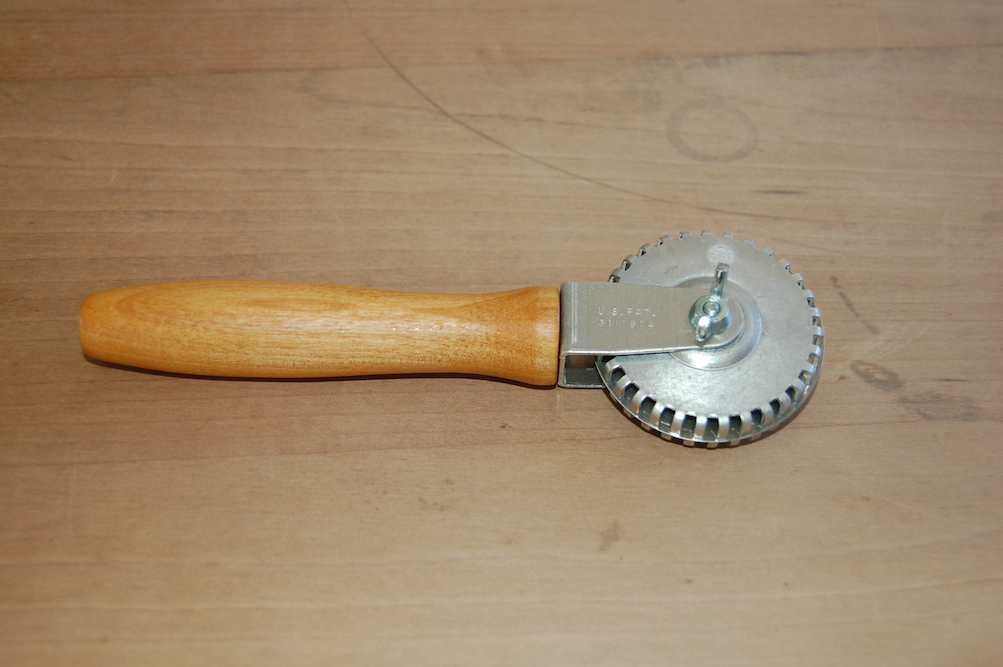
Ravioli slicer/sealer

Ravioli slicer/sealer

With a scratchy throat and the sniffles, I was thinking about easy dinners for this evening. I baked up some pumpkins mid-afternoon, and asked the kids what they thought I should do with them for dinner.

“Pumpkin ravioli!” was the enthusiastic response. I had to admit, it sounded like a great idea, in spite of my lingering cold.

“If you’ll help, I’ll make ravioli.”

And so my daughter and I made ravioli together. Pumpkin ravioli has traditionally been one of those once-a-year meals that I swear I’ll never make again every time. The ravioli takes forever to make, then explodes when it is boiled. I’ve used a ravioli maker with little wells in it, I’ve cut my ravioli with a biscuit cutter and sealed it with my fingers, I’ve cut it with a knife and sealed it with a fork. Doesn’t matter, it takes forever to make and falls apart in the water.

This time, I used a ravioli cutter/sealer my in-laws gave us for Christmas. Used like a pizza cutter, it rolls along, sealing the edges and cutting the ravioli apart in one quick motion. I was dubious, and I explained to my daughter that “this probably won’t work, and we might end up having to just make pasta noodles and use our filling as a sauce.”

Much to my surprise and delight, the little cutter did a brilliant job! I’ve never had ravioli go so quickly (even in spite of the fact the power went out half way through dinner preparation)—we rolled out big sheets of dough, dolloped them with filling, topped them with a second sheet, and ran the cutter along the edges. Slick as…

And the taste? We topped it with a sauce of butter, garlic, rosemary, sage, and dried tomatoes. Fresh Parmesan cheese grated onto it at the table, and it was absolutely divine!

Unfortunately, with the power out, I got no photographs of the finished ravioli, but we had a delightful candlelight dinner—quite appropriate for glorious homemade pasta.


Leftover Soup

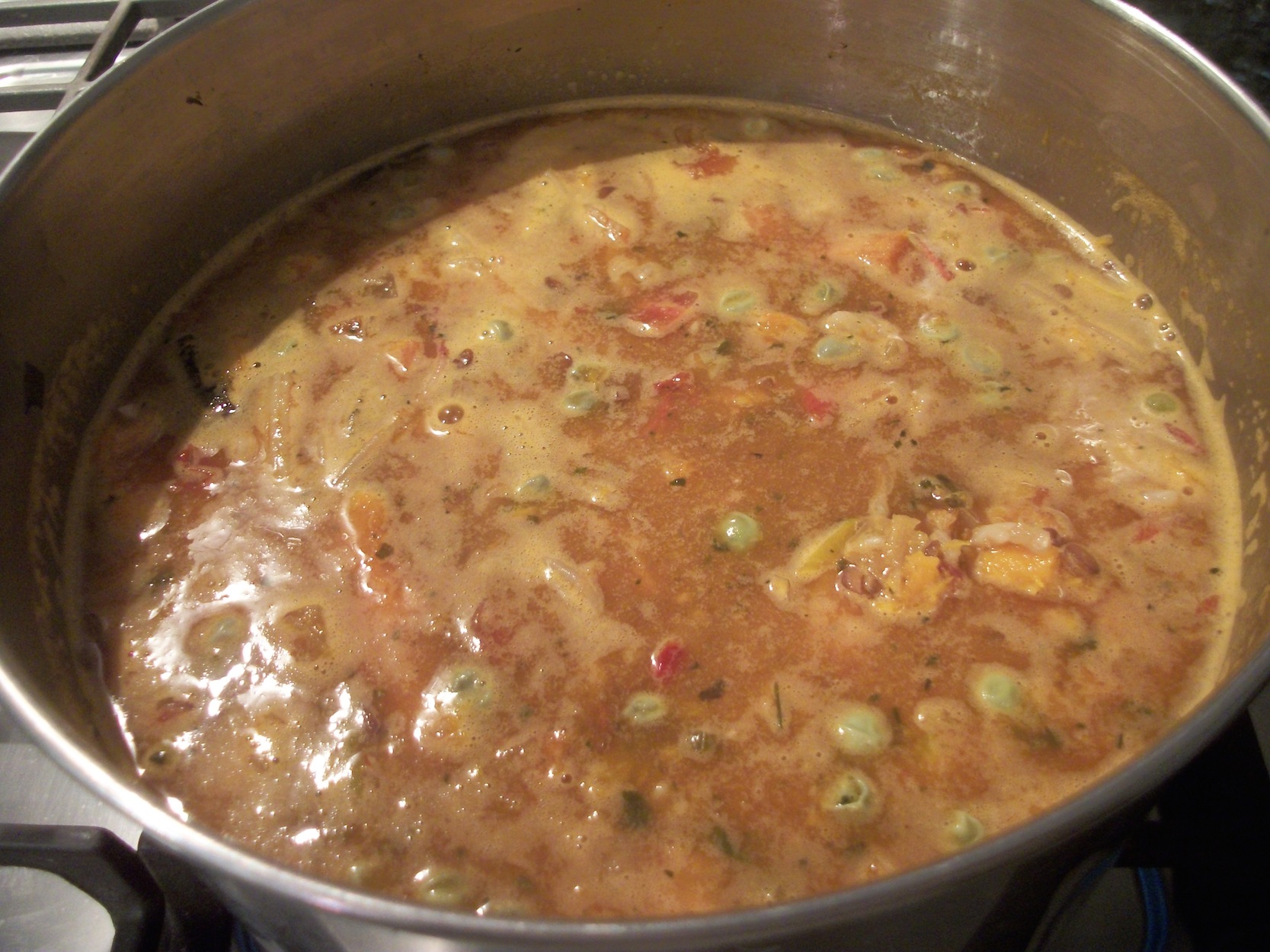
There could be anything in here...

There could be anything in here…

It always happens. At some point in winter, we start to see the end of the vegetables. Winter’s vegetables lose their fight against the cold and rain. The remaining potatoes are small and beginning to sprout, the pumpkins are nearly gone, as are the onions. The garlic is sprouting. The frozen and canned vegetables are harder to find, requiring rummaging around in the freezer or cupboard. There are still vegetables to eat, but we can start to see the bottom of the barrel.

At that point, leftovers from dinner stop going to the chickens. We keep an ice cream tub in the fridge, and leftovers go there instead. When the ice cream tub is full, we have enough for leftover soup.

Leftover soup is always a surprise. Indian food mixes with Italian food. Tomato sauce might mix with a Béchamel. Doesn’t matter what it is, it goes in. Add a little water, maybe make some savoury muffins to have with it, and ‘voila’! A dinner that doesn’t deplete the remaining stores from summer. And, usually, it’s not half bad, either! It usually takes us a week to build up enough leftovers for soup, and we’ll often time a leftover soup night for Friday. An easy dinner, then a family movie is a great way to kick off the weekend!

The Last of the Cheese

cheeseandcracker smWe marked another milestone in the food year yesterday—we ate the last of the goat cheese. We managed to finish off the Parmesan and Bishop’s Corner* on the same day.

It’s true, you only know what you’ve got when it’s gone. The goat cheese is that way for me. During the height of milking season, when rounds of cheese crowd out other food from the refrigerator, I can forget what a gourmet delight it is. I can forget that our ‘everyday’ cheese would cost us about $100/kg if we had to buy it. But when I’m staring at the last tiny sliver of perfection, knowing that my next bite of cheese is going to have to be run-of-the-mill commercial cow cheese, I recognise the value of what we produce.

So we savoured our last bites, and look forward to spring, when the milk will again be flowing, and the rounds of cheese will start stacking up.


*Bishop’s Corner is a cheese of my own creation—a happy mistake that turned out better than what I meant to make. I make that mistake over and over again now, and have named the cheese after a local crossroads.

Vegetable Poetry

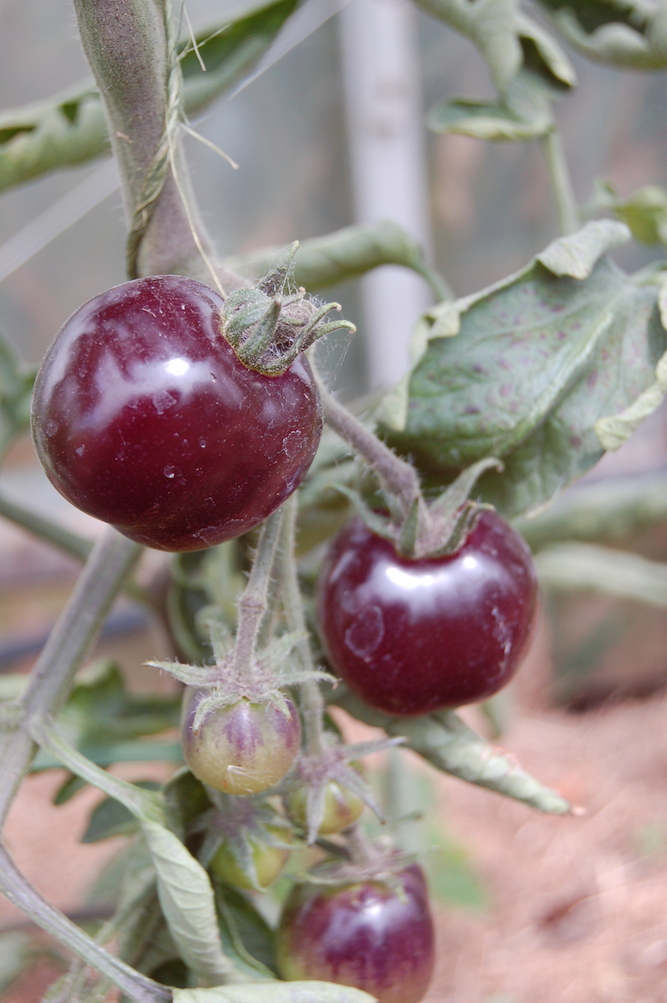
Painted Mountain,

Long White Wonder,

Indigo Rose

Indigo Rose

Full Moon,

Flying Saucers,

Pink Banana Jumbo,

Bloody Butcher,

Collective Farm Woman,

Drunken Woman Fringed Head,

King of the Blues,

Peppermint Stick.

I love the poetry of vegetable names! I’ll be planting many of these vegetables this spring. Can you identify what each is?

Gardener’s Porn

IMG_2948The catalog has arrived! After a brief tussle with my husband, I snagged first rights to it. I poured a glass of wine, curled up next to the fire, and prepared to feast my eyes on what Ian calls ‘gardener’s porn’.

I have a seed catalog ritual. When the catalog comes, I first flip through quickly, looking at pictures, checking for new plants and things that catch my eye, and revisiting ‘old friends’. The second time through, I circle those seeds I know or think I want to buy. The third time through, I prepare my order, consulting my list of needs, and selecting or rejecting the many ‘wants’ I’ve circled.

I look at my order critically then. It almost always shocks me how many seed packets are on the list. Do I really need both large and small gourds? How many tomato varieties is too many?

While I’m fretting over the length of my list, Ian usually snags the catalog. He invariably manages to goad, heckle, and request several more seeds onto my order.

He is the id, and my super-ego has no chance against him when it comes to seeds. I give in every time, and the order gets longer.

Finally, the order is made and sent off, but the catalog doesn’t necessarily get put away. It remains out for a few days as we all enjoy the bright colours of summer in the middle of winter.

July = Seed Catalogue!

100_3404 copyKings Seed announced yesterday that the new year’s catalogue is shipping this week. I can’t wait! I’ve also got my work cut out for me, now.

Before the catalogue arrives, I need to assess my current seed situation and make a list of what I need. If I don’t, I tend to buy EVERYTHING, and end up with too many seeds. As it is, I have a hard time limiting myself to what I need, plus a few “special” things.

It’s slightly easier here than it is in the US. Before we moved here, I used to get half a dozen seed catalogues every winter, and choosing among such a huge range of options was incredibly difficult. Here, with only one decent mail-order seed supplier, I at least have only one catalogue to pore over.

So tonight I’ll pull out the seed packets and the computer (where I maintain a spreadsheet of all the seeds I have), and update my records so I can purchase sensibly when the catalogue arrives…well…if not sensibly, at least I’ll know I’m buying too many seeds! 😉

Half Way!

Wine:peppers smI have reached the halfway point—half way through my 365 Days of Food blogging challenge. So far, except for technical difficulties, I have not missed a day.

It has been an interesting journey from a writing standpoint, and I still feel as though I’ve not begun to exhaust my ideas around food. Winter, I will admit, is tough because there is little to do in the garden, and our diet tends to shrink to a few ingredients that store well. But invariably, every day brings something blog-worthy.

This morning, I took two friends to the airport for their trip home to the US. We spent the past week travelling, talking, and eating…and often talking about travelling and talking about eating. It was good to talk to them about food and our relationship with food. They asked probing questions that forced me to verbalise some of my thoughts about food that I have not really discussed with anyone before. Their reactions to my food and lifestyle choices made me reassess and appreciate anew the value of those choices.

I’m sure those discussions and new perspectives will make their way into this blog over the next days, weeks and months, and I suspect that when I reach the end of my blogging Food Year there will still be more to be said. So pour yourself a glass of wine and settle in!

A new relationship with bees

DSC_0005 cropMy friend, Maryann, researches pollinator decline. Her focus is on honey bees, and how honey bee management can affect bee health.

The picture is a complex and disheartening one, but one that offers glimpses of what sustainable bee management could look like. Wherever they live, honey bees are beset by an array of diseases and parasites. Under the non-intensive, almost natural management regimes used in much of Africa, the bees fight off these pathogens and parasites without intervention from bee keepers. Intensely managed North American hives crumble under their onslaught.

North American hives are shifted from place to place, following the flowering crops, in order to provide pollination services for huge monocultures of fruits, vegetables and nuts. Hives are packed close together in vast arrays, making it easy for disease to spread from hive to hive.

The heavy use of herbicides in the agricultural landscape mean that the only source of pollen and nectar may be the crop to be pollinated. Bees evolved to feed on a wide variety of flowers, and cannot survive on one food alone. Imagine being forced to eat only broccoli—it’s good for you, but if you ate nothing else, your health would suffer.

Add to malnutrition the fact that the pollen the bees are eating is laced with no fewer than 137 different pesticides, many of which are toxic to bees or interfere with their growth, development and learning. And these pesticides are mixed with a range of substances to help them stick to the plants or disperse evenly when sprayed; these chemicals can be as poisonous to bees as the pesticides, and they are virtually unregulated.

Poor nutrition, poisoned food, and crowded conditions make North American bees susceptible to disease and parasite outbreaks. Bee keepers’ response has largely been to treat hives with pesticides to kill the parasites that spread disease, further adding to the chemical load the bees must support. When parasites develop resistance to pesticides (which they do at an alarming rate), the weakened bees are overwhelmed, and the colony dies.

I have long been uncomfortable with the North American management of bees—we squeeze everything we can from the poor animals, pushing them to their physiological limits in poor conditions. It’s no wonder they are in trouble. If we forced any other livestock to live in overcrowded conditions and eat poisoned food that didn’t meet their nutritional needs, the public would be outraged. Now, this unsustainable management has created a crisis, as the animals we depend upon to produce much of our food die in unprecedented numbers.

We need to develop a more gentle approach to bee management—one that respects the needs of these little animals. We need to critically evaluate (and curtail) our use of pesticides, and reconsider our model of vast monocultures in favour of more mixed agriculture. We need to give bees a break from the agricultural landscape so they have opportunities to eat food not laced with pesticides. We need to manage bees less for our own convenience, and more for their health and well-being. We need a new relationship with bees, forged from an understanding of bees’ needs, and aimed at long-term sustainability.

Fresh Eyes

Endangered dolphins? Nothing unusual to see...

Endangered dolphins? Nothing unusual to see…

Travelling around this week with friends from the U.S., I am seeing things with fresh eyes. The strange pronunciations, the shockingly changeable weather, the casual acceptance of road closures, spotting endangered species from the roadside…all those things I now just accept as normal. I’m reminded of how foreign they were to me once.

Coming from the land of restaurant chains, they were surprised by the abundance and quality of local cafés. Coming from a place of certainty, they remarked on the number of times I said, “This has changed completely since I was last here.” Coming from a land of freezing winters, they marvelled at fresh vegetables from the garden at the winter solstice.

It has highlighted for me just how much I have ‘gone native’. How much I have accepted, adapted to, and embraced this place. It has become me, and I have become it. There are many times when I still feel foreign, even after ten years here, but having visitors here helps me realise just how much I have come to belong.