Daddy long-legs

daddylonglegs1cropsmThe name Daddy long-legs conjures images of swift, leggy creatures, but depending on where you live, the image you see in your mind may not be the creature pictured here. The name can refer to a particularly common house spider, a crane fly, or this delightful animal—a harvestman.

Harvestmen are arachnids, and are often confused with spiders—eight legs, roundish body, move quickly—but they are in a separate order from the spiders, and have important differences.

The most obvious distinction is the body shape. Spider bodies are divided into two sections, but harvestman bodies are just one section.

Most people are familiar with the European harvestman (pictured), but most harvestmen are much more fierce-looking than the European ones. They sport vicious-looking spines, oversized pincers, and bizarre body shapes and colours. Perhaps this is where they get their reputation as “the most poisonous spider on the planet”. The truth is that, unlike spiders, none of the harvestmen have poison glands.

Harvestmen are primarily scavengers—eating dead insects, and the occasional tiny, slow-moving live insect (the European ones are said to like aphids). They have no need for poison except in defence, and here they are well-endowed. Most harvestmen have small pores on their backs that exude a smelly substance that repels most predators.

So the worst a harvestman can do is smell bad.

Of course, every kid who’s ever tried to catch a harvestman knows they have another defence mechanism—legs that break off easily. A harvestman’s legs act as a quick get-away mechanism if it is snatched by a predator—the leg snaps off easily in the predator’s mouth, allowing the harvestman to escape. Harvestmen seem to get along quite well with seven, six, even as few as four legs (look closely and you’ll notice the one I photographed has only seven legs).

These shy, gangly creatures are some of my favourites in the garden and in the forest, where hundreds of species abound, many of which are still undescribed by science.

Secret Garden

Years ago, my husband installed a mirror in our hedge. I still catch myself wondering about the garden on the other side.


hedgemirrorsmThere is an arch in the hedge,

Dark and green,

And a gate.

It beckons.

Calls me to step through

To the secret garden

Beyond.


At work over here,

I glance up.

The far side is green,

Lush,

With clipped shrubs

And well-weeded flowers.


I wonder at the gardener

Who can maintain such beauty.

I struggle so on this side!


A bird flashes by,

Glimpsed through the arch,

I am sure it was red,

With a long tail.

What exotic creatures live over there

On the other side?


I stand, stretching my aching back.

I step closer to the arch.

Was there movement?

There is someone on the other side.

The gardener?

I would like to meet her.

Would she show me around her garden?

Boldly I approach the gap.

I see she, too, walks to greet me.

When I catch her eye,

I draw up short.

A slow smile spreads across our faces

As we recognise one another.


The hills are alive with the sound of music

I was in the garden, weeding as usual, when I heard the Star Wars theme wafting across the yard. It was my daughter, testing the new low register she was making for the flip-flop-o-phone.

What’s a flip-flop-o-phone, you ask?

It’s one of a number of musical instruments scattered around our yard. My husband believes in tantalizing all the senses in the garden. Music is an important part of that, so he builds instruments everywhere.
tubophone smIn the herb garden is the tubophone—galvanized electrical conduit cut to a C-major scale and played with a mallet—a DIY glockenspiel.

musicalbench sm


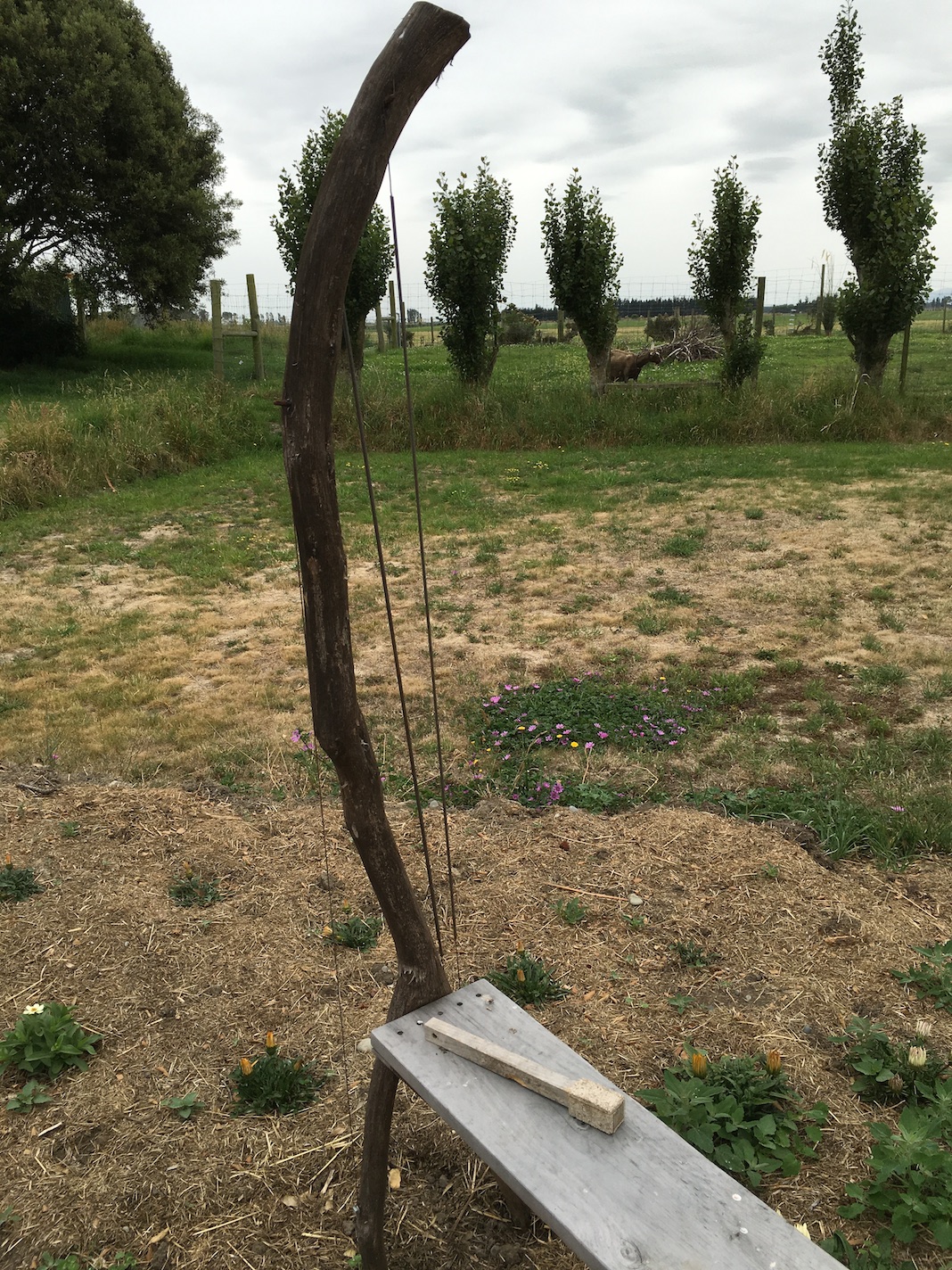
In the pond garden is a bench strung with strikable and pluckable piano strings—sort of a jug band sound.


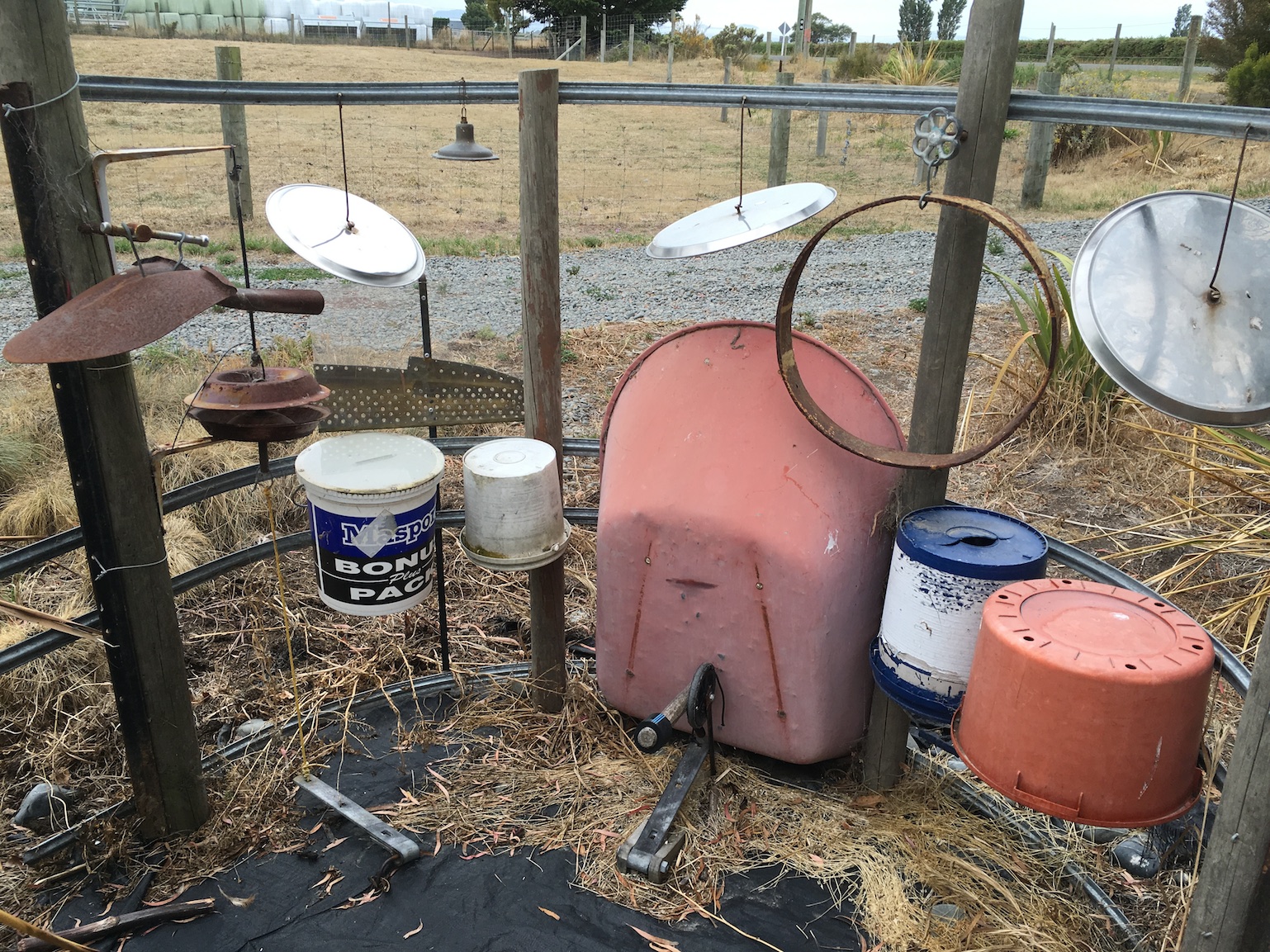
drumkit1 smAnd nestled among the plants in the native garden are the garden drum kit (complete with wheelbarrow bass drum, bucket snare, and tyre hub high hat), and the flip-flop-o-phone.
flipflopophone1 sm


The flip-flop-o-phone is a set of pvc pipes (salvaged plumbing) that are struck on the end with an old flip-flop to make a (sort of) musical note.

The outdoor instruments are fun, interactive garden elements we all enjoy—one of the many elements of whimsy my husband adds to the landscaping.

2016 Blog Challenge

100_2118smNew year, new challenge. This year I’m going to stray from the table and the kitchen, though I’m sure I won’t leave the subject of food entirely.

This year I’m returning to my roots as an interpretive naturalist with my blog challenge—A Year Outdoors.

As I did with the 365 Days of Food challenge, I will interpret my theme broadly and explore a wide range of ideas and perspectives on the outdoors. I’ll range from garden to beach to mountaintop. I’ll look at microcosms and ecosystems, the tiny to the huge. I’ll explore outdoor work and play. Anything out of the confines of four walls and a roof is fair game.

Rain or shine, I’ll be out there. So grab your hat and come join me for another year!

365 Days of Food

100_3831 smHere I am at the end of my 365 Days of Food blog challenge. Reflecting on the year, I am pleased–and a little surprised–I’ve managed to blog every day. Yes, some days were…um…half-hearted at best, and some posts were written in advance, to be posted automatically on days when I had no internet access. So there was a little fudging, but only a little.

And what did I learn from this exercise?

DSC_0009 smI gained a heightened appreciation for how much of my daily life revolves around food—planting, caring for, harvesting, preserving, preparing, eating…and cleaning up from all of the above. There were times during the year when I felt that dealing with food was the only thing I was doing, and I wondered if I needed to get a life.

But what is more basic to life than food? What is more fundamental to human cultures than sharing food with friends and family? On the last day of the year, I come full-circle—back to my first blog post of the year:

DSC_0016 copy“[Food] feeds us physically and emotionally. It is an integral part of our celebrations, and is the scaffold on which our days are built.”

After a year of blogging about food, I would add that it underpins our economy, is woven into the fabric of human history, impacts the health of the planet, reflects our personal values, and is an inseparable part of our identity.

DSC_0015 copyThank you for reading and commenting all through the past year. Though it is the end of my 365 Days of Food challenge, it is not the end of my blogging. There will be more…maybe even a new challenge for next year.

Stay tuned!


Eating Together

100_4263 smAt the festive time of year, it seems right to blog about family meals.

There has been a great deal of hoopla over the past ten years or so about family meals. Some researchers have claimed they reduce childhood obesity, raise GPAs, reduce depression, reduce delinquency, and a host of other benefits.

The truth isn’t quite so amazing. When factors such as socioeconomics, family structure and other demographics are controlled for, it appears that family meals slightly reduce childhood depression, and that’s it. All the other ‘benefits’ are simply correlated with the other features that contribute to a family that sits down together for a daily meal.

But I like to think that, just as smiling makes you happier, sitting down to a family meal every day makes the family better. It makes it more likely the family will have the other characteristics that lead to higher GPAs, lower obesity, etc.

A family meal is a time to talk to each other, to discuss current events, ideas, and feelings. It’s a time to teach children manners and respect for one another. It’s a chance for quality time with the people we love—why not take advantage of it? You’ve all got to eat—make the most of it.

We eat dinner as a family every day, and on weekends, we eat lunch together. Sunday, we even sit down together for breakfast. Sometimes I’m reluctant to take the time for a family meal, particularly lunch, when I’m in the middle of the day’s work, and would prefer just to grab a quick bite and be on my way. But a family meal forces me to slow down. It forces me to check in with my family and see how their day is going. A family meal reminds me that my work is less important than my family, and I regularly change my day’s plans based on what I see the family needs when we sit down to eat.

Because we eat together, I not only talk to my family more, but I play more games with the kids, I do more projects with them, I go to the beach more often, and I stress less about life.

So pull up a chair. Fill your plate. Sit down, and tell me about your day.


Homemade and Home grown

100_4265 smMy family loves food. We eat well. We eat a lot. But what I’ve come to realise is that we don’t just love food for its own sake. We don’t go out to restaurants, and we don’t wax lyrical about our favourite products from the grocery store.

For us, food is as much about how it gets to our table as it is about what it tastes like there. Food is a labour of love, a creative endeavour, a team effort. Food is inseparable from its origin.

Years ago, my son asked, “If we didn’t grow the ingredients ourselves, is it really homemade?” That is how deep our relationship to our food is.

I sometimes wonder if this is healthy—this obsession with food. But it really isn’t so much about the food as it is about the process and all the corollary benefits.

Producing our own food, we stay fit without paying for gym memberships, we have food security in the face of natural disasters, we learn to work together as a family, the children gain a sense of worth from helping to feed us all, we eat better, we reduce our impact on the earth…the list goes on and on.

Producing our own food is a way to nurture the family, a way to acknowledge our place in the natural world, a way to celebrate each day of the year and the gifts it brings.

Sauerkraut

100_4247 cropsmOur laundry room smells like a boys’ locker room next to a sulphurous hot spring…and I’m happy about that.

Sitting on the benchtop in the laundry is a large ceramic crock filled with fermenting cabbage—in six weeks the bacteria bubbling away in the crock will turn it into sauerkraut.

Making sauerkraut is incredibly simple—it’s nothing but shredded cabbage and salt. But it’s not a pretty process—fermentation is smelly, looks disgusting, and should never be attempted by the squeamish. The end result, however, is delicious.

Being a good Pennsylvania Dutch girl, I love sauerkraut. It’s great on burgers and grilled cheese sandwiches, and goes well with almost any potato dish.

But I’m thankful we can make two years worth of sauerkraut at once, because the smell of fermenting cabbage could put you off the finished product pretty fast. Once the fermentation is complete, I’ll bottle the lot in pint jars—the perfect amount for a meal—and give the laundry room a really good airing.

Best Christmas Gifts

bagholderThe best Christmas gifts are made by hand and predicated on an intimate understanding of the person receiving the gift. My husband is supremely talented at these sorts of gifts.

This year, he made for me a clever rack for drying zipper bags. We use these bags over and over, washing them between uses. But the drying bags take up space on the kitchen counter and blow around the house on windy days. Not anymore! This lovely rack holds the bags open to dry. It is bolted in a convenient, but out-of-the-way location, and has arms that move independently and fold out of the way when not in use.

It’s a gift I know will get near-constant use for a very long time.

A Day Off

DSC_0020 smI don’t do anything on Christmas Day. I take the day off. Well, okay, I have to do the milking and the other animal care, but I do only the essential daily tasks.

Before Christmas, I make sure the garden is well-weeded, so I’m not tempted to pull any on the day. I make sure all the picking and processing of fruits and vegetables is caught up, so I don’t feel I have to make jam or sauerkraut. I make sure the laundry is all done the day before, so I don’t feel a need to do washing. As soon as I’m done with the morning chores, I put on a skirt, just to make it harder to do work.

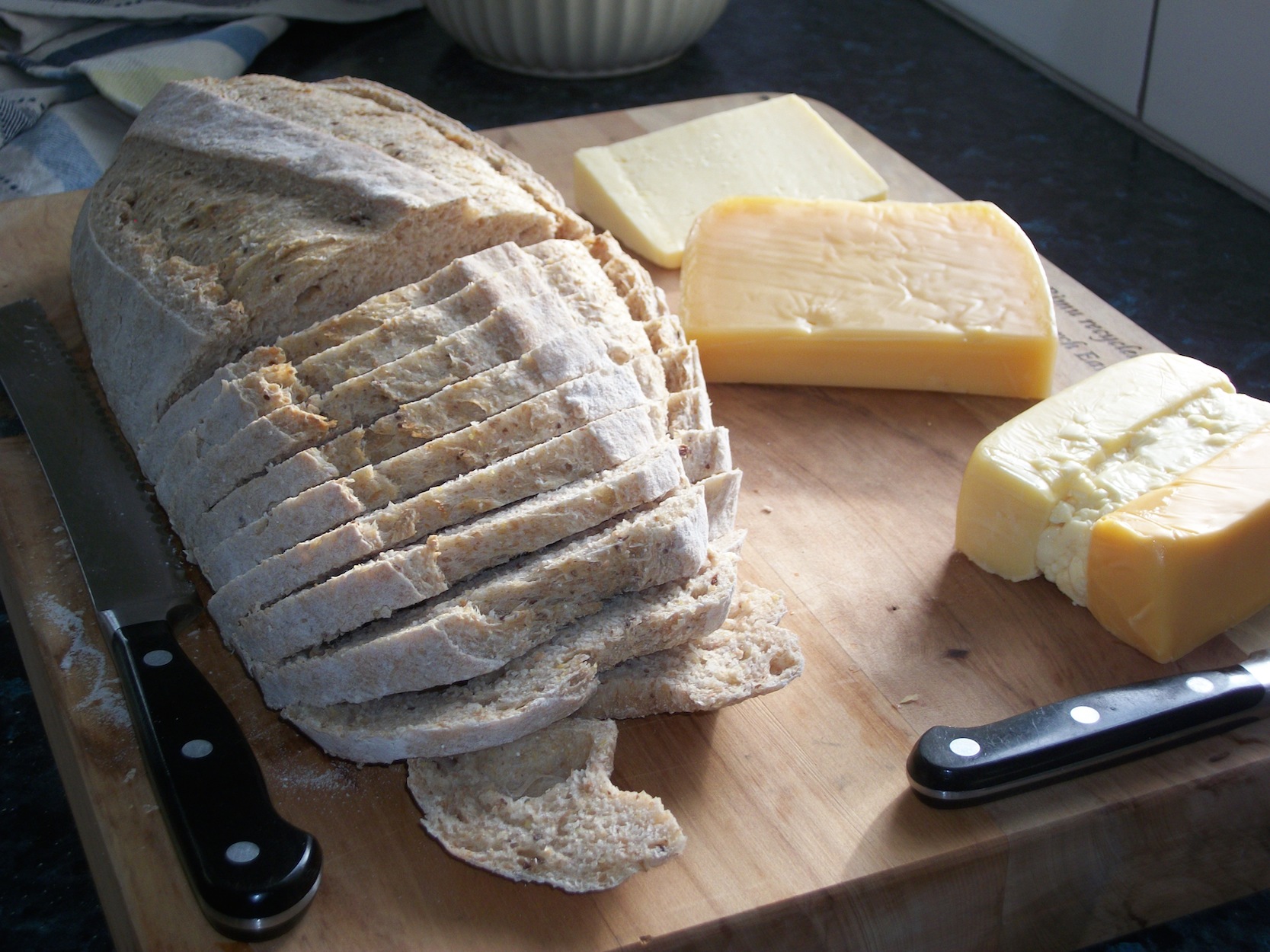
I don’t even cook much. Christmas breakfast—sticky buns—are made the night before, and left to rise in the fridge overnight. All I do is throw them in the oven in the morning. Lunch on Christmas is leftovers from Christmas eve dinner—usually calzones. Christmas dinner is salad, cheese, and bread. Easy and summery.

So I take a day of rest, and I enjoy it a great deal. I read a book. I take an afternoon nap. I do a little sewing, I play games with the kids.

The problem is the next day.

My body is obviously made to be in motion. Sitting around all day is not good for it.

The morning of the 26th of December, I can barely get out of bed, my back is so stiff and sore. I hobble around groaning for the first hour of the day.

So I’m happy to be back at work on Boxing Day, weeding, harvesting, doing the laundry. Good thing Christmas comes only once a year!