Pest Management: Control

Yesterday I wrote about strategies for preventing pest problems. If you’ve taken all the measures you can to prevent pests, but the pests arrive anyway, there are different questions to ask:

Centipedes are predators of many garden pests.
  1. Do I need to worry? Low levels of pests aren’t a big deal. A few aphids, a caterpillar here or there, the odd bite out of a leaf—these things aren’t going to have a big impact on the quality or quantity of your harvest. Just keep an eye on them to be sure the problem doesn’t get worse.
  2. Can I physically remove them? I’m a huge fan of squishing and hosing pests off plants. For example, I have problems every spring with aphids on my roses. If I do nothing, the plants become completely covered, and the blooms are destroyed. So in spring, I keep an eye on the plants, and once the aphids start reproducing, I hose the plants down once a week, knocking off most of the aphids. Usually I only have to do this about three times before the aphids’ natural enemies build up enough to keep them under control without my help.
  3. Can you disrupt a critical part of your pest’s life cycle? Is there a life stage that can be easily killed, or has specific requirements you can disrupt? For example, I keep a close eye on my brassica seedlings, looking out for cabbage white butterfly eggs on the undersides of the leaves. All it takes is a quick swipe of the thumb across the bottom of each leaf to squash the eggs and eliminate future problems with caterpillars. Another example is my recent problems with slaters in my greenhouses. Discovering that the slaters are congregating between cement blocks stacked beside the greenhouse, I’ve started regularly checking and squashing all the slaters in those blocks. (I could also have moved the blocks, to eliminate the slaters’ shelter, but since the population was quite high, I thought squishing a whole lot of them would be more effective for now. Later I will probably move the blocks to make the area around the greenhouse less attractive to slaters). 
  4. Can I make use of them? Pest-covered plants, grass grubs and slugs all get thrown over the fence to my chickens, who turn them into beautiful eggs for me and save me from the disgusting task of squishing the bugs. 
  5. Can I pull out badly infested plants? If there’s a couple of plants badly infested, but the pests haven’t spread much, rip out those infested plants and destroy the pests on them. You’ll lose a few plants, but you’ll protect the rest of your crop.
Pest-gobbling chickens.

In an IPM system, you don’t consider any sort of chemical control until you’d exhausted all the possibilities above. In practice in my garden, I almost never need anything else. Occasionally, if I’ve missed an aphid infestation on a crop that can’t handle a strong spray of water, I’ll use a soap solution to kill aphids. That’s the extent of my chemical control. But if you do need to resort to chemicals, it’s important to choose the right one. The more specific it is to your pest, the better. Many modern pesticides are narrowly focused, and target specific pests, and that’s great. With a narrow target, the pesticide is less likely to kill beneficial insects or harm people and pets. Stay away from broad spectrum pesticides. Also, if you do use pesticides, be sure to follow the label directions carefully, wear protective gear, and dispose of leftover product and empty containers properly. 

Pest Management: prevention

It’s nearly spring, so naturally my thoughts turn to the subject of pests. Our big pest-related project in the garden this year is bird netting a third of the vegetable garden, so we don’t lose most of our tomatoes and peas to the feathered rats.

Aphids–the one on the right is healthy, the one on the left has been parasitised by a wasp, one of the many natural enemies that keep aphids under control in the garden.

As an entomologist whose research focused on Integrated Pest Management, I always have a lot to say about pests. And it’s an important topic—globally, 30-40% of crop yield is lost to pests (interestingly, this figure didn’t change with the advent of chemical pesticides—insect pests are incredibly quick to evolve pesticide resistance). That’s a lot of wasted food!

For home gardeners, fighting pests is a daily task. Every place I’ve gardened has its own unique pest problems. Growing up in Lancaster Country, Pennsylvania, I remember the rabbits munching through the garden. In State College, Pennsylvania it was flea beetles that shot so many holes through my eggplants’ leaves they never had a chance to grow, and the squash bugs that clustered in masses under the leaves of my zucchinis. In Panama, leaf cutter ants could strip a plant bare in no time. 

In my first garden in New Zealand, aphids and rabbits were my main problems. When we first arrived on the property, there were so many rabbits I wondered if I’d be able to grow anything. A rabbit-proof fence was the first garden project there.

In my current garden, birds are my worst enemy—mostly English sparrows and European blackbirds. They strip seedlings bare, eat tomatoes, pull out onions, and scratch away mulch and soil, leaving plant roots to dry out (never mind the amount of chicken feed they snarf down every day!). 

Fortunately for me (and unfortunately for the pests), my masters degree focused on Integrated Pest Management (IPM), so I’m well-armed when it comes to tackling pest problems.

IPM is often called common sense pest control. In IPM, the goal isn’t to eliminate pests, but to minimise the damage pests cause, while choosing the most environmentally-friendly control methods that do the job.

To successfully use IPM, you must first know your enemy. What conditions does it like? What’s its life cycle? What are its natural enemies? How does it find your plants, and how does it travel? Books and the internet can tell you a lot, but careful observation of the pests in your garden is key. The particular conditions in your garden will affect how pests behave, and where their weaknesses are. If you know exactly where pests are and what they’re doing in your garden, you can begin to tackle them more effectively. For example, I know that in my current garden, there are particular varieties of squash the aphids like. By keeping an eye on those particular plants, I can catch aphid infestations early and deal with them before they spread to more plants.

Bird netting protecting pea seedlings

Once you know your pest’s habits, you can begin to consider control methods. Questions to ask:

  1. Can you time your plantings to avoid the damaging stage of the pest’s life cycle? For example, I don’t grow brassicas during the summer here—I have an early spring crop and a winter crop. By avoiding brassicas in summer, I eliminate bad problems with cabbage white butterflies, which tend to reach damaging levels around Christmas. I still have to be on the lookout for butterfly eggs on my seedlings, but once the plants are growing, they easily stay ahead of the caterpillars.
  2. Can you exclude the pests from your crops during critical time periods? For example, psyllids can transmit disease to potatoes and tomatoes, leading to poor growth and damaged tubers. By covering the plants with a fine mesh cloth, I can keep the psyllids out for most of the summer (until the plants are too big for the covers, by which point the psyllids don’t seem to be much of a problem). I do the same for my peas and lettuces—netting out birds until the plants are large enough to handle losing a few leaves. I also net my berry crops and olives before the fruits start ripening, so the birds don’t pick them before I do.
  3. Can you plant varieties the pests don’t like as much? For example, I plant mostly red varieties of lettuce, because the aphids take longer to discover them than they do the green ones. Usually, by the time the aphids find my red lettuces, they’re bolting and ready to pull out anyway.
  4. Can you plant a ‘trap’ crop that the pests like more than your favourite vegetables? I haven’t done this explicitly, but as I mentioned earlier, there are certain varieties of plants I know are particularly tasty to pests, and I closely monitor them and kill the pests on them before they can spread to other crops. A true trap crop is something you’re willing to pull out entirely when it is infested by your pest, in order to destroy the pest.
  5. Can you prevent pests from finding your crop? Interplanting different crops can help disrupt the spread of pests, because they struggle to find new plants to feed on. It can also help you make the most of the space in your garden. For example, I sometimes plant summer lettuces in the shade of my sweetcorn—not only does the shade help prevent the lettuce from bolting, it also seems to hide the lettuce from aphids.
  6. Can I encourage the pests’ natural enemies? Many pest insects are preyed upon or parasitised by the larvae of beetles , flies and wasps. The adults often eat pollen and nectar, so planting herbs and flowers is a great way to encourage many pests’ natural enemies.

All six of the questions above will help you avoid a pest problem in the first place. They are changes in the way you plant or grow your crops that make it less likely you’ll have pest problems. Tomorrow, I’ll look at what you can do once you’ve discovered pests in your garden.

Mt Richardson–a beautiful winter hike

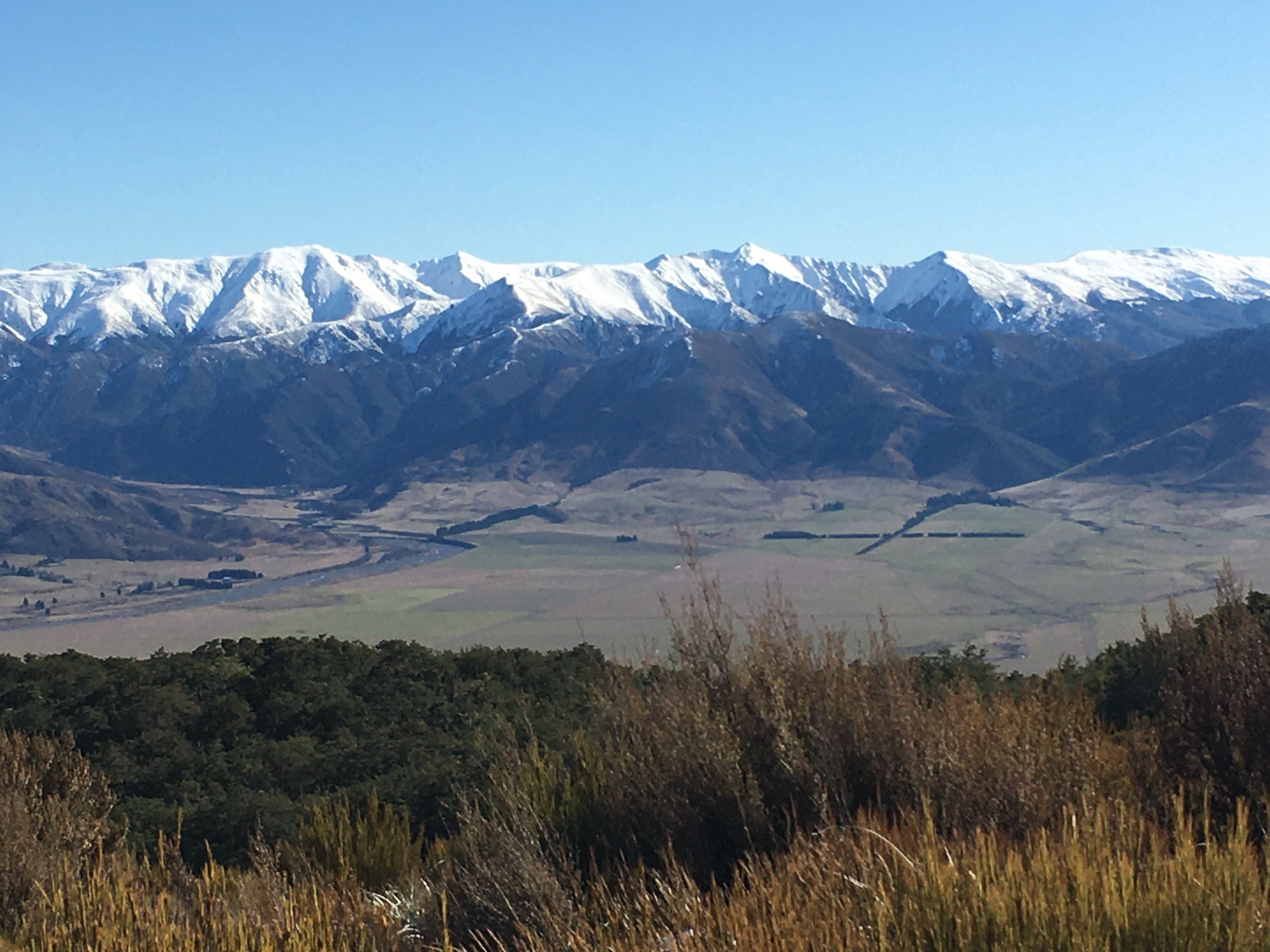
View across Lees Valley from Mt Richardson

Injuries and weather have conspired to keep me out of the mountains for months, but my husband and I finally made it to the hills a few weekends ago.

It wasn’t a big trip—just a little jaunt to the top of Mt Richardson, one of the foothills around Oxford.

At only 1047 metres tall, Mt Richardson doesn’t get above tree line, but a clearing at the top provides a great view of the ‘real’ mountains beyond.

The day we went was sunny and nearly windless. There was snow on the ground, but we ate lunch at the top in our t-shirts, enjoying the stunning panorama spread out around us.

I would say that the only things that diminished the perfection were the mud, the slip that took out a section of track (necessitating a bit of bushwhacking) and the washed-out bridge that meant wading through an icy stream, but those things only added to the fun. 

I look forward to better weather and more outdoor adventures as we head into spring.

Ready, Set, Plant!

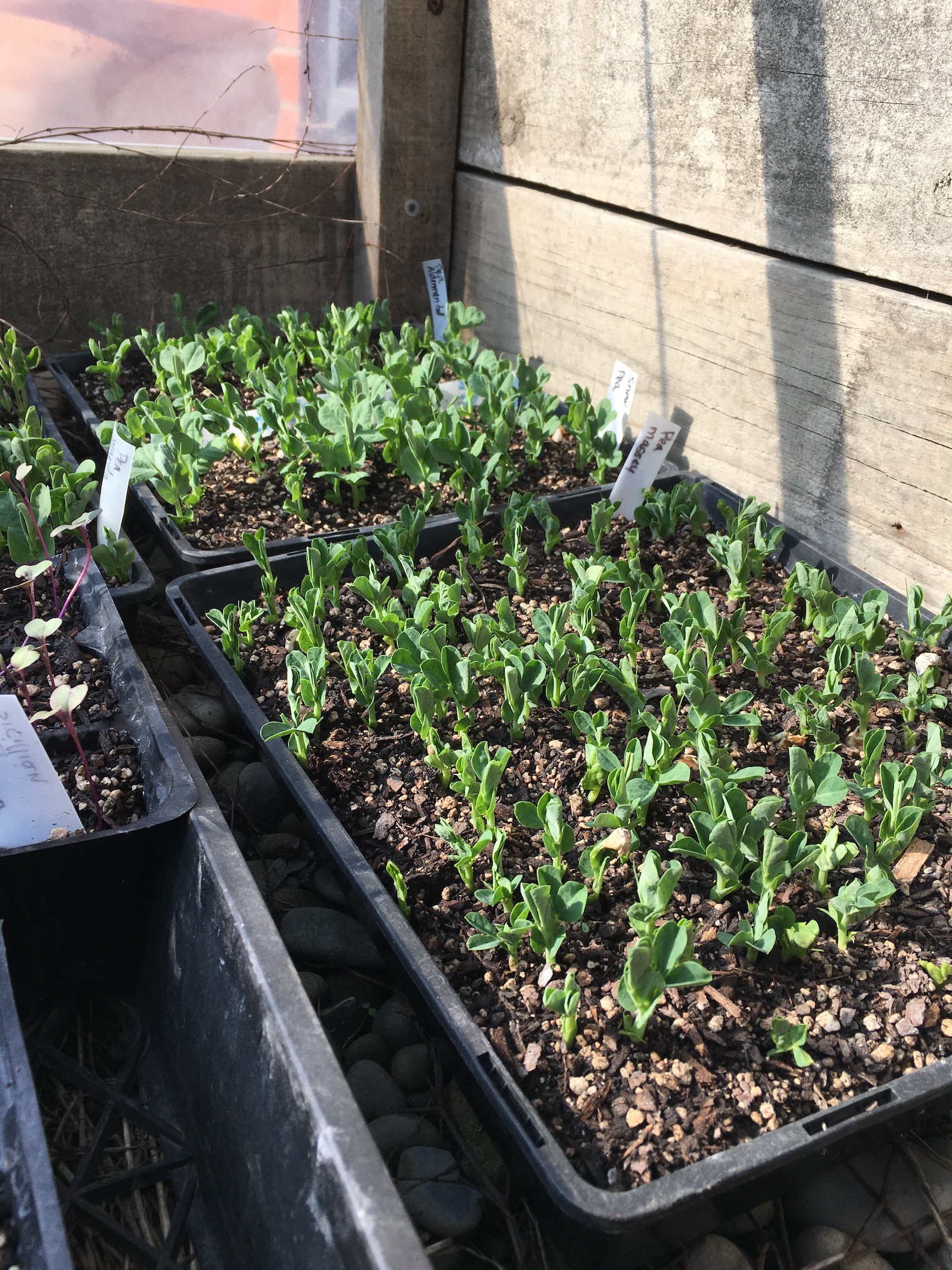
Looking forward to scenes like this in the coming weeks …

My seed order arrived last week, and I’ve stocked up on seed raising mix in preparation for this coming weekend.

The middle of August marks the start of spring planting, even though officially spring is still two weeks away (in spite of this week’s cold and snow).

This weekend I will plant hundreds of vegetable seeds—broccoli, cauliflower, cabbage, lettuces, spinach, onions, peppers, eggplants, herbs—a combination of early crops that can handle the cold and slow-growing late crops that need a long time in the greenhouse or indoors. 

This weekend is always a bit exciting and a bit daunting. Daunting because whatever winter projects I had going are doomed to the back burner until next April. Daunting because of the vast amount of work to get done in the coming months. And exciting because of the pleasure I get out of growing delicious food, and the joy of trying out new varieties of vegetables each year (this year, I’m trying Bartowich Parsley for the first time, a purple snow pea, a new hot pepper, and a couple of new tomato varieties).

I used to get overwhelmed at this time of year by the sheer amount of work ahead, but I’ve learned to manage the work, and more importantly the stress, by creating a weekend-by-weekend to-do list that runs from mid-August through the end of November. The list includes all the annual garden tasks associated with spring—planting seeds, potting up seedlings, preparing garden beds, setting up trellises, cleaning greenhouses, maintaining irrigation lines, fertilising weeding, mulching … With everything on the list, I know I won’t miss any tasks and everything will be done on time.

Obsessive compulsive? Yeah, probably. But it means I can fully enjoy each and every task without stressing about the fact I’m NOT doing something else. 

So from tomorrow, if you need to catch me on the weekend, I’ll be in the garden. 

Planning the Next Novel

While I wait for my beta readers to read Fatemaker, I’ve been planning the sequel to Demonic Summoning for the Modern Woman. I’ve spent a lot of time the past two weeks staring off into space while I think, researching really weird things, and taking long walks while I sort out ideas.

I do my planning on paper, with a pencil, because it helps my creativity.

I’ve learned a lot about planning a novel since I made my first, aborted (and truly dreadful) attempt at one. 

I’m definitely a planner, rather than a pantser when it comes to writing novels. I find writing the first draft difficult, and have learned that the better I plan, the easier the first draft is to write. I thought I had a pretty good system in place, but when I sat down to write Fatemaker I found my planning completely inadequate, because there were so many threads to draw together in the final book of an epic fantasy series. So I wrote a chapter by chapter plan of the book, summarising what had to occur in each chapter in order to wrap up everything by the end of the book. It probably took a week to create that summary, but by the end of the week, I had a detailed guide for my story, and I could focus on it chapter by chapter as I wrote, without worrying that I was forgetting something. I wrote the first draft in three weeks, rather than my usual six to eight weeks.

So I’m following the same process for the second book of the Rifton Chronicles, even though this book is not overly complex. Hopefully it will make the first draft fly onto the page.

My current planning process looks like this:

  1. Develop the basic premise for a book.
  2. Establish the world in which the story will take place. This includes creating a timeline of any historical events that impact on the story and details of any magic systems I’ll use.
  3. Develop the characters who are best suited to be my protagonists and antagonists. This includes not only their personal background, but also their ancestry, relationships, strengths, weaknesses, and habits. I never concern myself with physical characteristics unless they have a direct bearing on the plot. If you asked me what my characters looks like, I couldn’t tell you.
  4. Create a 1-page outline of the major plot points. Usually I do this in the form of a story mountain—yeah, primary school stuff, but it works for me. This outline includes key events—inciting incident, try-fail cycles, climax and conclusion, and puts them all on a specific timeline, so I know details like what season it is when I am writing.
  5. Determine the story arcs of each of the main characters. Usually this is a couple of paragraphs per character, which I add to the character descriptions.
  6. Write the blurb. I know this seems counterintuitive—how can you write the blurb before you’ve written the story? I used to struggle writing blurbs, because there were so many story details in my head, I didn’t know what to highlight in the blurb. The blurb needs to convey the genre, conflict, and just enough detail to hook readers into picking up the book. I’ve found it is MUCH easier to write this when that’s all I know about the book. When I’m not sick of the bloody story after weeks of writing, months of editing. When the story is still as shiny and new to me as it will be for potential readers. It also gives me a touchstone as I’m writing and editing—am I delivering what I said I would in the blurb? Is my story still conveying the awesome ideas I started off with?
  7. Write a chapter by chapter summary of the story. I know my books tend to run about 30 chapters, so I divide the story into thirty chunks, then start placing the major plot points and filling in the details. When I did this for Fatemaker, I had a couple of blank chapters near the end, but also had the feeling some of the chapters were going to need to be split into two once I started writing. In the end, I had 34 chapters, so it deviated a bit from my plan, but only in volume, not substance. For the second Rifton Chronicles book, I know I will have six historical ‘interludes’, so I’ve spread these evenly through my chapters, and am building the modern part of the story between them.

Oh, yeah, and there’s the staring off into space, researching bizarre things, and taking walks—those are critical components of every step in the planning process.

Baking Disaster

A rainy weekend, an empty cookie jar … why not try out a new cookie recipe? 

In general, I love the recipes in King Arthur Flour’s Whole Grain Baking book. So I thought I’d try a new one—a cookie recipe called All Oats All the Time. 

It’s an intriguing recipe with ground oats and nuts instead of flour. It’s also pretty low in fat, for a cookie.

My first warning was the texture of the dough. It was quite wet. I re-read the recipe to make sure I hadn’t forgotten any ingredients—nope, everything was in there. Still I hesitated—should I add a little flour?

No. King Arthur recipes are good ones—this would be fine. I carried on, dropping teaspoons of dough onto my greased cookie sheets. 

Five minutes in the oven, and I knew I had a problem. The cookies had spread into one another. Not horribly, but creating the thin edge, thick centre combination characteristic of a dough that’s simply too wet.

Okay, fine. They wouldn’t look nice, but they’d be okay.

I pulled them out of the oven before those thin edges burned. The recipe said to let them cool five minutes on the pan before removing them. Once again I hesitated. Would those thin edges lift off after five minutes?

Once again, I went with the recipe. 

After five minutes, those cookies were virtually cemented to the pans, and they’d turned super crisp, so the moment you managed to wedge the spatula under one, it shattered.

I experienced a moment of despair, thinking I was going to spend an hour chipping inedible cookies off the pans, and then scrubbing the pans until all that baked-on gunk was gone. But then I thought of cheesecake crust, and how these crumbly cookies would make a lovely crust, or maybe a fruit crisp topping. And once I no longer cared if the cookies crumbled, it was a snap to scrape them off the pans. The pans came clean easily after a short soaking. 

On Monday, I picked up the ingredients for cheesecake and made little cheesecake cupcakes using my crumbled cookies in a crust, with a little sprinkling of crumbled cookie on top. The results are pretty darned good—certainly better than the original cookie alone.

I’ve still got a fair bit of crushed cookie left—it has gone into the freezer for use in some other interesting way.

So maybe the cookies weren’t such a disaster after all.

Matariki Lights

Photo by Klemen Vrankar on Unsplash

On the eve of Matariki, I woke to an empty house, which meant I didn’t have to tiptoe around being quiet until my husband woke. 

The morning being dark and cold, I decided to start the day with music, and because we’re so close to Matariki and the promise of longer days to come, I searched up music with the word light in the title.

So my day started with Phil Collins’ song, Dance Into the Light, Lorde singing Green Light, Light (My Time Has Come) by Madison Ryann Ward, Nu Aspect’s Light, and One More Light by Linkin Park.

What a great way to start the day, to start the new year, to celebrate all that has passed and all that is to come.

Whatever your plans for celebrating Matariki this weekend, I hope it is full of the light cast by people you love and things that make you happy. 

And as I look forward to the coming growing season, the challenges and opportunities that the coming year has in store, I’m going to try to inject more music into my mornings.

So come on, dance into the light with me. Here’s a little poem I scribbled down on the solstice—it’s equally pertinent for Matariki.

On the darkest day
We turn to the light,
Hope for a ray to warm our cheek.

On the darkest day
We look to the stars,
Imagine constellations
To guide our stumbling steps.

On the darkest day
We light a fire,
Praying the kindling
Is still dry.

On the darkest day
We gather our whānau,
Tell stories of sunlight.

On the darkest day
We find comfort in the night,
In the slow circle of the seasons,
The dance of faraway suns
Across a black sky.

On the darkest day
We recall deeds of light,
Sun-dappled paths,
And warm sand.

On the darkest day,
Even on the darkest day
There is light.

Butter, Butter … and more butter

I checked out a cookbook from the library last week called Butter, Butter, by Petra Galler. I was sold on it before I even opened the book—the subtitle is ‘Sometimes more is more.’ The photography is dark and sensual, with lots of dripping honey, and hands smeared with berries and icing. Who could resist?

Indeed, I’ll be looking for this book next time I’m in the bookstore—it’s one I’d like to have on hand permanently, not just for a few weeks.

I want to try everything in this book. Petra is a Jewish New Zealander, and her recipes combine traditional Jewish dishes with modern Kiwi flavours in a way I find intriguing.

Yesterday I tried her recipe for Mandelbrot, a twice-baked cookie similar to biscotti, but higher in fat, so it has a more delicate texture. 

As you would expect from a book titled Butter, Butter, these cookies are rich—full of butter, eggs, nuts, and chocolate. Although they take some time to make, they’re not difficult, and the end result is beautiful and delicious.

I haven’t had a chance to make anything else from this book yet, but next on my to-bake list is Tahini Shortbread with Salted Chocolate Ganache, then Almond Butter Brownies, then Miso and Roasted White Chocolate Cookies, and then … Seriously, I need to go purchase a copy of this book. You do too. Here’s the Mandelbrot recipe, but don’t stop there. Buy the book. And a few blocks of butter …

390 g plain flour
2 tsp baking powder
1 tsp flaky salt
1 1/4 tsp ground cinnamon
1/4 tsp ground nutmeg
245 g butter, melted and cooled
200 g caster sugar
2 tsp vanilla paste
1/4 tsp almond extract
zest of 1 lemon
zest of 1 orange
3 eggs
180 g dark chocolate, roughly chopped
100 g walnuts, roasted and roughly chopped

For dusting:
30 g caster sugar
1/4 tsp ground cinnamon

In a medium bowl, combine all the dry ingredients, mixing well.

Place the butter, sugar, vanilla, almond extract and zests in a large bowl and whisk with a mixer until combined. Add the eggs one at a time and mix until thick and pale; about 2-3 minutes.

Working by hand, gently fold the dry ingredients into the wet until just combined. Add the chocolate and walnuts, and mix well. Cover the bowl and refrigerate 1-2 hours until firm.

Preheat the oven to 175℃ fan-bake. Grease a large baking sheet.

Turn the dough out onto a lightly floured surface and divide into two pieces. Form each piece into a log about 33 cm long and 5 cm wide. Place on the prepared tray and bake for 25 minutes.

Allow to cool for 10-15 minutes. Reduce the oven temperature to 130℃ fan-bake. Then cut the logs diagonally into 2 cm thick slices. Sprinkle both cut sides with the cinnamon/sugar mix, and bake them, cut side up for 20 minutes. Flip the slices over, then bake another 20 minutes. 

Allow to cool completely on the pan.

Winter’s Gift

Here in the dark part of the year, the lack of daylight can be depressing. Rise in the dark, eat breakfast in the dark, have a few hours of light, then eat dinner in the dark, go to bed in the dark … And even during the day, shadows are long, and the frost lingers in every chilly pocket of the yard. The trees across the road cast shade on my office windows for much of the day, so even the sunny side of the house can feel dark.

But the low angle of the sun in winter comes with its own beauty. While my office is mostly shaded, the trees don’t provide complete shade. Shafts of sunlight track across my office as the sun moves. An antique chandelier crystal my husband bought me years ago catches the sun’s rays and fills my office with thousands of rainbows that appear and disappear throughout the day, shimmering on the white walls and ceiling and splashing across the floor. 

In summer, the sun is too high to hit the crystal—it’s shaded by the eaves. I could hang the crystal lower, so it made rainbows all year, but I like to think the rainbows are winter’s gift to me. They’re something to look forward to during these short days.