Technology Woes

It’s been a difficult week for me and technology. On day two of my two-week break from my day job, my ten-year-old laptop died. I’d hoped to finish the first draft of the novel I’m working on during my break. No such luck.
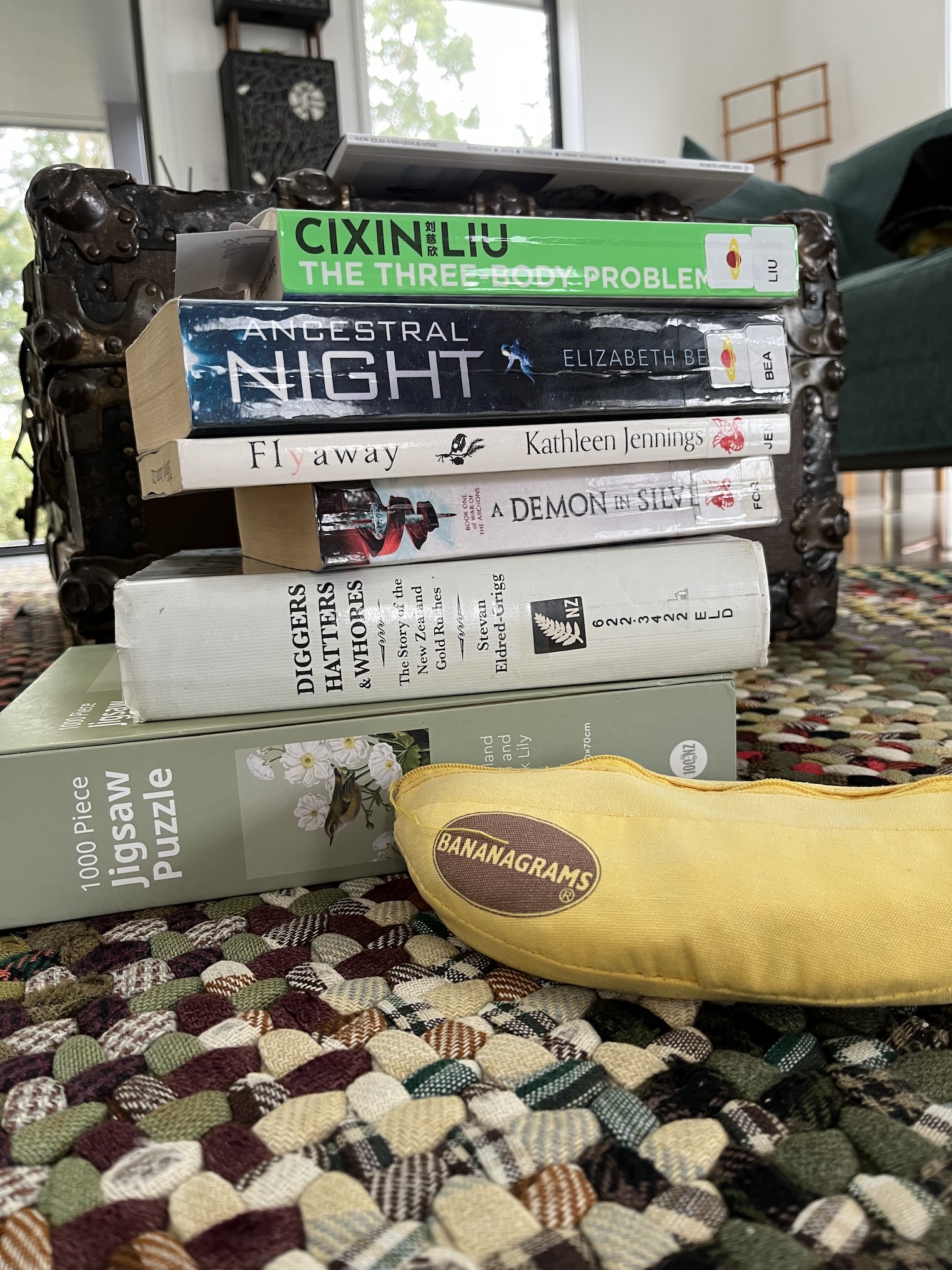
This week’s entertainment.

On the same day that my laptop died, my phone had to be recharged four times, because the battery was draining completely every couple of hours, even when I wasn’t using it.

So it’s been a very expensive and frustrating week, and now I have a new phone and a new laptop. I will admit it is nice to not have to carry an extra battery for the phone with me all the time, and it’s nice to have a computer with a fully functioning keyboard, but the upgrades have been quite disturbing, too.

Having not updated my devices for a decade, all my apps were old versions. The new ones have a zillion more features than I’m used to. Almost none of the new features increase the apps’ functionality. The ‘upgrades’ are primarily aimed at urging me to consume more advertisements on my device and making it easier for me to spend money. I find it quite depressing.

The rebellious part of me has decided that, in response to the upgrades, I’m going to do my best to spend even less time on my devices. The computer is pretty well unavoidable, because of my occupation, and I’ve never been one to spend personal time on the computer. But the phone tends to be what I grab during my leisure time. I admit, I have six different e-reader apps on the phone, and I read tons of ebooks, which is what occupies most of my phone time. But I also play a couple of games on the phone, and I read the news. I’m easily sucked into social media on the phone, too. So there’s lots of room to limit my phone use.

First job was to delete the games. I’d already deleted one, several weeks ago, because I realised I was using it to procrastinate, and I didn’t even really like it. I haven’t missed it at all. So the other two games have now gone.

Then, while I was out and about this morning, I stopped by the library. I checked out an armload of books, and also a jigsaw puzzle. Books are fantastic, but I do need the brain rest that those games on the phone or scrolling social media provide. Jigsaw puzzles will serve the same purpose, with the bonus that a jigsaw comes without advertisements and auto-play videos, and invites others to join in the fun. 

I also need to remember my love of playing solitary Bananagrams. It’s not as fun as facing off in a frenetic game with my daughter, but I enjoy coming up with different challenges. Last night I tried making the densest board I could, with nearly every letter forming part of two words. Way more rewarding than scrolling through Facebook trying to find posts by my actual friends between drifts of advertisements.

Will I still read the newspapers on my phone? Yep. And I’ll still carry it with me, in order to stay in touch with my family and take photos. And I’ll maintain my presence on social media (not that I use it much in the first place). But I reject my new apps’ insistence that I share more information with them so they can feed me advertisements. I reject Apple Pay. I reject the notion that my phone is there for the purpose of selling me more and more and more things I don’t need. I reject the assumption that I will blindly agree to be nothing but a source of income for corporate executives.

My entertainment is going analog.

Will my stand have any impact on the Mark Zuckerbergs of the world? Nope. But it will have an impact on me.

Compost–a really rotten subject

Talk to a serious gardener for more than a few minutes, and you’ll probably hear about compost. We all have our own composting methods, and we’re all passionate about how well our methods work.

If you go on line and search how to make compost, you’ll find a range of suggestions, most of which involve building your pile with ‘green’ and ‘brown’ layers. There are lots of suggestions about what to, and not to, put in your compost, and how often to turn it. I find many of these suggestions take a lot more time and effort than I’m willing to put into my compost, and they don’t necessarily take into account the effects of climate on compost making.

I’ve made compost in Pennsylvania, Minnesota, Michigan, Ohio, Panama, and New Zealand. Every place I’ve done it, it needs to be done differently. Few of my compost piles have followed the ‘rules’, yet I’ve almost always gotten fine compost out of them.

In Panama, the compost pile needed to be protected from too much rain, or it would get waterlogged and go smelly and anaerobic.

At our first place in New Zealand, the compost pile needed to be watered regularly and covered with a tarp or it would dry out and not rot at all.

Our current location is a sweet spot for compost making—not too wet and not too dry. It’s almost impossible to avoid making compost, because plant material rots beautifully. But making a ‘proper’ compost pile speeds up the process.

I have two compost bins measuring 2 m by 2 m. One serves as a holding bin for plant waste while I use the finished compost from the other. When one bin is empty, I turn the material from the holding bin into the empty bin.

As I turn the compost out of the holding bin, I layer it with manure and give it a good watering to ensure that there aren’t dry pockets in the pile. I don’t follow the ‘green’ and ‘brown’ layer guidelines, but I do try to make sure that woody debris is well mixed with leafy green stuff, and that there’s a good amount of manure in the mix, too. I find the key is not so much the exact nature of each layer, but that I don’t end up with a thick mat of one hard-to-compost thing. The manure and the watering both give the pile a good kick to speed up decomposition, and in the days after the pile is turned, the smell of rotting vegetation can be strong, and the pile reduces in size rapidly.

As for the rules about what goes into a compost pile, I ignore them all. Cheese and other oily things go right in, as do non-recyclable paper products like butter wrappers, paper towels, greasy paper bags, and used baking paper. They all break down just fine, particularly because they form such a small component of the total pile. Do those things attract rats, as the composting guides suggest they will? Yeah, probably, but rats are also drawn to my vegetable garden, where they eat raw potatoes underground, pumpkins on the vine, and peas and beans off the plants. ANY vegetable material in the compost is going to attract vermin—I’m not sure a greasy butter wrapper is going to increase the number of rats attracted to the compost. I keep a trap next to the compost pile to snap up rats and hedgehogs as they arrive to feast. Any animals my trap catches go right into the compost pile, to give back whatever nutrients they’ve consumed from it. The neighbourhood cats also help keep the rodents in check. These rodent-control measures are necessary, but they’re no more than I’d already be doing, as rats and hedgehogs are a problem everywhere here.

I do try to make sure that plant material is chopped into short pieces before I put it on the compost. This not only helps it break down faster, it makes turning the pile much easier.

And there are a few things I won’t put in my compost pile. Thick branches take far too long to rot, so they get chopped into short pieces and spread under the trees in the native garden. And twitch (couch grass) gets put into black rubbish bags for about 18 months before going on the compost—otherwise it will sprout and grow through the compost, then plant itself all over the garden when I spread compost. Twitch is an aggressive weed that’s almost impossible to eradicate once established, so it’s worth keeping it out of the vegetable garden at all costs. I’ve learned this lesson the hard way over the years. My rule of thumb is that until the twitch has rotted enough that I can’t identify it, it could still grow. A year and a half tied up tightly in a rubbish bag seems to be what it takes to reach this stage.

Although the centre of my compost pile can get quite hot, not all of the pile reaches the high temperature needed to kill weed seeds, so I do have weeds in the compost. But I don’t particularly worry about weed seeds. All the weeds in the compost came from the garden in the first place, so I’m not introducing new ones, and aside from twitch, the weeds are manageable. I have considered sterilising small quantities of compost in the microwave for use in seed raising mix, where I don’t want any weeds, but have never tried it.

Overall, I think too much emphasis is placed on making compost the ‘right’ way, and it can scare some people off even trying. But decomposition is a natural process that happens whether we “compost” or not. By setting up even a small compost bin, and making sure the compost stays moist but not waterlogged, so bacteria, fungi and invertebrates to do their work, gardeners can reclaim nutrients from their plants and return them to the soil. It may take a little trial and error to find out what works best for your climate and your level of enthusiasm for compost management, but it’s well worth the effort.