The Little Things–Hakatere Conservation Park

As usual, I spent most of the long Labour Day weekend in the vegetable garden. I weeded, prepared garden beds, and planted my cucurbits in trays.

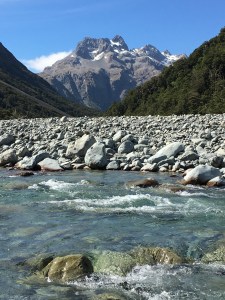
Lake Clearwater with mountains
Lake Clearwater was a mirror in the morning’s still air.

But as they say, all work and no play … I didn’t want to spend the whole holiday weekend sweating in the garden.

So on Monday my husband and I went to Hakatere Conservation Park and sweated on Mount Guy instead.

The Ashburton Lakes region is a glacially formed landscape dotted with lakes and tarns. The land around the wetlands is largely tussock grassland studded with spiny matagauri bushes. An unforgiving, windswept landscape that can feel downright bleak.

That was my impression the first time I visited. Fifteen years ago, I was hired to develop an interpretation plan for what was then a proposed park only. I had the great fortune to tour the area with a Department of Conservation ranger who had worked in the area for decades and had a great love of the landscape. He showed me the little things—not necessarily obvious at first—that set the region apart. Rare insects (including an aquatic moth!), waterfowl and lizards. Unique and diverse plants. Historical use of the land, and massive changes over geologic time. There’s a lot more than meets the eye.

skink
One of the many skinks we saw.

On Monday, we were treated to a glorious day—sunny and calm at first, with a brisk breeze kicking in just when the day began to feel too warm. We parked at Lake Clearwater and hiked the track to the summit of Mount Guy. On our return, we followed the tussocky ridge down to a saddle where we picked up Te Araroa, following the track back to the edge of Lake Clearwater where we completed our large, loopy circuit of the lake.

mountains and river valley
View from near the top of Mount Guy. Mount Sunday is a small mound in the river valley, just to the right of centre in the photo.

The hike afforded stunning views of jagged, snow-capped peaks, and a view of Mount Sunday down in the river valley.

Oddly, out of all the “mountains” in the park, Mount Sunday may be the most famous. The hill was used as the location for Edoras in the Lord of the Rings movies. In the enormity of the surrounding landscape, however, it is an insignificant lump of rock.

Perhaps, like the hidden insects, birds, and plants, it is the little details that are the interesting bits.
Asparagus, Asparaguses, Asparagi?

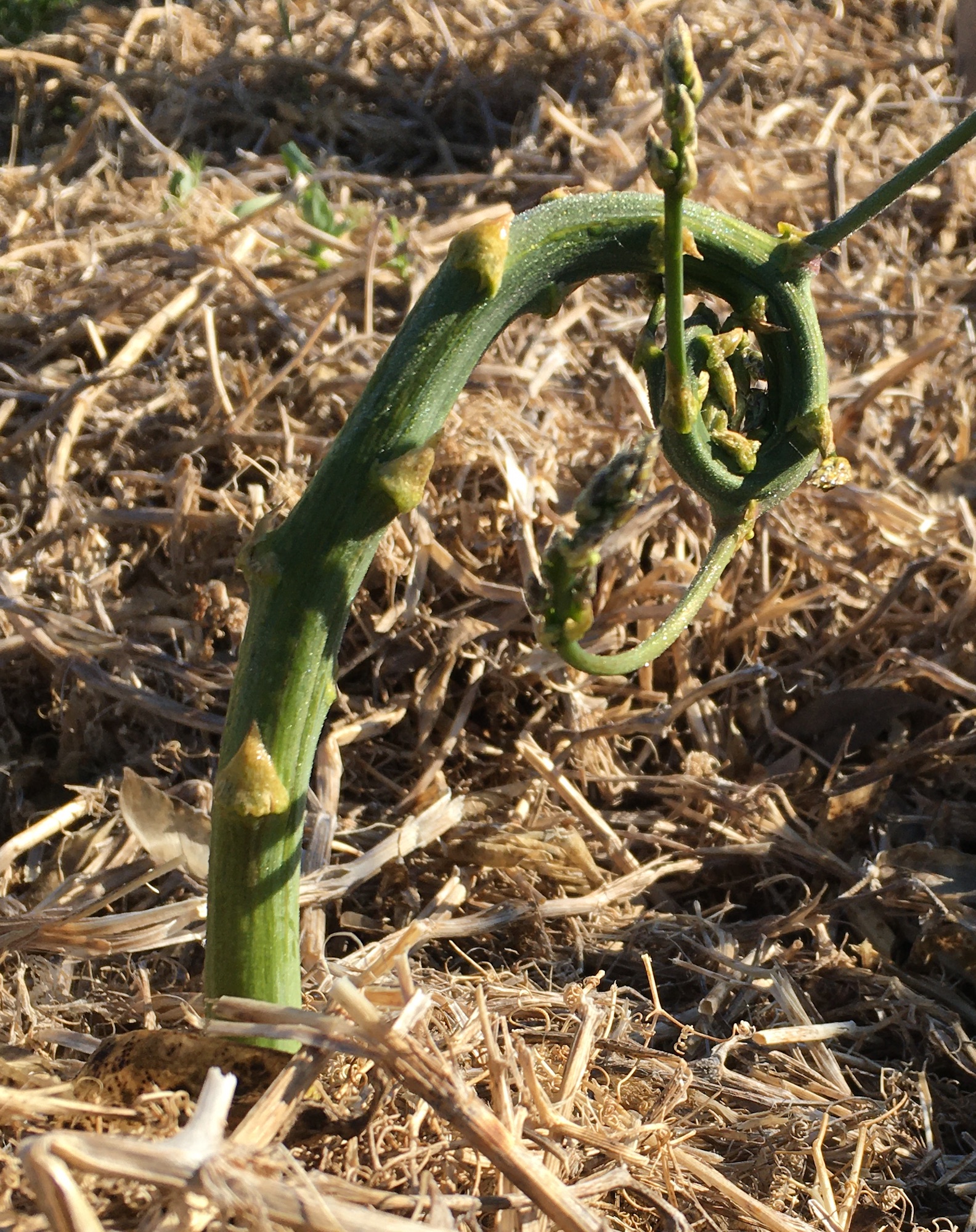
asparagus spear infected with phytophthora
Asparagus spear infected with phytophthora

It’s asparagus season, and we are enjoying spears from our own plants, though not as many as we’d like.

We moved crowns from our old house to the new, and have had rather mixed luck. Some didn’t survive transplant. Others grew poorly last year, and did not show their faces this year. Still others sprouted this year, but have been succumbing to phytophthora infection—a new challenge for us.

Phytophthora asparagi is an oomycete. Its long-lived spores overwinter in the soil and infect asparagus roots and spears. Phytophthora infection interferes with water transport in the stem, causing shrivelling and a ‘shepherd’s crook’ curl to the spears.

Oomycetes were once thought to be fungi, because their growth forms can be similar. They are, however, genetically distinct and are now known to be more closely related to kelp than fungi. Many oomycetes are plant pathogens, and some, like late potato blight, sudden oak disease, and Phytophthora asparagi are of economic importance.

We never had trouble with phytophthora at the old place—our well-drained soil with excellent nutrient levels kept it at bay. But at the new property, the heavy clay soil devoid of nutrients provides perfect conditions for phytophthora growth. 

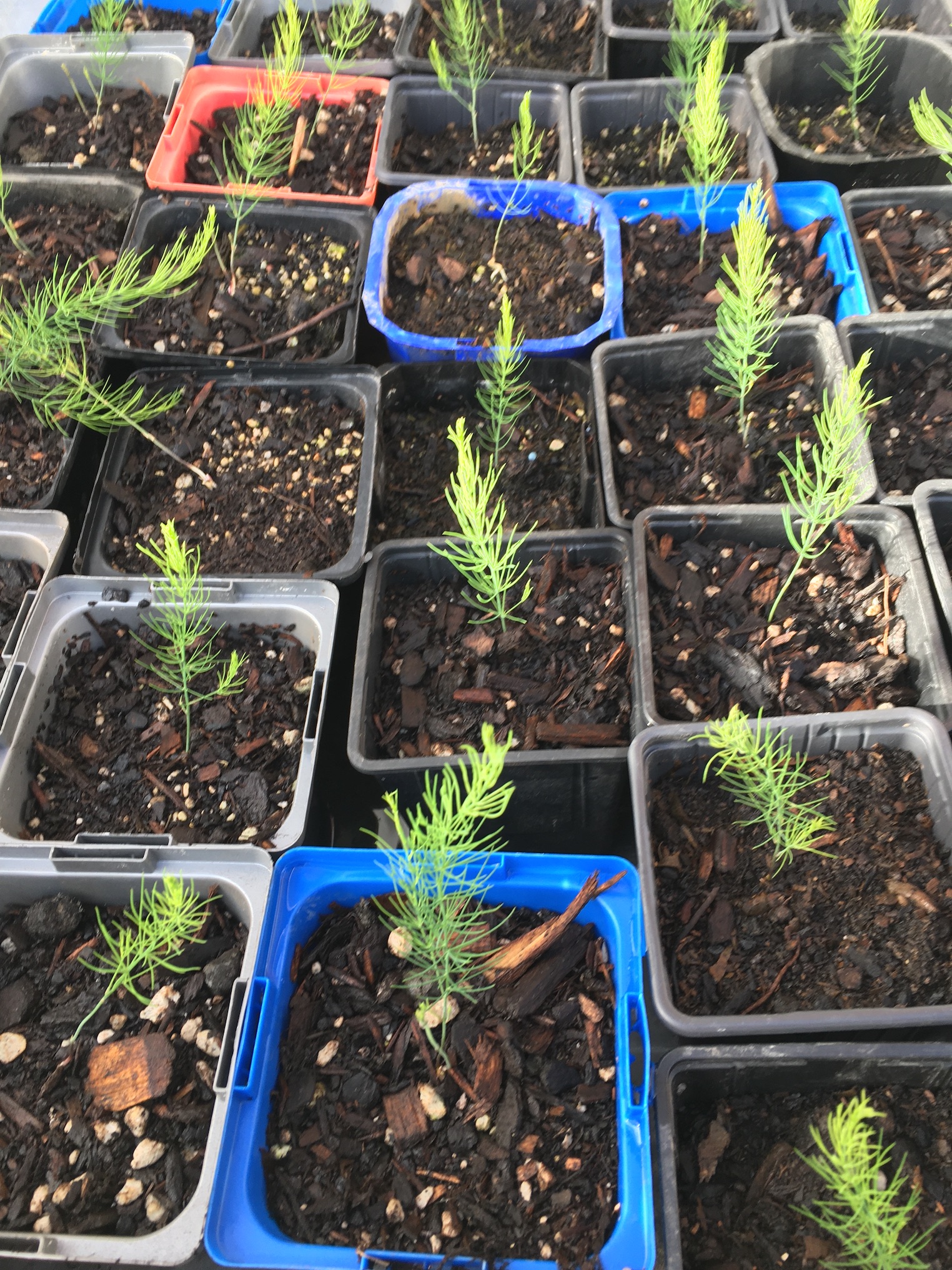
Two months ago, before we’d identified phytophthora, I planted a packet of asparagus seed. I wanted to fill in the gaps in the asparagus bed, where our transplanted plants had died. Now, with 38 beautiful asparagus seedlings in the greenhouse, I’ve got a different plan for them.

Michigan State Extension recommends fungicide and careful selection of planting site to control phytophthora. I’d like to avoid the fungicide, but I can manage the soil, at least a little.

asparagus seedlings

My little seedlings will need about 18 months in pots before I can plant them out. That’s plenty of time to prepare a special raised bed for them, filled with compost, sand, and soil for high-nutrient, well-drained growing conditions. In the meantime, we’ll enjoy the asparagus we are getting, and do our best to keep the old plant alive until the new ones can be harvested.

And, just so you know, the plural of asparagus is asparagus.

October Book Promotions

Whether you’re heading into autumn or coming into spring, October is a great month for reading. (Okay, EVERY month is a great month for reading!) This month, I’m participating in a pair of promotions with other authors, so if you like fantasy, get ready to go wild, because there are some fabulous reads here.

The first is a selection of free Fantasy books for Children and Teens. The selection includes The Dragon Slayer’s Son and a whole bunch of other great books. Definitely worth checking out!

The second is a fabulous group of fantasy books ranging from teen to adult titles that includes Fatecarver. Check out the list. Who knows? You may find your new favourite author here!

The Organised Gardener

Garden map and to-do lists

We’re in the middle of the spring school holidays. This two-week block of time off of the day job is always a busy gardening time. There are garden beds to prepare, vegetable seedlings to plant out, seeds to start, seedlings to pot up, and of course the weeds are running rampant everywhere. There’s never enough time to do it all.

This is the time where panic sets in—I’ll never have plants in the ground in time, the weeds will take over all the vegetables I planted earlier in the spring, the birds will eat all my pea plants before they get going, hail or frost will kill tender plants … I have a thousand worries at this point in the gardening year.

This is the time of year when my garden plan is absolutely essential. In mid-August, when I plant the first vegetable seeds, I create a garden map and a week by week to-do list. Every task—planting seeds, preparing garden beds, potting up seedlings, installing or fixing irrigation lines, netting crops, etc—is added to the list on the appropriate weekend from August to mid-November when I finally plant out the last vegetables. Each weekend, I need only worry about the items on the list for that weekend. I can ignore the burgeoning weeds in one place, and the swaths of winter-feral garden in another, because I know that those areas are on the list—I’ve got a plan that will make sure that by the time a plant is ready to go into the garden, the garden will be ready for it.

Of course, sometimes things get out of hand—a week of warm wet weather might speed up weed growth, or an unexpected frost might nail some tender plants and require replanting. I’m always adjusting the list, adding things or shifting tasks from one week to another, but having the plan means I can stop panicking. It means I don’t prepare a bed so early, that it needs to be weeded again before I can plant in it. It means I don’t forget to do an important task at the right time. It means that, if I spend a weekend hiking, I know exactly what I need to accomplish in the evenings during the following week in order to catch up on the work.

In short, it means I can relax and enjoy springtime—enjoy the work, rather than stress about it.

Sometimes I’m embarrassed by my stacks of lists and hyper-organised garden schedule. But here in the thick of springtime planting, I’m extremely thankful for the part of me that insists on organisation.

Sunshine in a Teacup

I woke up to the sound of rain today. Not an unwelcome sound—the seedlings in the garden will appreciate it. Still, a rainy day inspires a certain amount of decadent self-care to banish the mental chill (even if it is perfectly comfortable indoors). 

My decadence this morning came in the form of pulling out a Sunday teacup for my coffee. 

We bought two of these cups at Driving Creek Railway in the Coromandel a few years ago—a Christmas gift to ourselves, and a real splurge. They’ve become our special occasion coffee mugs—used on Sunday mornings and Christmas Day only. In my mind, they’re associated with relaxation, holiday, and decadence.

So on this rainy morning, with a day of intense work on the next novel ahead of me (and no sunny-day excuses to get me out of it), I thought I needed a little motivation in the form of a special vessel for my coffee. A tiny thing, but it has made my day sunny, despite the rain outside.

Inspiring Landscapes

When I was writing my Dragon Defence League series books, I delighted in placing my characters in some of my favourite places in New Zealand—the mountains of Fiordland, Kahurangi National Park, Waimangu Volcanic Valley, and many others.

But New Zealand’s landscapes infuse my latest book, Fatecarver, even though it is set in a purely fantasy world.

While I was writing Fatecarver, I kept imagining specific places in New Zealand. I sat on a peak near Arthur’s Pass and imagined my characters there. I scribbled down descriptions of real views, storms, trees, and hikes to use in the book.

I took the New Zealand landscapes and mixed and mingled them with favourite places in the United States, Panama, Peru and Bolivia until the Fatecarver world included elements of a lifetime of adventures. 

Many of my fellow authors are adventurers like me. We take inspiration for our writing from dramatic landscapes and other settings we’ve experienced. The landscape becomes a character in its own right, thwarting other characters’ plans, throwing up challenges, or providing aid at a critical moment. Just like real landscapes do.

Natural landscapes play a huge role in my own real life adventures—it’s only natural to include them in my fictional ones.