Pandemic Poetry–2021 edition, #6

It’s a gorgeous day here. I intend to take full advantage of lockdown and spend my afternoon in the garden. 

I thought I’d play around with different poetry styles this week, since Friday is National Poetry Day. Today’s is a Dansa. The Dansa structure: the first stanza is 5 lines, with the last line a repeat of line 1, and the rhyme pattern AbbaA; subsequent stanzas are 4-lines long, with the first line repeated as the last line of each stanza, with the rhyme sequence bbaA. 

Work together by staying apart.
Free from our bubbles for nearly a year
Spared the worry, sickness and fear
That gripped the world right from the start
Work together by staying apart.

Vaccinate is what we must do
Because this thing is more than the flu.
Protect the ones dear to your heart.
Work together by staying apart.

Wear a mask whenever you’re out.
Stay home if you can, and please don’t flout
The rules, ‘cause they’ll work if we all do our part.
Work together by staying apart.

Have fun with your bubble
Though the kids give you trouble.
Bake a cake, some bread, or a tart.
Work together by staying apart.

Walk the dog, play a game
Read a book, try to tame

A pet dragon, throw a ball or some darts.
Work together by staying apart.

Pandemic Poetry–2021 Edition, #5

daffodils in bud
Spring blooms are on their way!

In spite of lockdown, spring continues to show itself. Daffodils are blooming, and tree buds are swelling. I spent yesterday morning planting vegetable seeds, kicking off my gardening season for the year. So life is not all bad, stuck here at home with plants to tend.

The northwest wind cries Spring!
And the magpies, they all start to sing.
It’s hard to be sad
And think everything’s bad,
When nature is having a fling.

Pandemic Poetry–Part 2, #4

Baking time!

With 11 new cases in one day, and the virus spreading outside of Auckland, we knew what yesterday’s announcement from the prime minister would be. My only surprise was how short the initial extension was. I don’t think any of us really expects to be out of lockdown in less than a week.

Stay safe everyone. Wear your mask and wash your hands!

Three days locked down aren’t enough.
to crush that new virus is tough.
Spend a few days more
Behind your closed door
’Til the virus runs off in a huff.

Pandemic Poetry–2021 edition, #3

cat with ball on its head
We are not amused.

It’s only day 3 of lockdown and the cat is already over it. He’s annoyed that my daughter is sleeping in his bed, and I’m sitting in his chair. We’re disturbing his routine.

The cat wonders
why we are here
in his space.

Don’t you have
somewhere to go?

Go out! Go out!
the dog barks.
Go out for a walk!

The cat flicks his tail
and shows us the door.

Pandemic Poetry–2021 edition, day 2

unicorn pool toy
Photo by James Lee on Unsplash

Yesterday’s writing went poorly, as I might have expected. But the weather was crisp, and our lockdown walk was a highlight of the day. 

Kia kaha New Zealand. Our bodies may be stuck at home, but our imagination doesn’t need to be.

A lockdown walk
Is a great time to talk
Of fantasy, fiction and fun.

If you had useless powers
What would they be?
Where would you go
If travel were free?

If the cat could speak
What would he say?
What would you do as
PM for a day?

If the sky were pink
And unicorns flew
Over lollipop meadows
Could you ride on them too?

If your body was stuck,
As surely it is,
In a physical rut
With your mind in a fizz,

Could you picture a world
Full of magic and light
Where your spirit could soar
On the wings of a kite?

Pandemic Poetry–2021 Edition

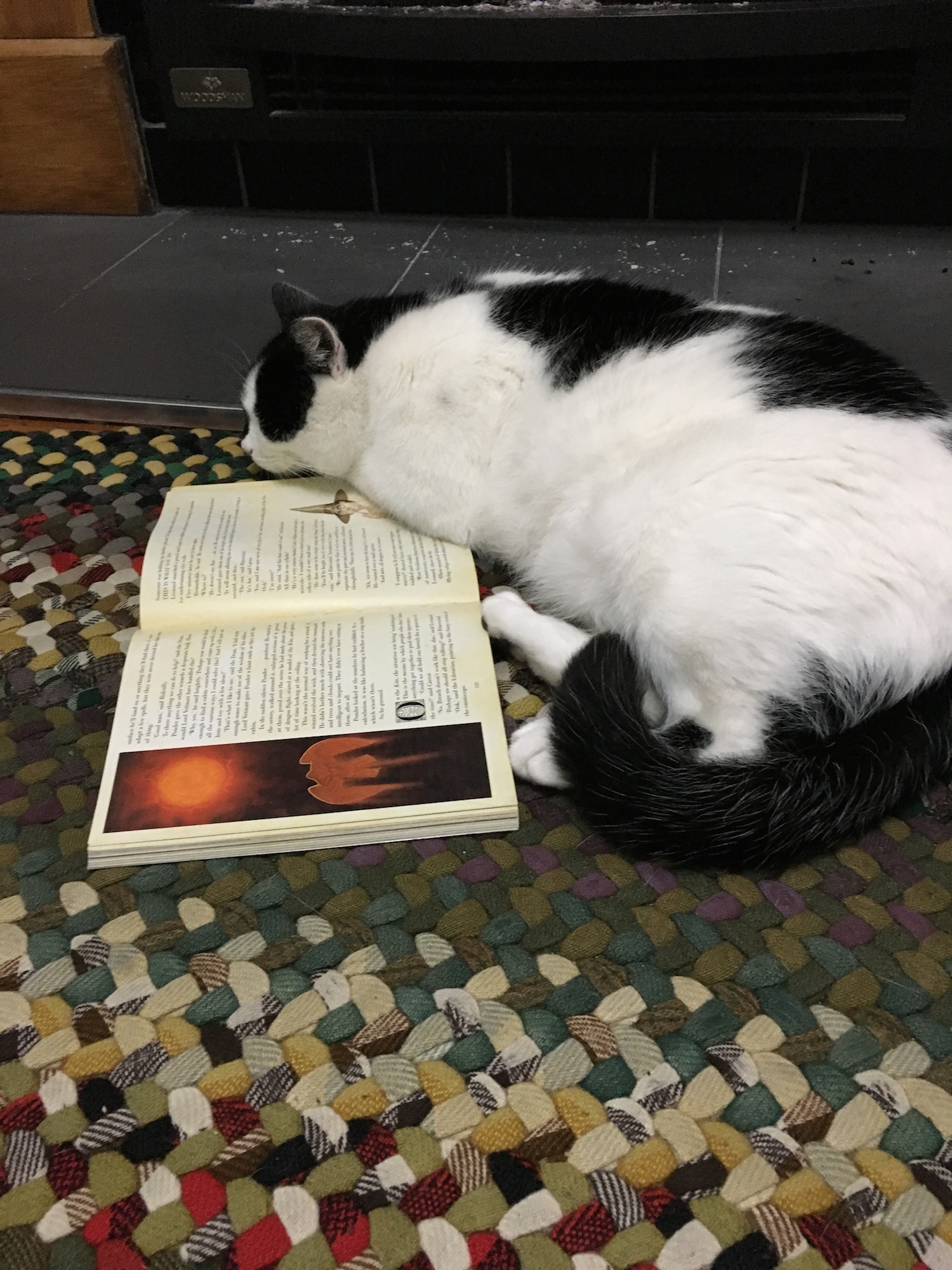
cat lying on a book
The cat illustrating proper lockdown behaviour.

I had a different blog post planned for today, but at 6:20 pm yesterday, the prime minister announced we were entering lockdown today. A case of Covid was detected in the community and, as it is suspected to be the Delta variant, the entire country is locked down.

So here we are again. I am thankfully no longer living in a shed, and there’s no longer a builder’s fence along our front boundary, but this morning I made sure there was a poem posted out front. 

Kia kaha everyone. Stay safe, wear a mask, and wash your hands!

We knew it might happen,
this déjà vu.
With Delta running rampant
our options were few.

We sigh, we might grumble.
It’s surely a pain
To be stuck here in lockdown,
in bubbles again.

But the reasons are sound and
the goal is quite clear.
We’ve enjoyed some rare freedom
for over a year.

If we can hold back the virus
a little while longer,
Roll out those vaccines
so the whole nation’s stronger,

We might just escape
the tragic events—
The overworked nurses
and hospital tents—

That much of the world
has suffered this year
As Delta’s roamed widely,
spreading sickness and fear.

So take a long walk,
join that meeting online,
Just hang with your bubble.
It’ll all turn out fine.

Cauliflower Power

head of cauliflower

A while back, I was searching online for something new to do with cauliflower for dinner. I found plenty of recipes, and nearly every one of them went on and on about how few carbs or calories cauliflower has.

Some of the photos looked delicious, and I’m sure most of the recipes are. But I was so turned off by the low calorie/low carb drumbeat, I lost my appetite.

I love cauliflower. But I love it for its sweet, nutty flavour. I love it for its crunch and the way it breaks into pretty little florets. I love it for its ability to grow year-round here and provide fresh, local produce even in the depths of winter. 

I don’t love it for its lack of carbs and low calorie count. Eating it for those reasons diminishes its value, reduces it to the sum of what it lacks. Here in Aotearoa, you might say it reduces its mana—its spiritual power or strength.

That’s no way to treat food.

I grow vegetables and purchase foods on the basis of what they are, not what they aren’t. Flavour, texture, nutrient content, protein content, and yes, those wonderful starches as well. Even colour is important. My family eats a glorious mix of richly flavoured and textured foods that nourish and satisfy. We celebrate what we eat, because food is what gives us life.

Maybe I’m prejudiced against the relentless messages telling us we must count calories and watch our weight. Raising an anorexic child will do that to you. But my discomfort runs deeper than that, because the focus on calories and carbs speaks to a real disconnect between people and the plants that sustain them. And I can’t help but think that disconnect exacerbates the growing incidence of obesity in modern society.

Counting calories and carbs reduces food to fuel—pump it in, make sure you don’t overfill the tank.

But food is part of our social network, our cultural history, our daily routines. It’s a way to show love and to care for one another. It is part of who we are as humans. And when we acknowledge that, we find ourselves not wolfing down some prepackaged insta-meal while scrolling on our phones, but taking time to make a meal and share it with others. We find ourselves gravitating to foods that make us feel good—foods that nourish our emotions as well as our bodies. We find ourselves reaching back to our ancestors for foods that define who we are.

And we forget about carbs and calories and learn instead to love food for what it provides, not what it withholds.

Youthful Adventure / Parental Angst

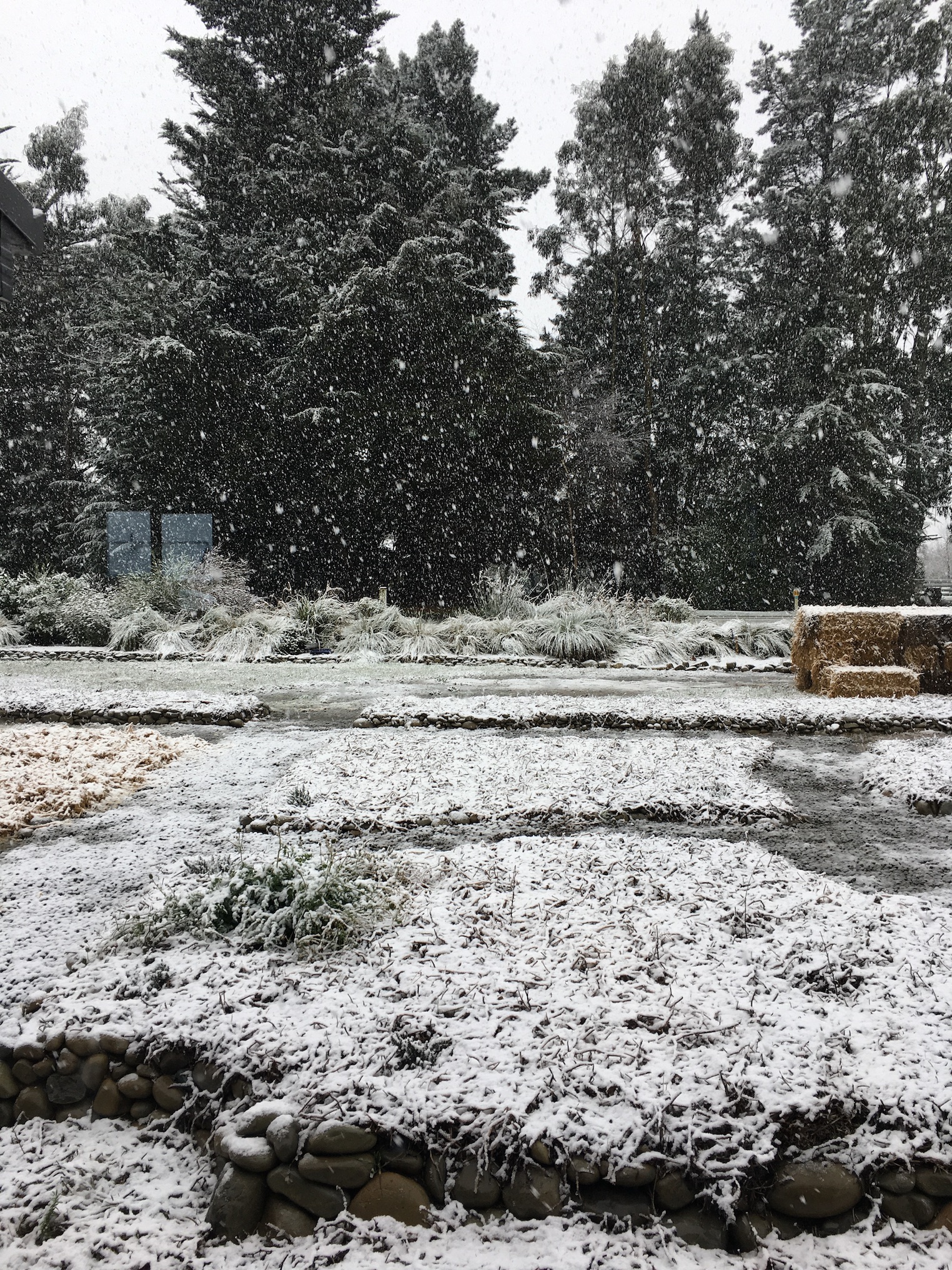
I find myself pacing the living room floor, gazing out the window at the swirling snow.

par

Stop. She’ll be fine.

My daughter is snowed into a cabin in the mountains. Porter’s Pass is closed and I cannot reach her by any means. I cannot supply her with the food I know she does not have for the 24-48 hours it will be until she can escape.

She is with friends. I know the cabin they’ve holed up in—it is warm and dry. There is water and even electricity.

She’s probably having a blast. No doubt they’ve pooled their food and are concocting some strange dinner tonight from instant soup packets and half a package of pasta of unknown provenance and indeterminate age left in the cabin by a previous inhabitant. It won’t be enough, but they’ll make do.

I know this because I remember my own adventures as a young adult. A day of hiking fuelled only by a pair of bananas purchased from a family in a small mountain village. A trek across the isthmus of Panama that involved an ill fated bus, hitching a ride in the back of a pickup, sleeping on the concrete floor of the police station in an unknown village, hiring a villager and his canoe, and begging meals and accomodation in another unknown village. Cowering in a tent as tornadoes ripped through the forest nearby. Carrying a chicken to a friend, on foot, three hours distant. … The list is long.

Every one of those adventures involved hardship—hunger, exhaustion, fear, danger. My mother would have freaked out had she known what I was doing.

Just as part of me wants to freak out right now.

But I know what those adventures did for me as a young adult. I can’t imagine having not had them. They’ve woven their way into the fabric that is me today. They are who I am.

My husband and I have taught our children how to prepare for adventure, how to be safe, how to face the inevitable difficulties, how to enjoy the hardships. The most important thing we can do now is trust that we’ve taught them well, and keep our own worries to ourselves so they don’t dim our children’s sense of adventure.

So I will pace the room, but never tell her I did so. I can’t wait to hear all about her adventure when she returns.

Same Name, Different Drink

saucepan of chai simmering on the stove

If I find myself at a cafe in the afternoon (usually for a meeting), I try to avoid coffee, since the caffeine interferes with my sleep. Instead, I’ll often order a chai latte. At a cafe, that usually means an instant beverage—spice powder or syrup mixed into steamed milk.

I enjoy the occasional chai latte. But it bears little resemblance to the real thing.

I was introduced to chai by a friend who grew up in India. He taught me how to make chai by steeping black tea and whole spies i simmering milk. The process is definitely not instant, and it requires a close eye to prevent the milk from burning.

That ‘slow’ chai, made on a winter evening in a kitchen full of friends was always more than a drink. It was a gift—of time, knowledge, memories, and love. No instant chai will ever be able to deliver the same.

I seldom make chai at home, but a few weeks ago on a cold dreary afternoon, I felt the need for more than a cup of tea. I made myself a chai instead, and enjoyed a drink that not only satisfied my desire for a cuppa, but also wrapped me in friendship and warm memories.

No cafe chai could come close.