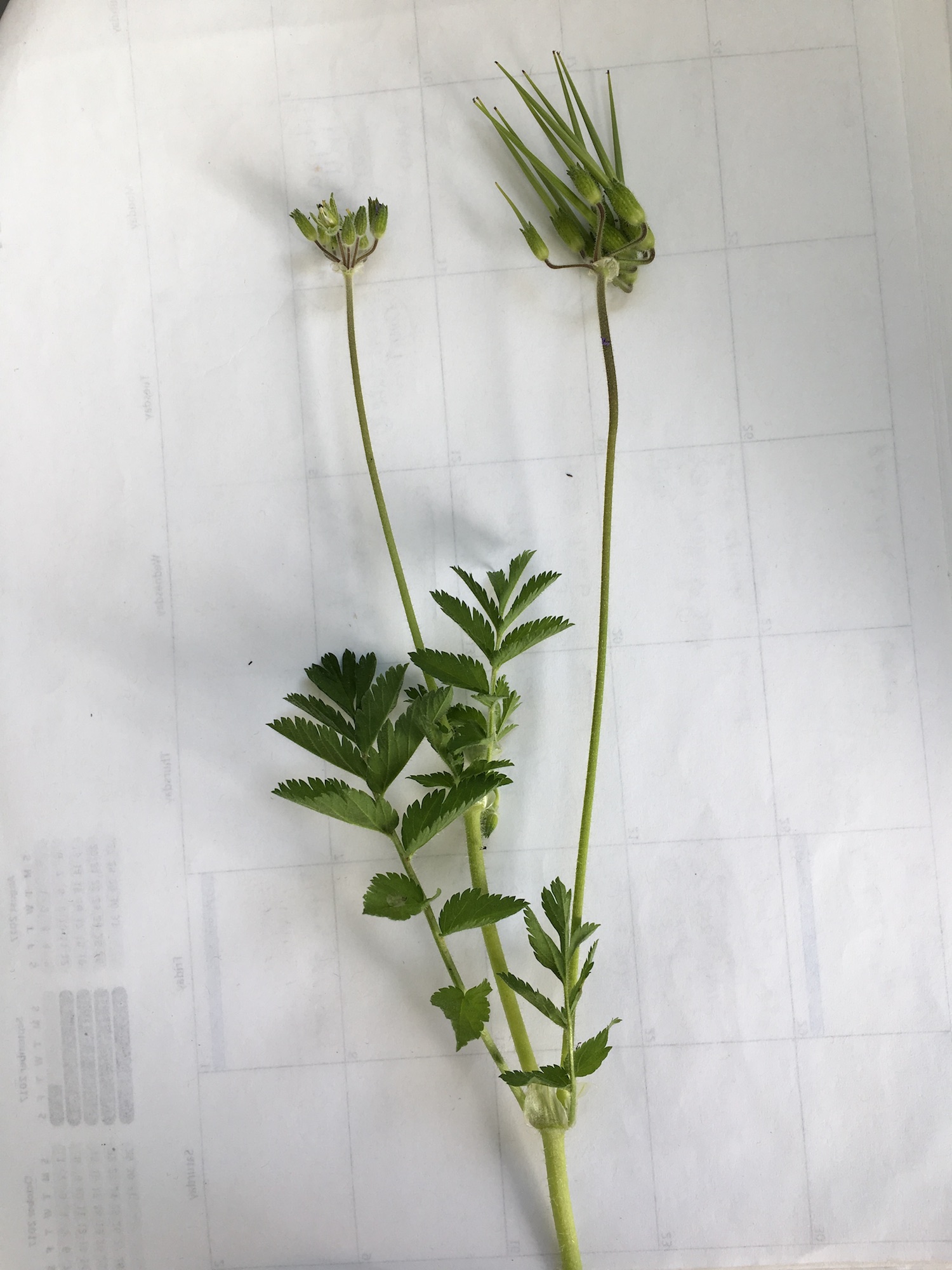
Storksbill

Continuing my springtime obsession with weeds…

Most of my weeds are most weedy in the vegetable garden. That’s where my tolerance is lowest and the weeds’ damage is worst. In fact many of the plants I consider weeds in the vegetable garden are quite welcome in the paddock—yarrow, clover, plantain, and nearly all the grasses. And in the lawn, I don’t worry about weeds at all—as long as it’s green and can be mowed, it works for me as lawn.

But there are a few weeds that are worse in the paddock and lawn than in the garden.

Musky storksbill (Erodium moschatum) is one of them. In the vegetable garden, the weed is aggressive and quick-growing as you would expect from a weed, but it’s pretty easy to pull out. It doesn’t resprout easily from the root, and doesn’t send out underground runners. It seeds prolifically, but the seedlings are easy to deal with along with all the other weeds.

In the paddock, however, it’s a different story. Theoretically, it’s a fine fodder plant when young, but once it sets seed, it can start causing trouble.

The long spiky fruits that give the plant its common name can work their way into animals’ flesh. I have, fortunately, never had to deal with storksbill fruits stuck in any of my goats, but it’s not something I ever want to have to do.

Keeping the storksbill out of the paddock requires constant vigilance. The plants grow quickly, and seem to go from tiny rosette to fully fruited overnight. And because I can never catch them all, for every one plant I pull, two seem to grow in their place.

In the lawn, those spiky seeds form just below mower height (instead of at about 50 cm like they do elsewhere), making barefoot walking in the heavily infested parts of the lawn an excessively exciting experience.

All in all, as weeds go, it’s not the worst. I can’t say I appreciate its charm, because it doesn’t really have any. It doesn’t appear to have any particular use (and I suspect it arrived here accidentally), but the seed heads do have a weird goofiness to their look that I have to admire while I yank them out of the ground.

Spring Cuteness

‘Tis the season for growth and new life.

Unfortunately, that means lots and lots of weeds, birds nesting in the shed (and pooing on the car), and slugs multiplying like mad (and decimating the newly-planted lettuces).

But it also means the occasional cuteness overload, like this guy.

This newly-fledged magpie has been hanging out in various locations around the yard as he learns how to get around and hunt for himself. He’s quite tame at the moment, and you can even give him a little scratch without him fluttering away. I’m sure it won’t be long before he’s dive-bombing the cat with his cohort of teenage magpie thugs, but at least for now, he’s terribly cute.

Danger! Keep out!

I was driving to town with the kids this afternoon, and we got to talking about dreams. After concluding that dreams were seriously weird, and even more so considering they come from inside our heads, I said, “Yeah. A brain isn’t a place you want to go walking around alone in after dark.”

To which my daughter’s response was, “I don’t think I’d want to go wandering around there at any time.”

And it struck me that there lies the crux of being an introvert. We go walking alone in our brains, in spite of the fact it’s not a nice neighbourhood.

We go walking alone there, where anything could jump out at us, and probably will. We walk through alleys smelling of rats and urine, where all the stupid things we’ve ever said slouch in shadowy doorways drinking out of bottles in brown paper bags.

We walk through busy thoroughfares where our own doppelgangers repeat every public embarrassment we’ve ever committed over and over and over without pause.

We walk into brightly lit rooms where we are handcuffed and a poised and confident extrovert asks probing questions about why, exactly, we decided to wear our “Nerd is the new Sexy” t-shirt to the bar on Saturday night.

We step out onto the street, thinking the way is clear, and the bus carrying every one of our personal inconsistencies and incompetencies runs us down.

We pass a parked car with tinted windows, and the door opens. Out steps our younger self. She looks us up and down and sighs. “I thought by now you’d have done something with your life.” She rolls her eyes and stalks off.

We walk past a tall chain link fence topped with razor wire. On the other side is the hitchhiker we didn’t pick up last August, the crying child we didn’t comfort two years ago, the Salvation Army bell ringer we didn’t empty our pockets for on December 23, 1989.

The mind is the seedy place we introverts are drawn to in the dead of night, when the happy extroverts are tucked safely in bed or walking brightly lit streets with a crowd of friends. It’s a bad neighbourhood, but it’s our own, and maybe we think we can fix it up if only we visit it frequently enough.


Making Connections with Children’s Stories

Brian Falkner discussing his publishing journey.

I’m in a rainy Auckland this weekend at the Storylines Children’s Writers and Illustrators Hui. There are over a hundred writers and illustrators here this weekend, from people who have yet to start writing their first book to the venerable Joy Cowley, who has published so many stories over her long career she’s lost count of them.

Some curious observations:

The vast majority–probably 80%–of the participants are middle-aged women, parents of teens and adult children.

Another 10% is composed of younger women.

Most of the women are writers, though some are illustrators.

Only about 10% are men, and at least half the men are illustrators.

So why are most participants middle-aged women? Is it that a workshop like this appeals more to that demographic? Is it because that demographic has a greater ability to take off for a weekend to attend a workshop (both because of finances and because our children are old enough to stay at home alone)? Why aren’t more of the women illustrators?

My unscientific and haphazard look at how we all arrived at this place reveals a preponderance of teachers and former teachers in the group (which would partly explain the preponderance of women). Not surprising, perhaps. We have spent more time with children than others, and have an affinity for children and the books they read. Maybe we want to write the books we wish our students had read? Some, like the wonderful David Riley, who produces books about Pacific island heroes, write the books his students are desperate to read.

However we’ve gotten here, all of us share the goal of making emotional connections with children through stories and books. It is inspiring to hear the creative and diverse ways in which New Zealand authors are doing that.


Spring Weeds–Dock

Springtime is weed season, and there are plenty in my garden–57 species at last count.

I grumble about weeds, but I also find them fascinating. Weeds are the opportunists, the survivors, the tough and persistent plants of the world. Some have been spread accidentally, through virtue of their mobile, sticky, or tough seeds, but many more have been introduced on purpose. They are plants we once considered useful, and it is our changing values that make them weeds today.

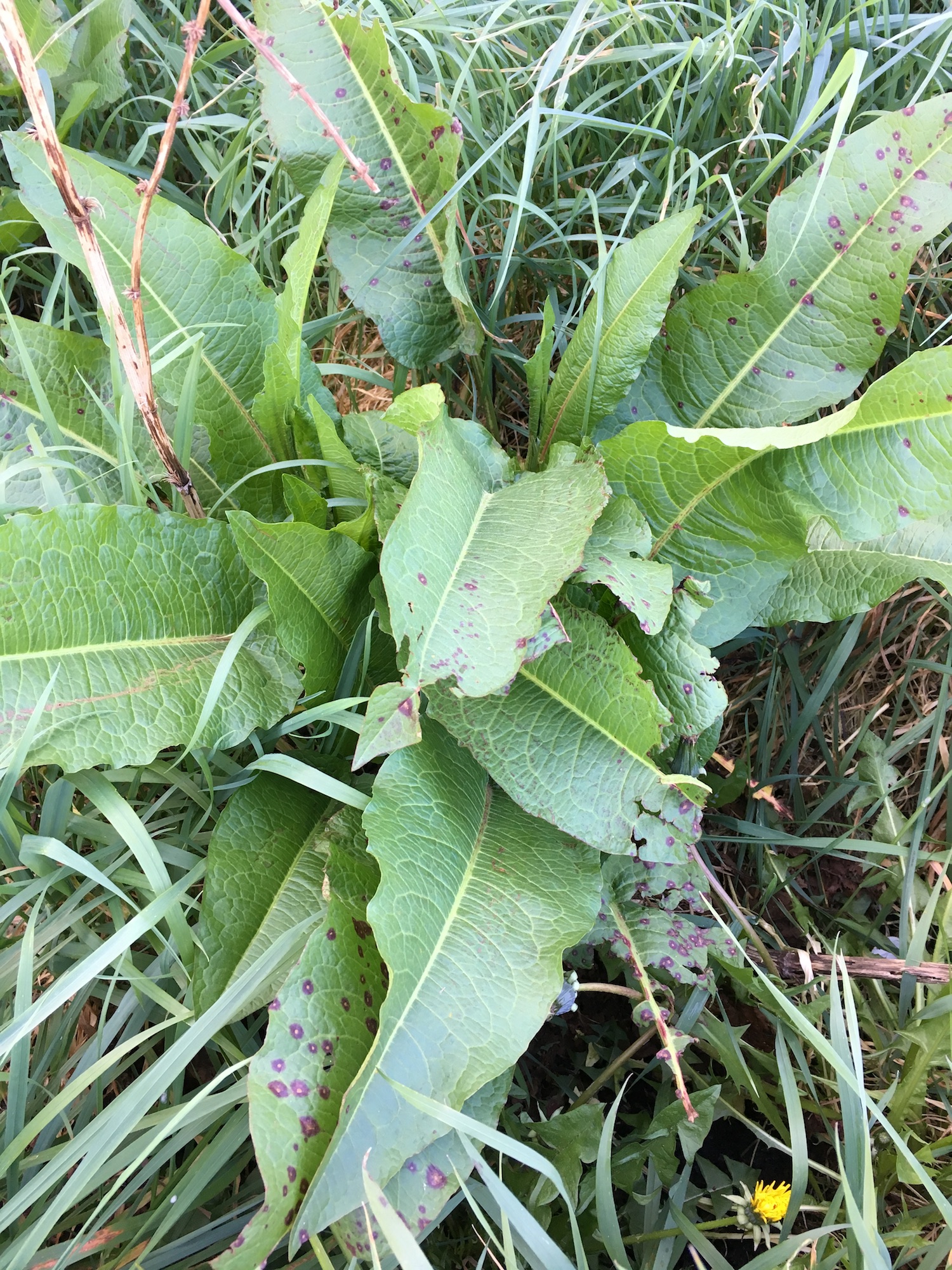
So I’ll be introducing some of my weeds over the next few weeks as they sprout and flower and generally annoy me. We’ll start today with a weed I love to hate–broad-leaved dock (Rumex obtusifolius).

Dock isn’t my worst weed. Not by a long shot. But it is persistent. Deep, branching taproots make it a struggle to pull out, and with each plant able to produce up to 60,000 seeds a year which can remain viable in the soil for up to 50 years, there is an unending supply of new plants. Still, dock struggles to compete with established plants, so it’s mostly a weed of disturbed soil.

The goats absolutely love it, so I can’t complain there. Dock is high in magnesium, phosphate, and potassium, and the tannins in the leaves can help prevent bloat in ruminants. Any dock I pull out of the garden goes directly to the goats.

It is likely dock was brought to New Zealand (from its native Europe) on purpose in the mid-1800s. Though the leaves are high in oxalates, which can irritate the stomach and bind to calcium, potentially leading to calcium deficiency, the plant was regularly eaten like spinach. It was also used to treat a variety of ailments, from coughs to cancer.

Dock often grows side by side with stinging nettle and, like many nettle associates, it can supposedly cure nettle stings. I’ve used dock for this purpose, and can attest that it seems to help, but then so does just about any fresh leaf rubbed on nettle stings.

I wouldn’t want to fight dock on a large scale–it scoffs at most herbicides, easily survives mowing, and can resprout from pieces of root left in the soil after ploughing–but for me, it’s a manageable weed that even has some utility.


Chasing Chickens

Foiled again! A chicken eyes the zip ties on top of the gate.

Two weeks ago I moved the chickens out of the vegetable garden and into their summer paddock. The summer paddock is smaller than the garden, and not quite as rich in insects and diverse weeds. The chickens are always a bit put out at their restricted terrain, and they express their dissatisfaction for the first few weeks by escaping.

When they get out, they immediately rake all the mulch from under the artichokes onto the paths. Then they attack the compost pile, spreading twitch roots, mouldy bread and last night’s leftovers around the yard.

It’s a test of ingenuity between me and the chickens. At first, they might fly over the fence–I clip their wings. Then they might scramble to the top of the gate along the fence’s diagonal bracing–I use zip ties to create a jagged edge on the gate so they can’t perch there. Then they might use the nesting boxes as a perch, jumping from the ground to the nesting boxes, and then over the fence–I add zip ties to the top of the nesting boxes. In time, they might dig underneath the fence and slip underneath–I fill their holes with rocks.

Eventually, they’ll grow tired of trying to escape. Or maybe they forget that they used to have more space–they have pretty small brains, after all. Either way, I will eventually win.

Until then, I’ll spend every afternoon rounding up the chickens who’ve escaped and returning them to their paddock, and then raking mulch off the paths, wondering why I don’t simply increase the height of their fence. Perhaps it’s me with the small brain…

Skink-scaping

Our property sits in the middle of an agricultural landscape. Not the quaint, woodsy sort of agricultural landscape favoured by jigsaw puzzle makers, but the scorched-earth type of agricultural landscape, where every square metre of land is ploughed, planted, sprayed, and sucked for all it’s worth. Not the sort of landscape that welcomes wildlife, particularly not native wildlife.

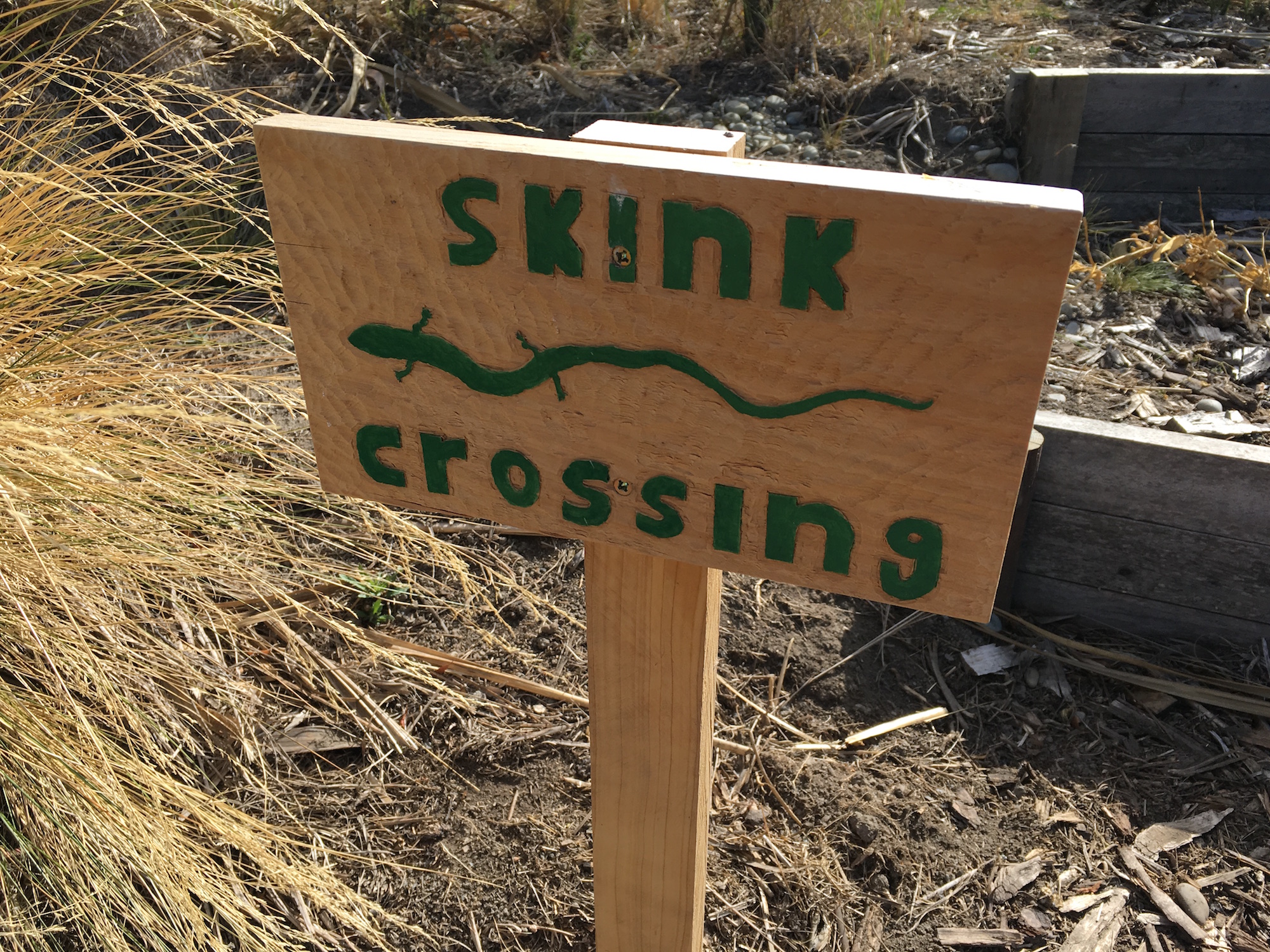
In spite of that, our property is home to native skinks (the common skink, Oligosoma nigriplantare). They stalk the vegetable garden and sun themselves on rocks in the flower garden. They rustle among the native grasses and slip into garden hoses left lying on the ground. I don’t know why we have so many skinks, but I aim to keep them here.

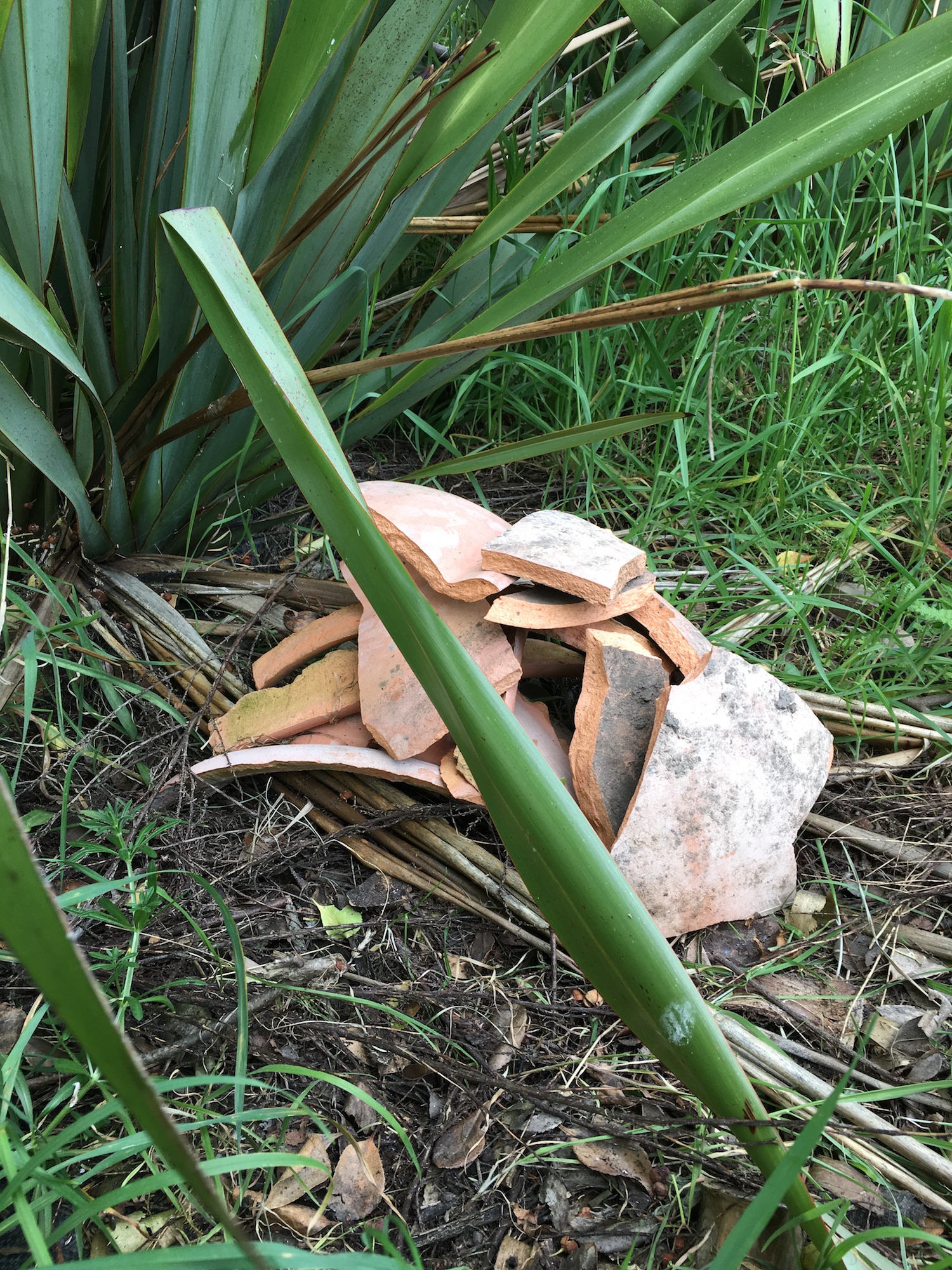
Habitat loss and predators are the main threats to skinks in New Zealand (though the common skink is not threatened, as many of our other lizards are). Skinks are preyed upon by cats, rats and stoats, all of which are plentiful around our place. We can’t eliminate all the predators, but we can provide plenty of hiding spots for the skinks. Dense native grasses, rocks, and even broken flower pots all provide shelter for skinks. The rocks and flower pots also make nice sunning spots.

Skinks eat mostly insects and spiders, along with the occasional fruit or seed snack. Our live-and-let-live attitude toward insect pests means there are plenty of arthropods for our skinks to eat. We’ve also planted a range of native plants to ensure there are berries available much of the year. (I also suspect the skinks of snapping up the currants that drop to the ground and taking the odd bite of my strawberries, but I’m happy to share.)

The end result is a healthy population of skinks on the property—welcome wildlife that makes me smile every time I see one basking outside my office window or rustling through the lettuces.