Orange Cake

Having friends over is such a good excuse to bake. I normally wouldn’t experiment for guests, but I was pretty sure of the orange cake I tried out on Saturday, because I based it on my lemon cake recipe.

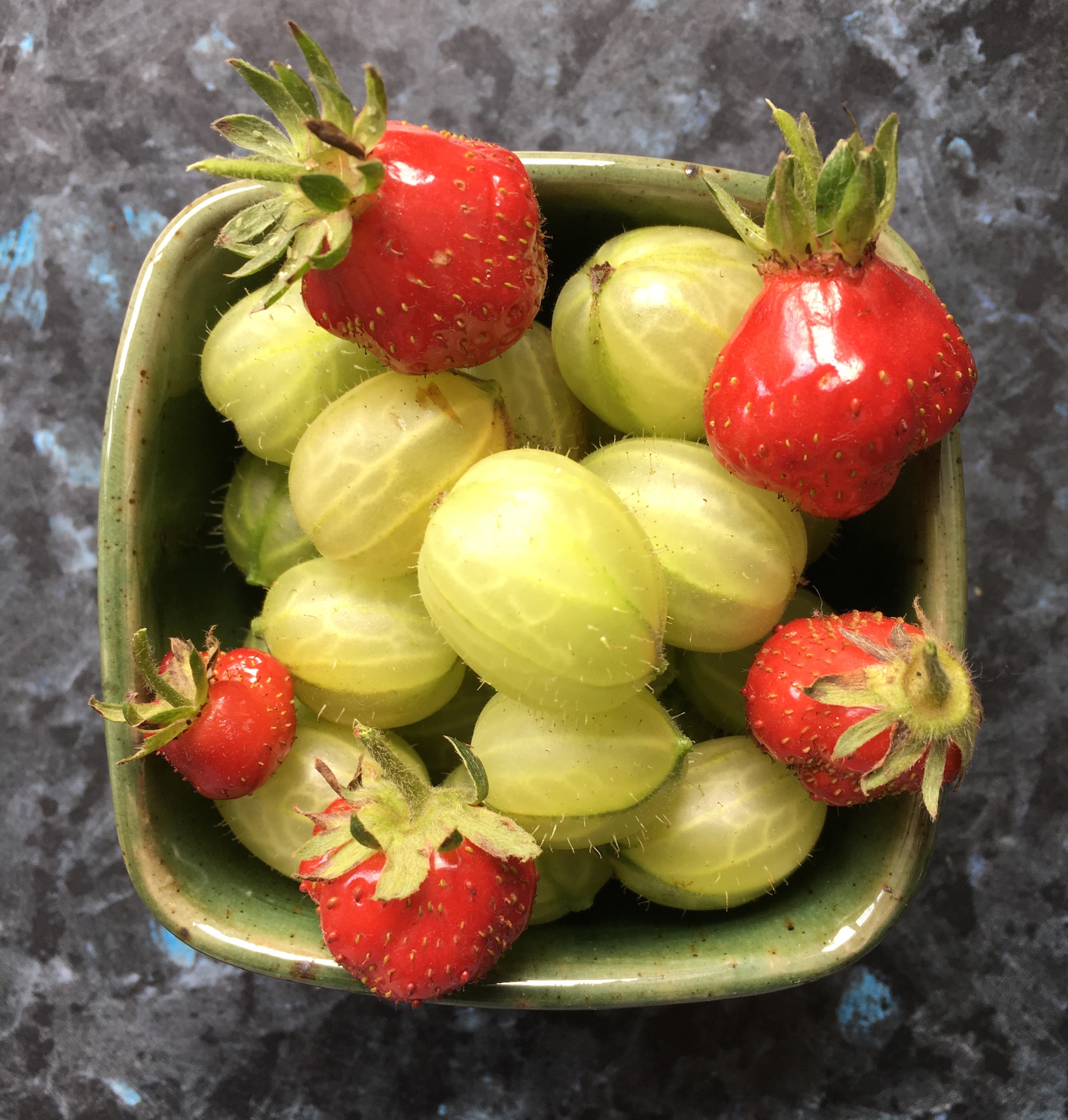
It’s a close race, but I think I may like the orange version even better than the lemon. I filled the cake with gooseberry jam and drizzled it with a simple orange icing, both of which nicely set off the cake itself.

Here’s the recipe. I suggest trying the lemon version also, to see which you prefer. You might need to make them both several times to decide.

1 cup butter, softened
1 3/4 cups sugar
4 eggs, separated
grated rind of 1 orange
2 1/4 cups all-purpose flour
1 cup barley flour
1/2 tsp salt
2 1/2 tsp baking powder
1/2 cup orange juice
1/2 cup water
3/4 cup threaded coconut

In a medium bowl, mix flours, salt, and baking powder. In a large bowl, cream butter. Add sugar gradually and beat until fluffy. Add egg yolks and orange rind and continue to beat. Add dry ingredients alternately with orange juice and water. Beat thoroughly after each addition. Fold in stiffly beaten egg whites and coconut. Pour into greased pans. Bake at 180ºC (350ºF) for 30 minutes.

Orange frosting: Sift 1 cup confectioners sugar into a small bowl. Stir in orange juice by the teaspoon until the icing reaches a thick, just pourable consistency (I used about 2 Tbsp total).

Eau de Paddock

The smell of cattle and rank pasture grasses.

Most of you are saying, “Ew! Disgusting!”

But a few, I’m sure, are thinking, “Yep! Nothing else says summer like that smell.”

And I can guess that, if you’re in the second group, you grew up running barefoot through yours or the neighbours paddocks as a kid. You hopped the fence, dodged the cows (or if you were unlucky, the bull), and swished through tall grass to the creek where you’d wade in the ankle-deep water for hours in the hot sun, catching crayfish, water striders, and dragonfly nymphs. You’d follow the trickle upstream to ‘the dam’, made by countless ten-year-old hands over decades of summers. The pool behind the dam always teemed with minnows, and you’d stand still, hands outstretched in the water hoping to catch one.

The whirligig beetles loved the pool behind the dam, too, and their jiggling, twirling dance on the water’s surface sent ripples across the water, bouncing and refracting into mesmerising patterns.

All the while, the sun heated grass and cow pies, and the perfume of the paddock hung in the hot air and clung to the back of your neck like your sweaty hair.

And when the sun finally began to sink in the west, and you knew dinner was waiting for you at home, you’d climb up from the stream and swish through the paddock again, the cows further off now, in the lengthening shade of the trees. You’d climb back over the fence and take one last, deep breath, storing the summer day, and saving it for tomorrow.

And now, forty years later, you drive past a paddock on a hot day, and in a single breath, you are suddenly ten again, ankle-deep in a creek catching crayfish.

Cheesy Scones

I came home late earlier this week. No time to really cook. So I pulled out a couple of jars of summer soup and made savoury scones (biscuits to the Americans) to go with it.

But I didn’t want plain scones…

These are what I threw together, and they were divine.

1 cup all-purpose flour
3/4 cup whole wheat flour
1 Tbsp baking powder
1/2 tsp salt
60 g butter (about 4 Tbs)
1/2 cup chopped parsley
1/4 cup chopped dill
1 cup grated cheddar cheese
2 small leeks (about 1/2 cup), finely chopped
3/4 cup milk

Combine flours, baking powder and salt in a large bowl. Cut butter in until it’s the consistency of coarse meal. Mix in the herbs, cheese, and leek. Stir in the milk. On a well-floured board, knead the dough gently 4 or 5 times, then roll out to 1.5 cm (5/8 inch) thickness. Cut into squares or use a biscuit cutter.

Bake on an ungreased sheet 15 minutes at 200ºC (400ºF).

An Abundance of Artichokes

It’s a terrible thing, having excess gourmet vegetables. We are in our usual springtime artichoke excess. It’s not unusual for us to eat eight or nine artichokes five days out of seven.

A quick online search shows artichokes currently selling for anywhere from US$3 to 10 per pound (that’s NZ$9-31/kg). Given we easily eat a kilo per meal…Well, you get the idea. If we had to pay for them, we couldn’t afford them.

Of course, the problem remains–what do you do with that many artichokes? We preserve quite a few for use at other times of the year, but that still leaves plenty to enjoy during the season.

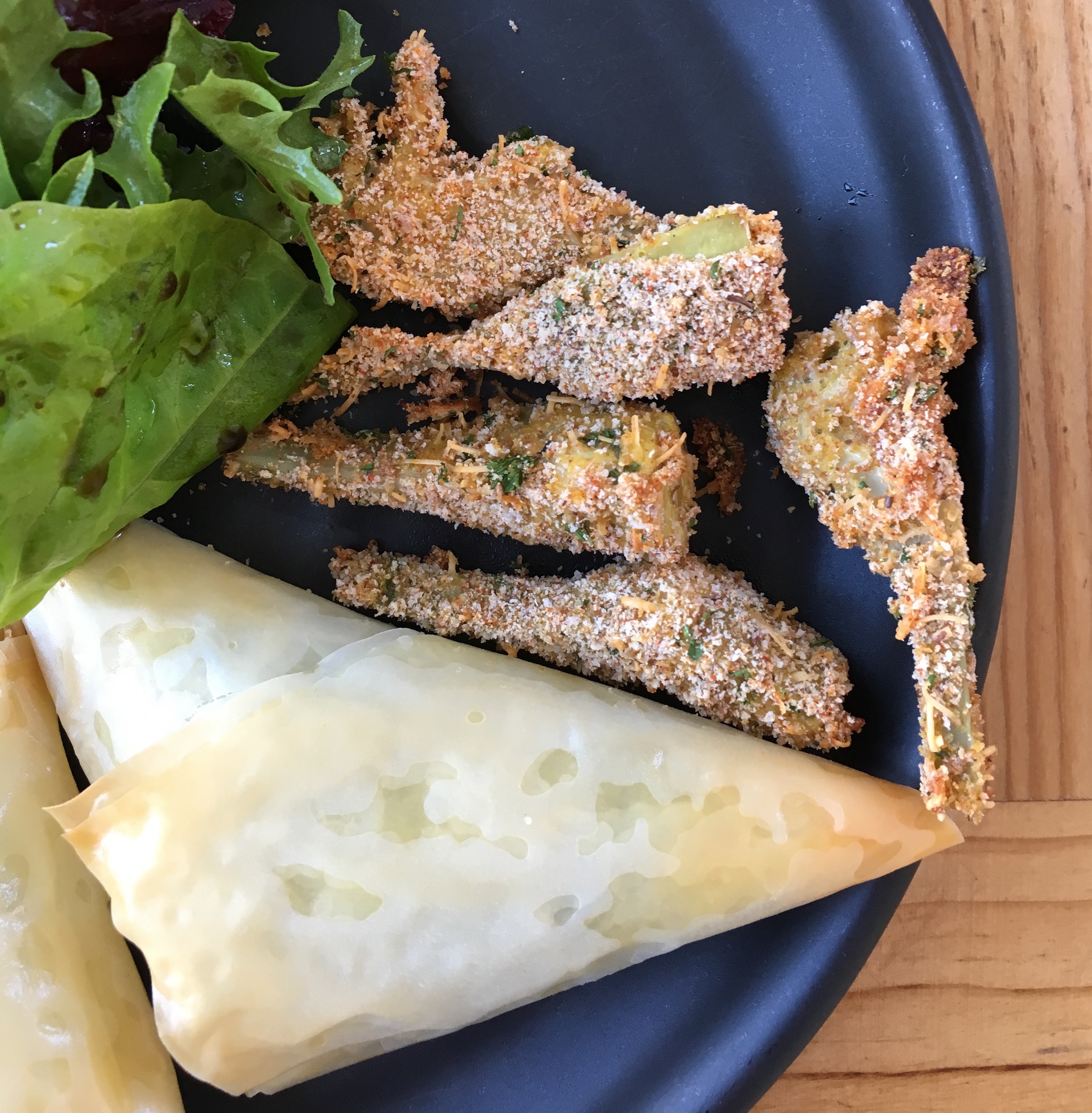
We eat a lot of artichokes in risotto, pasta, pizza, and gratins. The other day, I tried a new way of preparing them–crusted with parmesan and baked.

It’s simple, if a bit time-consuming (it would be trivial if you simply bought canned or frozen artichokes).

First, prepare the artichokes: snap off the outer leaves, peel the base and stem, trim off the top 1/3 of the leaves, remove the choke and any spines on the inner leaves, and cut the remaining heart into wedges. Drop wedges into a bowl of lemon juice and water as you go to avoid browning. Drain and steam for 3-5 minutes, until just tender, but not falling apart.

Then prepare the breading: mix in a medium bowl 1 cup bread crumbs, 1 cup grated parmesan cheese, 1/4 cup finely chopped parsley, 1 tsp salt, 1 tsp paprika, 1/8 tsp cayenne, and black pepper to taste.

In another bowl, beat two eggs.

Dredge the artichoke wedges first in the egg, then in the breading to coat thoroughly. Arrange in one layer on an oiled baking sheet. Bake for about 20 minutes at 190°C (375°F) until brown.

I served them plain, but they would be lovely with a dipping sauce like aioli or skordalia. They made a delicious accompaniment to the tiropitas (spinach and feta triangles) and salad that rounded out the meal.

Stress Free…sort of

I’m getting better at this. Sort of.

Two weeks to plant out day, and I was able to spend a day at the beach without stressing.

Not that I didn’t stress, actually. I worked hard all day Saturday, and then scrambled to get more done Sunday morning before we left, and then scrambled to finish the rest when we got home Sunday evening.

But from the moment I stepped out the door to the moment I returned, I didn’t think about weeds, plants, animals, cleaning…nothing on the to-do list.

I slipped momentarily, sitting at the edge of a wood-chipped playground…There was a twitch plant growing up through the woodchips. I was sorely tempted to reach out and yank it out, but I stayed strong. That weed is still happily growing, though it was a near thing.

Maybe some day I’ll be able to take an overnight trip without stress. Baby steps.

Subterranean clover

Subterranean clover (Trifolium subterraneum), like other clovers throughout the world, is an important pasture species. And it’s also a weed.

I’ve grown quite fond of ‘sub-clover’ as it’s often called. It’s much smaller than red or white clover, and the flowers form in clusters of only 2-5 in each head (as opposed to the large clusters that make up each ‘flower’ of other clovers). It also has the interesting habit of turning its flower heads downward after germination, so that the seed pods develop underground (hence, its name).

What I like most about subterranean clover is the thick mat of low-growing greenery it can produce, even in the dry rock where the old driveway used to be. Without it, some areas of the lawn would be bare year-round.

I also like the fact clover is a nitrogen-fixing plant. The clover in the old driveway is improving the soil for other plants as it grows and dies. With its help, grass might some day thrive there (though I’m not holding my breath).

Unfortunately, sub-clover dies. Dramatically. Just when we’re desperate for green. It’s a winter annual, meaning it sprouts with the autumn rain, grows through winter and spring, and flowers in early summer. When summer turns hot and dry, the plant dies, its life cycle complete. The lawn outside my office is composed almost entirely of sub-clover, so when it goes, it’s grim.

The only consolation is that the grass dies shortly after the sub-clover. Summer is simply brown here.

So for now I’m enjoying the lush greenery underfoot. It’s wonderful while it lasts.

Wasp 1: Cleaning 0

I try to keep a clean and tidy house, but sometimes it’s just not possible.

I was going to dust this weekend, but the first spot I ‘dusted’ was the dining room windowsill. It’s a big window and, for some reason, most of the insects that get into the house seem to end up there when they die.

Next thing I knew, I had a handful of dead insects in a petri dish and was looking at them through the microscope. Most were insects I was familiar with—old friends I was catching up with—but this lovely lady was new. A tiny parasitic wasp, but I couldn’t quite place her family. Several hours, a couple of taxonomic keys, and a stack of entomology books later, I still wasn’t certain, but I tentatively put her in the family Pteromalidae.

Oh, and the cleaning was entirely forgotten.

Restaurant Review: Crazy Corner Cuisine

“I e-mailed you a picture. I want a blog.”

I find it difficult to blog about a meal I haven’t cooked myself. I can’t give you a recipe or even a detailed ingredient list.

So I’ll have to blog as though I went to a restaurant for a fine meal…

I walked into Sedgemere’s finest vegetarian restaurant, Crazy Corner Cuisine, early–my reservation wasn’t until six–but I was ushered into the lounge and encouraged to relax with a book while I waited. As I reclined in a delightful window seat overlooking the restaurant’s herb gardens, the wonderful aroma of my meal wafted through the restaurant.

Crazy Corner isn’t your usual restaurant, where the meal is prepared behind closed doors. At Crazy Corner, the chef consults with the patrons, tweaking the meal to suit their tastes. In fact, on this visit to Crazy Corner, I was given a colander and allowed to enter the restaurant’s garden to pick my own salad.

Crazy Corner Cuisine grows nearly all the vegetables used in the restaurant, so you can be sure that whatever you eat, only the freshest ingredients are used.

On this visit, dinner included a beautiful polenta ‘lasagna’–layers of herb-filled polenta and thick lentil stew rich in mushrooms and spinach generously topped with cheese and baked to perfection. The portions were generous, and the side salad was the perfect foil to the hearty lasagna. The meal was accompanied by an excellent New Zealand Merlot.

I have to put in a good word for the kitchen staff, too. Though quite young, they cleared the table efficiently and I heard them industriously washing dishes as I left.

The whole experience was delightful and relaxing. I highly recommend a visit to Crazy Corner Cuisine the next time you’re in Sedgemere.

My First Selfie

So I’ve been doing a lot of weeding lately–clearing beds, dealing with a winter’s worth of growth…

As a rule, I don’t take selfies, but I felt a picture of the compost pile needed a person in it for scale. It was hard to get any shot that included both me and the top of the compost pile, but, here it is–my selfie with Mt. Weedmore.

Spittlebugs

Spring is spittlebug season. Just about the time I want to start picking and dehydrating the perennial herbs, the spittlebugs descend upon them. In bad years, it makes harvesting herbs a slimy task.

Spittlebugs are also known as frog hoppers. As adults, they are cute, squat, dun coloured insects with spectacular leaping abilities. They really do resemble frogs (with a little imagination).

It’s the nymphs that have the disgusting habit of spitting. Well, it’s actually not spit at all. The foamy slimy ‘spittle’ is a combination of fluid from the insect’s anus, and slimy gunk from glands on the insect’s abdomen. The insect sits head downward on the stem of a plant and exudes the ‘spittle’, letting it pour over its body and cover it completely. The resulting mass keeps the young insect protected from enemies and from drying wind and sun. Gross, but effective.

Like humans, who usually stop blowing bubbles in their milk as adults, spittlebugs leave off spittle production when they grow up. As adults, they use their hopping ability to avoid predators.

Some species of spittlebug can become significant agricultural pests, stunting the growth of herbaceous plants and some forestry trees, but in the home garden, they’re usually not much more than a minor nuisance.