A Little Bit of Crazy

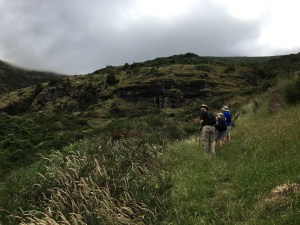
On the lower slopes, looking up to the clouds.

You have to be some kind of crazy to summit Mount Herbert in a raging Nor’easter. Apparently my family and I are some kind of crazy.

To be fair, we didn’t set out to summit. We’d hoped for a day at the beach, but the wind and cloud cover wasn’t promising. So we pulled into Orton Bradley Park thinking we’d do a nice little hike.

We thought, ‘Let’s go toward Mount Herbert; we haven’t actually hiked that track before.’

It’s a typical Banks Peninsula track, winding through non-native forestry blocks, pasture, and scrubby native bush on its way up the mountain. As we got higher and higher, the wind picked up. The ridge line and summit were shrouded in cloud. It certainly wouldn’t be nice up there.

But, hey, it was great hiking weather down lower—not too sunny, and the breeze was nice … until it started whipping off our hats. We carried on up the slope.

By the time we reached the bottom of the cloud layer, the wind was getting a bit ridiculous. We checked our location on the topo map.

Well, it wasn’t too much farther to a shelter where we could eat lunch. Surely we could go that far. We carried on, around a switchback so the wind was blowing full in our faces. I laughed and shouted, ‘This is silly!’ But no one heard me over the wind.

We were in the cloud now, hiking blind to the shelter. When we found it, we tumbled inside, laughing and a little breathless. As we ate our lunch, the sturdily-built shelter shimmied and moaned in the wind. Billowing waves of cloud poured in with each gust.

It would be ridiculous to go on in this weather. What would there be to see, anyway, in the cloud?

But it was only a little bit further to the summit …

We donned our raincoats, shoved our useless hats into our bags, and made for the top.

And so there I was, leaning into the wind, a cramp in my left thigh and a blister on my right heel, condensation dripping off my hair and running down my glasses, unable to see the rest of my family just ten metres ahead of me through the cloud … and stupid-grinning the whole way.

At the summit (the highest point on the Banks Peninsula) we should have been able to see a huge expanse of the South Island spread out around us. We could barely see each other. We cheered our accomplishment, admired the view, and then set off back down.

Our little walk ended up traversing 15 kilometres and climbing 900 vertical metres. It was a ridiculous walk to do, given the weather conditions, but it was absolutely brilliant.

And we got our beach time in, too. By the time we made it back to sea level, it was sunny and hot, so we had a little splash in the sea before returning home.

Sometimes a little bit of crazy is perfect.
Respite on the Rakaia

The temperature is squatting at 37 degrees C. Body temperature. I’ve experienced hotter, but when it hits 37, it’s just hot, no way to argue it’s not.

So we headed down to the Rakaia River, just a short drive from our place.

The walk in from the settlement of Rakaia Huts is green and humid. The track is maintained only by the feet that tread it and winds through a magical scrubby forest. Non-natives brush leaves with natives, feral fruit trees share space with hydrangeas. The worst of Canterbury’s weeds coexist with a remarkable array of native shrubs and ferns—it’s the Peaceable Kingdom of the plant world.

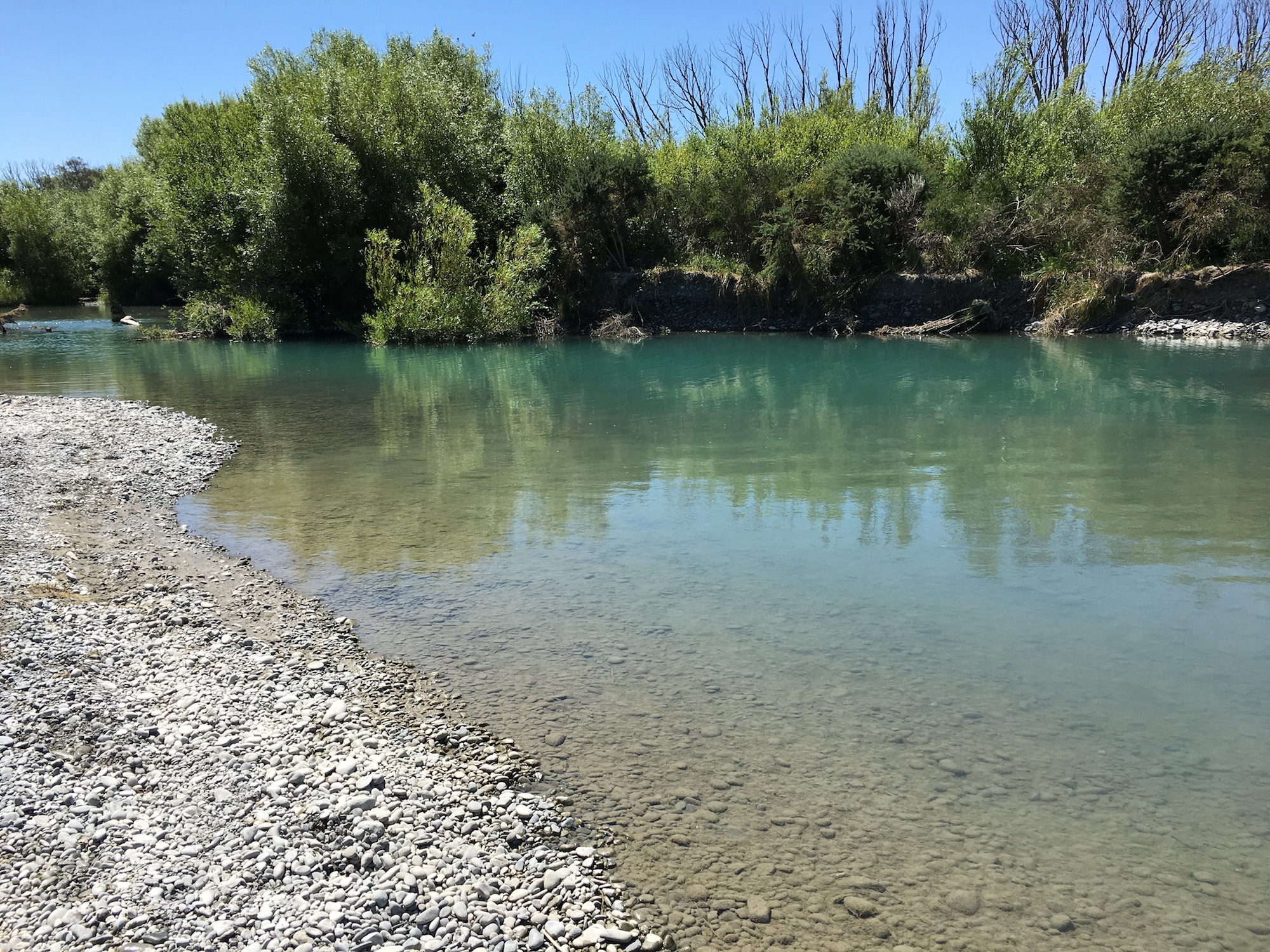
Twenty minutes of walking through this green glade brings you to the river. The Rakaia is a braided river, so you cross and re-cross channels to reach one suitable for swimming. Down near the mouth, there are many swimming holes—deep and turquoise with suspended loess (wind-blown rock dust)—separated by sparkling riffles. We followed the river to the sea, testing each pool to find the best one.

They were all delightful, all ours for the taking, because there was no one else there.

Back home, we stayed in our wet togs until they dried, bringing the cool river with us.

In the time it’s taken me to write this blog, the temperature has risen further. The river water has long since evaporated. Now we have just the memory to keep us cool.

Alpine Delights

The family spent a delightful hour on the Dobson Nature Walk in Arthur’s Pass National Park on Wednesday. The track is an easy one, and hiking it quickly takes about 20 minutes. But it’s not a walk you want to do quickly, especially in summer. It winds through alpine and sub-alpine vegetation, including some beautiful tarns, and in summer, so many plants are blooming, it’s hard to take five steps without finding another lovely orchid, daisy, or hebe in bloom.

For me, the best part of the walk is the abundance of sundews in the tarns. As an entomologist, I’m naturally drawn to carnivorous plants like sundews. Sundews catch insects on the sticky hairs you can see glistening in this photo. The hairs are sensitive to both touch and taste, and when they sense a struggling insect, they fold inward to further entangle their prey. Enzymes exuded by the hairs then digest the insect, and the leaf takes up the nutrients in order to grow in the nutrient-poor alpine wetlands. 

These sundews were just beginning to flower—many plants had flower buds, but none had yet opened. The flowers sit above the leaves—an important adaptation, since the plant needs to be pollinated by the very insects it eats.

The alpine summer is short, so when these plants are done flowering, the leaves will slowly shrink into a structure called a hibernaculum that sits near the soil surface and protects the plant through the winter.

A Trifle More Christmas Baking

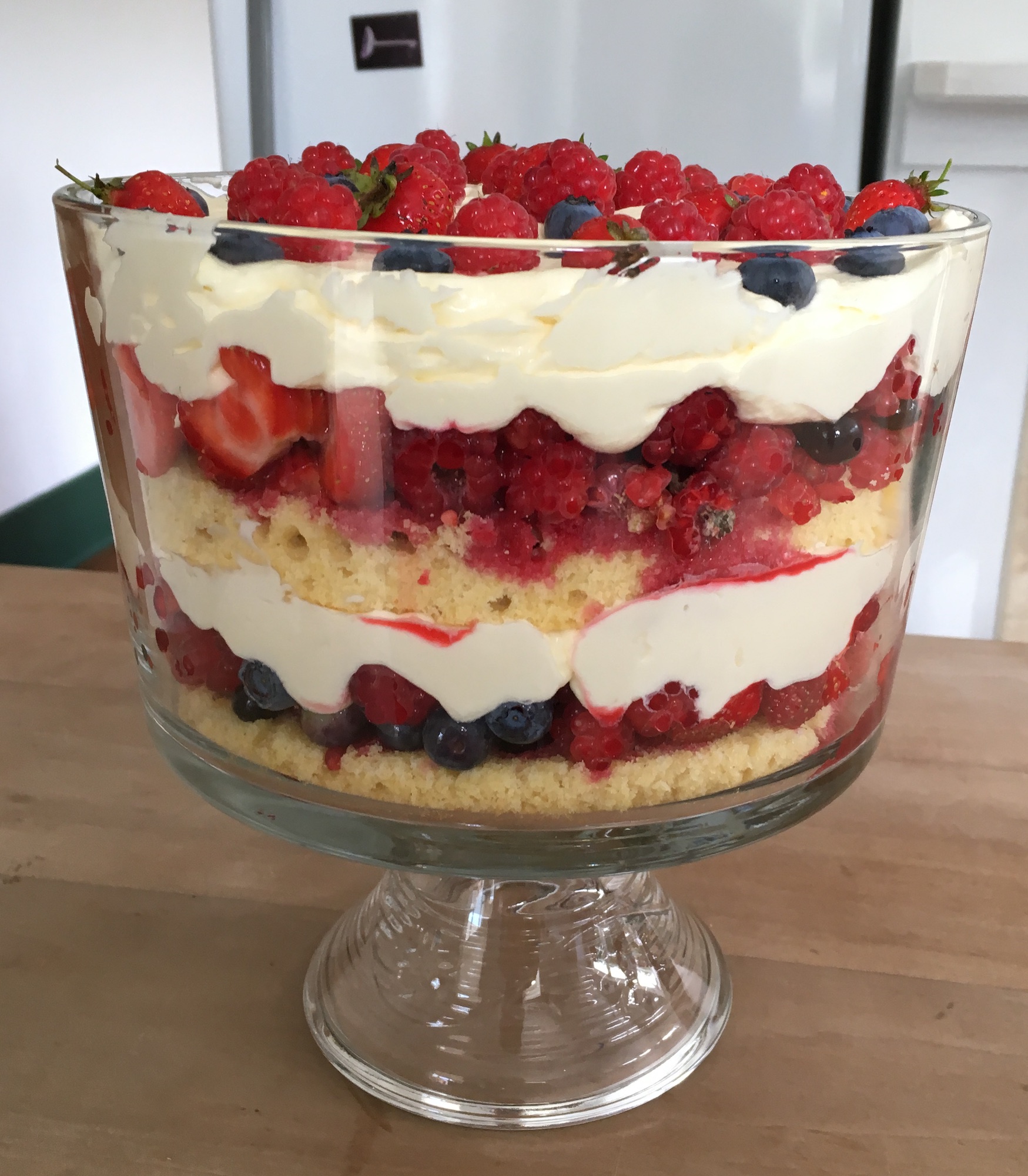
Okay, so I wrote the Christmas Baking blog post a couple of days ago, and then this happened. We picked another mountain of fruit this morning, and it happened to be a bread day. My original plan was to bake a pie, but my husband agitated for a trifle, but without the custard, which he’s not fond of.

So into the baking rotation went a lemon cake. Once it was cool, I sliced it and layered it with fresh fruit (strawberries, raspberries, black currants and blueberries), raspberry sauce, and a mixture of cream cheese, whipped cream, sugar and vanilla (inspired by this trifle recipe, but I measured nothing, and ignored most of the directions).

Just making it made everyone smile. Eating it … Oh my! I think I have a new favourite Christmas dessert!

Christmas Baking

When I was a kid, my mother would start her Christmas baking just after Thanksgiving. She’d bake dozens of kinds of cookies and freeze them. For weeks before the big day, there would be a big platter of cookies—a few of each of the types she’d made—out for eating. It was a child’s dream. I don’t remember her making anything but cookies for holiday desserts. We certainly didn’t need anything else, with all those cookies available.

Before moving to New Zealand, my holiday baking was similar (though with only one child eating cookies, I didn’t make quite so many as my mother did—she had three young cookie eaters). But it’s changed a lot since then.

Cookies are made with ingredients that store well—flour, butter, sugar, nuts—that’s great for winter baking, when fresh ingredients are hard to come by. But Christmas falls at the height of the summer fruit season here—it’s no wonder the traditional Christmas dessert here is pavlova—a meringue ring filled with fresh fruit (Unfortunately, I’m really not fond of meringue).

At the moment on our property, we are harvesting black currants, red currants, gooseberries, raspberries, strawberries, cherries, and blueberries. With as much as 10 kilograms of fruit coming in every two days, much of that harvest goes into jam, sauces, chutney, or simply gets frozen for later use. But it would be a shame not to bake with that fruit, in favour of cookies, which I can make any time of the year.

So we’ve been enjoying strawberry shortcake, currant pie, and gooseberry crisp. For breakfast, we’ve been eating waffles smothered in fruit, and muffins studded with fruit. For snacks, and with every meal, we’ve been eating fresh fruit—whatever hasn’t gone into baking or the freezer.

Oh, there are cookies, too (why not?). But it’s the fruit I snitch while walking through the kitchen, and it’s the pie I crave for dessert.

Some day I’ll dispense with the cookies entirely … Maybe I’ll even learn to like pavlova.

Catlin’s River Walk—a little bit of magic

My family and I were in the Catlins last week, in the southeast corner of the South Island. It’s a wild and remote area, home to more penguins and fur seals than humans. No urban adventures here—it’s a place for outdoor recreation.

One of the things we did was to hike part of the Catlins River Track (we didn’t have time to do the full track). It was unlike any other place I’ve been in New Zealand.

In fact, it reminded me most of eastern Pennsylvania, in spite of the fact that it shares not a single common species of plant or animal.

The track follows the Catlins River, a beautiful waterway that cuts through layers of limestone in one little cascade after another. Swing bridges cross the river several times, providing great aerial views of the water (and a little excitement for those who don’t like heights). The forest is old-growth beech which provides habitat for myriad native birds, carefully protected by intensive predator control. 

In addition to the beech, we were delighted to see two species of orchid on the forest floor, red-flowered mistletoes in the treetops, several species of slime mould, some lovely mushrooms, and a beautiful native harvestman. The birdlife was noisy and varied, but we weren’t lucky enough to see any endangered mohua. And, amazingly, there wasn’t a single sandfly! 

The whole effect was one of an enchanted forest. We were certainly enchanted.

The track is relatively flat—easy hiking for kids or those who can’t face the usual Kiwi hiking track going straight up a mountain, and because there’s no “goal” to reach, you can simply walk as far as you’d like, and then return. The entire length is 12 km one-way, with a return loop option through forestry land away from the river. 

I highly recommend this track. I’ll certainly be going back when I have enough time to do the whole thing.

Knickers for Posterity

I visited the Otago Museum a few days ago. Among the many artefacts on display, two in particular caught my eye.

The first was a jar of elastic, saved for reuse and donated to the museum by one Jane Barker-Eames. I immediately thought of my grandmother. Every day for at least fifty years, she’s had the paper delivered to her doorstep. Every day she’s taken the rubber band off the rolled-up paper and carefully saved it. By my calculations, that’s over 18,250 rubber bands, dutifully saved for reuse. No doubt many of those rubber bands went on to perform useful tasks elsewhere, but they added up, filling multiple coffee cans (reused, of course), and forming small drifts in kitchen drawers. 

When Grandma recently moved into a rest home, my mother threw away her large rubber band stash (don’t tell Grandma!).

I suspect Jane Barker-Eames was the daughter of a Mrs. Barker, careful re-user of elastic, and that at some point, she faced my own mother’s conundrum—what do do with Mum’s stuff?

Maybe she didn’t even know that jar of elastics was there, tucked inside a sagging cardboard box in the attic along with a dozen empty thread spools, a moth-eaten sweater, and a small tin of safety pins—the entirety of Mum’s estate was packed off to the Otago Museum. Maybe they could figure out what to do with it.

And upon passing through the museum’s doors, Mum’s stuff was instantly elevated from rubbish to artefact, never to be used again.

I think Mrs. Barker would be disappointed her elastic stash wasn’t used in a new pair of knickers.

And speaking of knickers, the second item that caught my eye was a scrap of woven textile identified as a loincloth. It made me think about the pair of underwear I recently tossed out—the elastic had failed and they no longer stayed up (Where was Mrs. Barker’s elastic when I needed it?). I wondered if the loincloth in the museum had been similarly discarded at the end of its useful life. Little could its wearer have imagined that their dirty old knickers would someday sit enshrined in glass to be ogled at by thousands of people, most of whom would be mortified to have their own underwear similarly on display.

It made me wonder if, someday, my underwear might be displayed alongside Mrs. Barker’s jar of elastic as a lesson in frugal living—for want of a piece of used elastic, this poor 21st-century woman went bare-bottomed. Mrs. Barker, on the other hand, always kept her knickers firmly in place.

Hang on to your elastic, ladies.

The Ghost of Christmas Trees Past

Growing up, my parents had an artificial Christmas tree. It was hauled out of the attic the weekend after Thanksgiving and assembled and decorated, ushering in the Christmas season.

I remember one year having a real tree—I loved the smell in the closed-up winter house.

When my husband and I married, we spent a few years finding our Christmas tree tradition. For the first two years, we had an eight-inch tall artificial tree in our mud house in Panama. After we returned to the US, we wanted something bigger. So we spent months making a six-foot papier-mache tree, binding on raffia needles and painting bark on the branches. It was a labour of love, and we used it until we had to move across the country, and knew it wouldn’t survive the experience. 

Then babies happened, and for a few years, our Christmas trees were real trees—there was no time or energy for creativity in those early years.

By the time we moved to New Zealand, we were settled into the parent routine enough to be creative again. And summer Christmases invited creativity. We fashioned trees out of driftwood, dead branches pruned off trees in the yard, an old fishing net, fencing wire and flax stalks, copper plumbing, live runner beans—most trees were inspired by what was lying around the property at the time.

Last year, we fashioned a DNA strand as a Christmas tree. Elegant and simple.

This year, we went for crazy, creating an architectural monstrosity from cardboard boxes.

You might wonder what the point is—wouldn’t it be easier and more, well, Christmasy to do a more traditional tree? Yes. But what is a Christmas tree for?

I view a Christmas tree as a focal point—somewhere for family to gather. Our trees have always been decorated with ornaments that have a history—maybe they were made by someone special, or given by a friend, or came from an exotic location. Decorating the tree has always been a time to celebrate the family stories behind the ornaments.

Why shouldn’t that family activity extend to making the tree itself? This year’s tree took a lot of time to make, and we spent several evenings as a whole family working on it—making a tremendous mess of the living room, laughing, and enjoying each other’s company and creativity. That’s exactly what Christmas traditions should do.

So, perhaps our trees don’t meet the traditional definition of a Christmas tree, but I think they embody the spirit of the season.

Summer?

It’s been decidedly un-summer-like recently. We’ve had an exceptionally wet two weeks—there’s a puddle in the yard, Coes Ford is flooded, and weeds and mushrooms are sprouting everywhere.

Fortunately, that hasn’t stopped the strawberries. When my daughter braved the rain to pick, she found a surprising number of slug-bitten but delicious ripe fruits.

Strawberry shortcake for dessert, strawberries on my morning muesli, strawberries every time I walk through the kitchen…it must be summer!

Now, if only we’d see the sun…

Upcoming Events!

This Saturday, 24 November, will be a great day for book lovers in Christchurch! Two great events will be running all day. I’ve teamed up with author Jo Carson-Barr, so we’ll both have a presence at each event.

Jo will be meeting readers and selling both our books at the Wham Bam Author Jam, at the Addington Raceway from 10 to 4. Lots of other authors will be there, too, from New Zealand and Australia. It’s a great chance to discover some new authors and books!

Get tickets and more info

I’ll be at the Tamariki Book Festival in Raoura Park from 10 to 3, along with a bunch of other local authors. The Festival includes readings (mine is at 10.20 am), activities for kids (including a scavenger hunt with prizes!), and opportunities for kids of all ages to do a little creative writing of their own. I’ll have live insects for kids to check out, and will talk about how I use science in my creative writing. I’ll also be selling my books and Jo’s.

Get more info about the festival