Once a Gardenaholic, Always a Gardenaholic

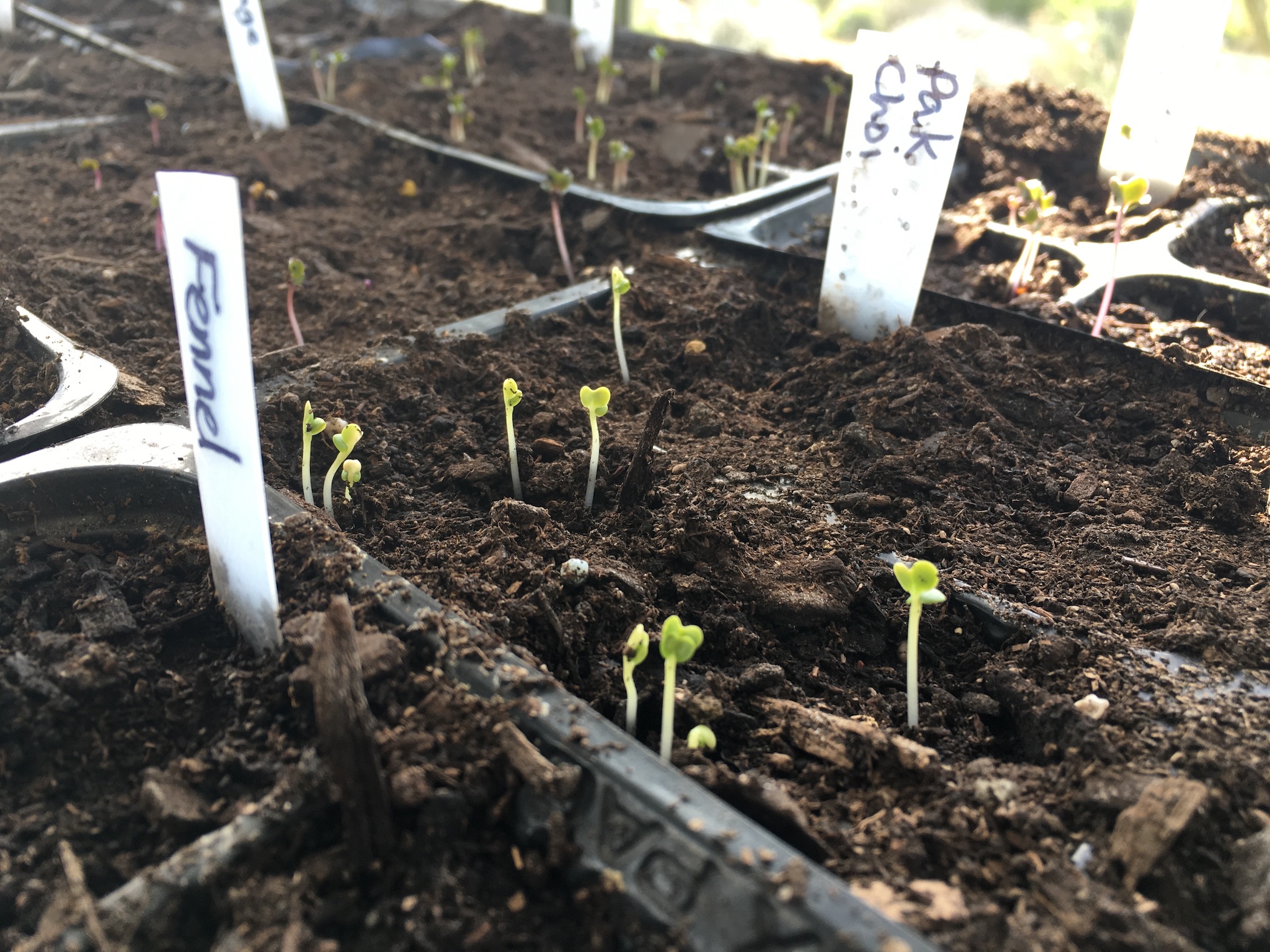
This past weekend was the beginning of the gardening year. The first of the seeds are in flats in my office. My plan was for a minimal garden this year, since I’ll be splitting it between the old and new places—caring for so many plants on two properties is a daunting prospect.

But of course, when I started planting, all thoughts of restraint evaporated. I’d splurged when buying seeds—that purple cauliflower looked gorgeous in the catalog, and who could resist a small-stature eggplant with glossy dark fruits? And once I had the seeds, there was no question I’d plant them, along with all the regular varieties, of course. Never trust a new variety until it’s proven itself.

So here I am, one weekend into the new garden year and already overdoing it.

Some things never change.

Winter Baking—Anise-scented Fig and Date Swirls

After a week of frosty mornings and gloriously warm sunny days, the weekend has brought us cold, drenching rain. 

So, the only thing for it was to bake!

I stocked up on my homemade granola and made a batch of Mommy’s Magical Crackers, but the fun baking for the day was a batch of fig and date pinwheels. I’ve only made them once before, but loved them. Flavoured with anise and rich in figs, they have a unique taste and texture that improves with age.

These are straight from my favourite cookie cookbook (the book itself is a work of art), The Gourmet Cookie Book. They take more time to make than many cookies, but the results are as attractive as they are delicious—well worth the effort.

1 cup dried figs
1 cup pitted dates
1/3 cup water
1/2 cup plus 2 Tbs sugar
1 3/4 cups all-purpose flour
1 Tbs ground anise seeds
1/4 tsp baking powder
1/4 tsp baking soda
1/4 tsp salt
125 g (1/2 cup) softened butter
125 g (4 oz) cream cheese
1 tsp vanilla
1 large egg yolk
1/4 cup raw sugar (optional)

In a food processor or blender, puree figs, dates, water and 2 Tbs sugar. Set aside.

In a bowl, whisk together flour, anise, baking powder, baking soda and salt. In another bowl beat together butter, cream cheese, and remaining 1/2 cup sugar until light and fluffy. Add vanilla, egg yolk and flour mixture and beat until a dough forms. Form dough into a disk and wrap in wax paper. Chill about a hour, until firm enough to handle (I found in my winter-cool house I didn’t need to chill the dough at all).

On a floured surface, roll out dough into a 33 x 25 cm (13 x 10-inch) rectangle about 8 mm (1/3-inch) thick. Gently spread fig and date mixture evenly over the top, leaving a narrow border around the edges. Starting at one long edge, roll the dough into a jelly-roll-like log. Optional: roll log in raw sugar to coat. Wrap in waxed paper and chill 4 hours until firm.

Slice into 8 mm (1/3-inch) rounds and place on a greased baking sheet. Bake about 13 minutes at 180ºC (350ºF) until golden.

No-fuss Bliss Balls

I like the idea of the now-ubiquitous protein balls/energy bites/bliss balls/whatever they’re called. I thought they’d be great for my athletic daughter, to keep her weight up.

But when I bought some, we found them more candy bar than energy boost—overly sweet and not particularly tasty, either.

So I was intrigued when I found the book, Energy Bites, by Christine Bailey in the cookbook section of my local library. 

My excitement quickly turned to disappointment as I flicked past recipe after recipe that included such hard-to-find ingredients as xylitol, yacon syrup, matcha, colostrum powder, and lucuma powder. Surely, one should be able to concoct a not-too-sweet high-energy treat from ingredients I already had in the cupboard.

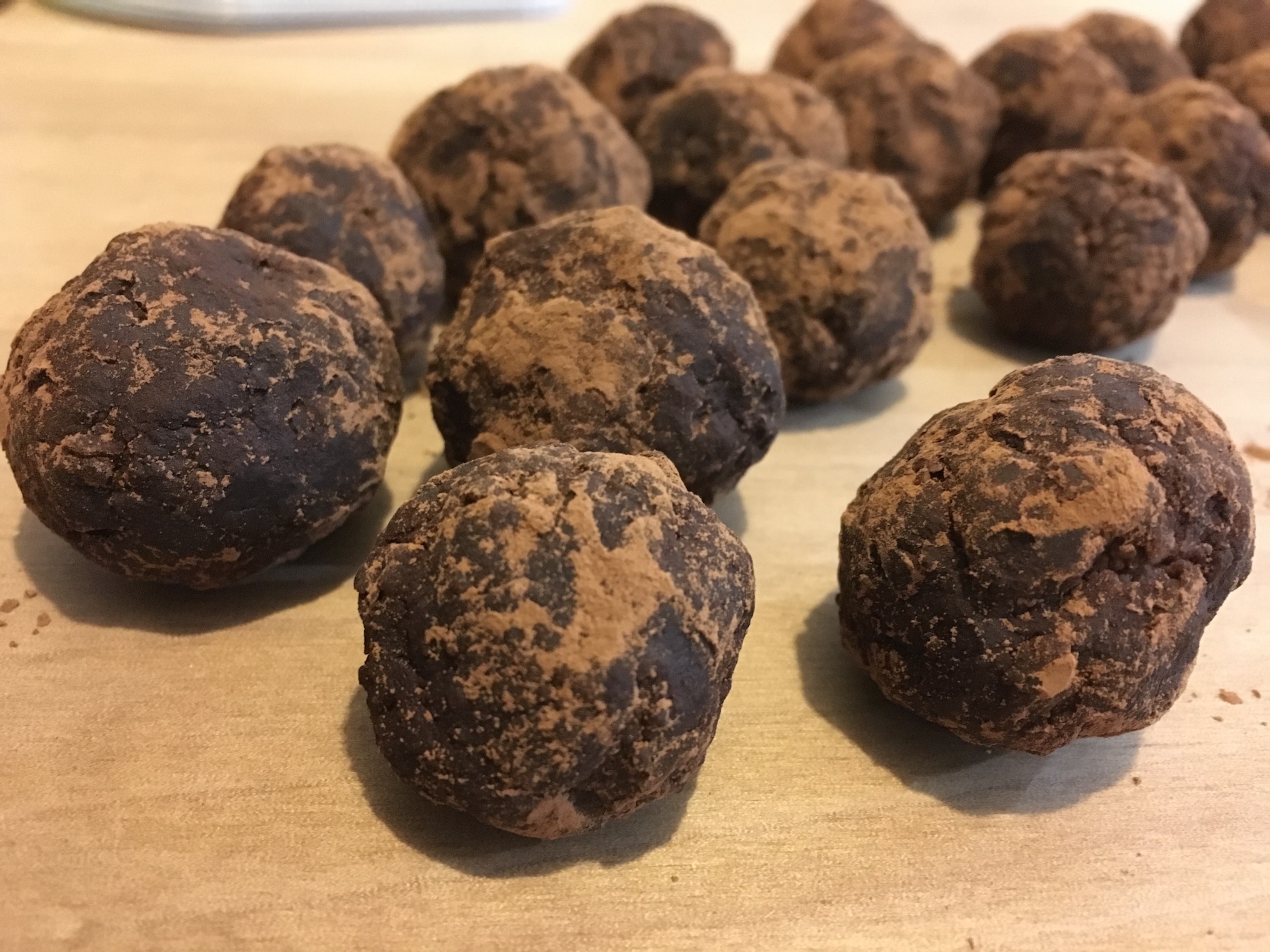
I pulled out my food processor and started dropping things in and buzzing them until I had a mixture of the right consistency and flavour.

  • A cup of walnuts
  • A handful of coconut
  • Two spoonfuls of unsweetened cocoa
  • A handful of dates
  • A few spoonfuls of peanut butter
  • A pinch or two of cayenne pepper
  • Several gratings of coarse salt

The result was bitter with chocolate, rich with nuts, and just a little zingy with salt and cayenne. A definite improvement over the store bought ones, and easy to whip up with staples from my cupboard.

Winter Losing its Grip

When I returned a tool to the equipment hire place yesterday morning, the owner asked if I thought we’d have snow.

At school, the staff were buzzing with the possibility of a snow day. “Don’t tell the kids!” one whispered. “They’ll go crazy.”

The weather forecast is for a southerly storm to blow in on Wednesday. Depending on which forecast you look at, we might have snow to 400 metres or to near sea level.

But regardless of the forecast, it’s beginning to feel like spring.

Yesterday evening when I stepped out to close the chicken house, lambs bleated in nearby paddocks, starlings warbled in the treetops, and blackbirds fought over new territories. 

The sky was still light, though it was nearly six o’clock, and the air was soft and full of promises.

Today I am comfortable in a t-shirt, and have opened the doors and windows to warm up the house in the winter sunshine.

Whether it snows tomorrow or not, winter has lost its grip. Spring is on its way.

Gifts from the freezer

With love, from the freezer.

Our apple trees struggle against the macrocarpa hedge shading them and sucking away nutrients and moisture from the soil. I’m sure many years ago, when a previous owner planted them, they seemed far enough from the hedge, but today, without aggressive pruning, the hedge would engulf the fruit trees. So we rarely get large harvests of apples, and most years we eat them all fresh, long before they go wrinkly with age. 

This past summer was different. We had extra apples after accepting a big box of them from a friend, and then realising our trees held more than we thought. There was no way we were going to use all of the apples before they dried out, nor did I want the kitchen and dining room littered with baskets and bowls of apples for months. I filled the last of our empty canning jars with applesauce and still had more fruit. So I made a large quantity of apple pie filling, cooking the apples just enough to soften them slightly and release some of their juices. Then I froze it in pie-sized quantities. We enjoyed apple pie all through autumn.

We thought we’d finished the apple pie filling off, but the other day, my husband found a container of it on the bottom of the freezer. To find that pie filling on a cold and rainy weekend was a beautiful gift. A gift from our summer selves and from the freezer itself, which hid it until the need was greatest.

So while rain streamed down the window panes, I made a pie, filling the house with the warming smell of baking cinnamon, apple and pastry. We enjoyed the pie warm with whipped cream by the fire on a dreary night—a wintertime decadence to make us forget the damp and cold.

Thank you, freezer, for the wonderful winter gift.

Mail-order Summer

The rain has been steady all day—cold and drenching. Even indoors, I feel like the cold and damp has settled into my bones. Hibernation seems like a good idea.

But midday, the post arrived.

I braved the rain to run to the mailbox.

Inside, I found summer, or at least the promise of it. My seed order had arrived.

I’m still considering hibernation—this rain is supposed to continue for days—but now I have seeds to sort out and gardens to plan. With my mind on summer, I can’t possibly feel cold.

Orange Coconut Scones

Sunday morning breakfasts aren’t always the best planned meals. Sometimes I start baking before I really know what I want to make. Sometimes I decide to make something, only to discover half way through that we’re missing an ingredient.

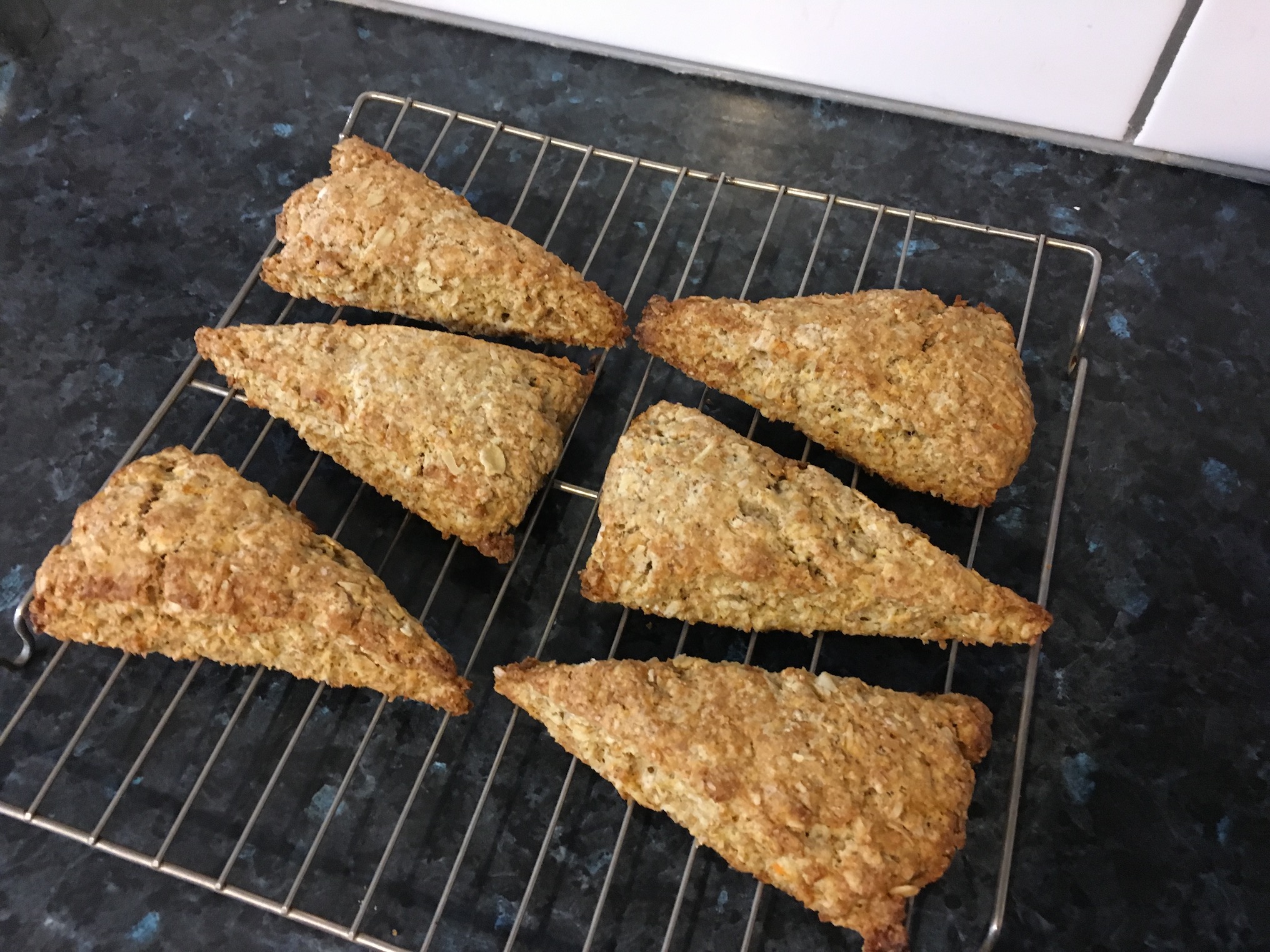
Both of those happened this morning. I grabbed a recipe for oat scones, not really wanting them, but not having any better ideas. On my way to the flour bin, I passed the fruit bowl, spilling over with oranges. I could make orange oat scones! I grabbed an orange and started considering how the recipe would change with the addition of grated orange peel. By the time my consideration was over, the new recipe bore little resemblance to the one I was technically following.

I was cutting the butter into the flour mixture when I remembered there were no eggs in the house. Well, I’d have to make my scones without an egg. No problem—scones are just biscuits fancied up with egg and sugar anyway. They’d be fine.

They were more than fine.

They were downright delicious.

So next time you think you want to make oat scones, but decide not to at the last minute, and then find you have no eggs in the house, try these lovely, light and tasty orange coconut scones!

1 1/2 cups wholemeal flour
1 cup old-fashioned rolled oats
3 Tbs sugar
2 tsp baking powder
1/2 tsp baking soda
1/2 tsp salt
110 g (7 Tbs) cold butter
grated rind of 1 orange
1/2 cup shredded coconut
1/2 cup + 2 Tbs orange juice
1/2 tsp vanilla

Combine the flour, oats, sugar, baking powder, baking soda and salt in a mixing bowl. Cut in the butter until the mixture resembles coarse crumbs. Add the orange rind and coconut. Combine orange juice and vanilla in a measuring cup or small bowl, and then add to the flour mixture. Stir just until moistened (you may need to add a touch more orange juice). Knead briefly to bring the mixture into a ball. Pat the dough out on a floured countertop into a round about 1.5 cm thick (a generous half-inch). Cut into 12 wedges. Place wedges on a greased baking sheet and bake at 210ºC (425ºF) for 13-15 minutes until golden brown.

Topping the Cake

Red currant jam and coconut on devil’s food cake.

Cake, as I remember it growing up, always had icing on it. Super sweet quick icing, usually, made with Crisco and powdered sugar. I’m sure there was occasionally cream cheese frosting and buttercream frosting. And, of course, frosting came in multiple flavours, including chocolate and peanut butter.

But in my memory, there was always frosting on cake.

I still enjoy frosting, but these days, I’m far less likely to use frosting on a cake than something else, or nothing.

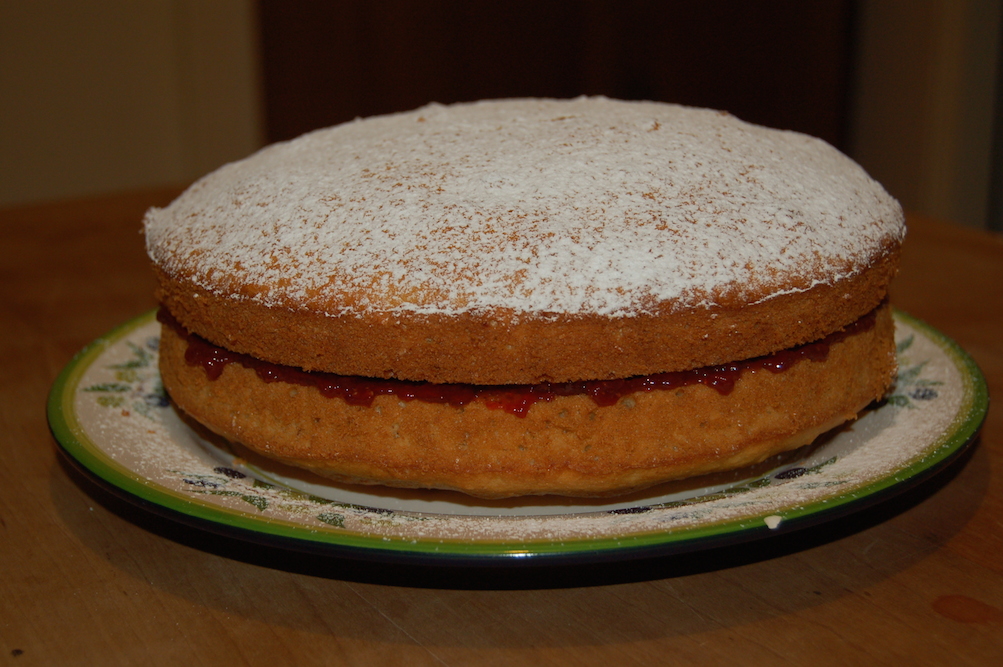
Powdered sugar on top, jam in the middle of a coconut cake.

My current favourite is jam. We always make too much jam in the summer, when fruit pours off the berry bushes and screams out to be preserved. So using a cup of jam to fill and top a cake doesn’t seem excessive.

The best jams for cake are tart ones like currant or gooseberry. I heat the jam slightly in the microwave so it’s smooth and spreadable. Sometimes I just put jam between the layers, but other times I glaze the top with it, too. Once there’s sticky jam on top of a cake, I can’t resist sprinkling things on it—coconut, chopped nuts, grated chocolate—anything that compliments the flavours of the cake and jam.

Straight chocolate is also a nice cake topping—not a continuous layer as you would do with a ganache, but artistic squiggles, dark on a light-coloured cake. They’re pretty and delicious.

I also like powdered sugar sifted onto my cakes. Sometimes I make a stencil out of paper to create pretty patterns with the sugar.

Some cakes need no topping, for beauty or for taste.

And I’m quite fond of cakes with the topping baked on—chocolate chips and chopped nuts sprinkled over the batter before baking is particularly good.

I still like frosting, but other toppings have the advantage of traveling better than frosting does, and I enjoy the variety of flavours and textures along with my cake.

Inspired Red Currant Cobbler

Sometimes you have an idea that simply works.

We have a large quantity of red currants in the freezer from last summer, so we regularly enjoy red currant desserts. Usually, we make crisp with them, but tonight we wanted something different.

I decided to make a cobbler, but I wanted something different from a plain biscuit on top—something sweeter, and with a bit more flavour to complement the intense sour of the currants.

In a stroke of inspiration, I remembered a biscuit recipe in King Arthur Flour’s Whole Grain Baking book. I’ve never made the recipe, but I’ve often looked at it. It pairs cornmeal and maple syrup, and I was pretty sure those were the perfect flavours to go with red currants.

I was right.

The result was perfectly balanced, cake-like, and absolutely delicious (and would probably be excellent with frozen cranberries, if you don’t have red currants).

Combine in a shallow baking dish:
3/8 cup sugar
3 cups frozen red currants

Set aside while you make the biscuit.

Combine in a medium mixing bowl:
1 cup cornmeal
1 cup wholemeal flour
1 Tbsp baking powder
1/2 tsp salt

Cut into the dry ingredients until the consistency of coarse crumbs:
80 g (5 Tbsp) cold butter

Combine in a small bowl or measuring cup:
1/2 cup milk
1/4 cup maple syrup

Add the liquid to the dry ingredients, mixing until evenly moistened. Pat out the dough into a shape to fit neatly over the fruit in your baking dish. Poke steam vents into the dough. Bake 30-40 minutes at 190ºC (375ºF). 

*Like any baked fruit dessert, this gets quite bubbly. Mine boiled over onto the bottom of the oven—you may want to set the dish on top of a baking sheet to avoid a mess in the oven.

New Year, New Garden

A blank slate for a new garden–10 cubic metres of compost ready to be added to the soil.

Another solstice has passed and we can look forward to more sunlight each day. We celebrated Matariki—the Māori new year—last week, too, so it’s well and truly time to start thinking about the garden for this coming summer.

This year, my garden decisions are more difficult than they’ve been recently. This year we will be moving house mid-summer, assuming all goes as planned with our new build.

We have already marked out and tilled the garden at the new property, and we’ve planted it in green manure crops for the winter, even though the foundation of the house hasn’t even been laid yet. 

But moving mid-summer, it’s hard to know where to plant all the crops. Late-season vegetables like pumpkins and dry beans are easy—they’ll go in the new garden. Early crops like broccoli and radishes are also easy—they’ll go in the old garden.

Unfortunately, a huge number of crops will come on before we move and still be going strong afterwards. I’ll want them at both houses. But the prospect of maintaining two full gardens forty-five minutes apart from one another is daunting.

Add to the challenge the fact that the soil at the new garden is hard clay generously studded with rocks. It will easily take a decade of soil improvements to make the new garden as productive as the old, and it will always be rocky, no matter how much organic material I can build up.

So in my garden planning and calculating this year, I have to lower my expectations. I have had such a glorious garden, with excellent soil, for many years. It will be a challenge to start over, rehabilitating a compacted paddock scarred by years of commercial agriculture and not naturally blessed with loamy soil.

It will mean finding new varieties that thrive in different conditions, pulling out all the tricks I know for improving soil conditions, and learning new ways of working with the soil. I am prepared for disappointment, and excited by the challenge.

Stay tuned …