Beautiful food

2016-02-22 17.55.00 smI was making a lovely Indian dish the other day, with paneer, zucchini, green beans and tomato, and as I stirred everything into the pot, I couldn’t resist taking a photo.

And I realised that half my enjoyment of food comes from the beauty of the colours and shapes in the pot and on the plate. That beauty is what turns an ordinary meal into an extraordinary one.

Pilando

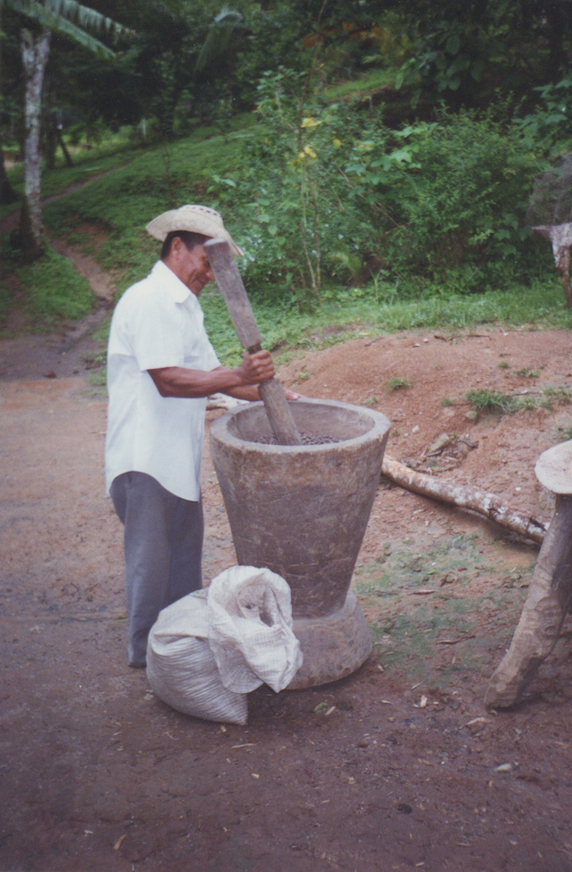
PilandocoffeeJulian smThrowback Thursday was so fun last week, I thought I’d do another one this week.

This week I dredged up a photograph of Julián, our landlord and next door neighbour in Panama. He was tickled to pose for this photo—he always enjoyed sharing cultural differences.

In this photo, Julián was grinding coffee in a massive mortar and pestle called a pilón. These tools get near-constant use—grinding coffee, pounding rice to remove the hulls, grinding corn—and I loved to hear the deep, rhythmic thud, thud, thud of the neighbours at work.

And I was always grateful to buy my coffee already ground…

A pilĂłn is carved from the trunk of a tree, and when it’s not in use as a grinder, often serves, tipped on its side, as a bench in the kitchen. Every family we knew had one, but they must last forever, because I never saw a new one. They were all beaten and dinged, and I imagine they must be able to tell some great stories.

Soundtrack For the Drive Home on a Summer Evening

(with special thanks to Dave Dobbyn)


2016-02-24 20.57.32Traffic thins, dusk falls

Be mine tonight.

Windows down, breathe cool air

Just add water and dissolve, Baby.

100 kilometres per hour past disinterested sheep

Guilty through neglect.

Moths in the headlights make furry windshield thuds

The outlook for Thursday, your guess is good as mine.

Stray hairs tap tap tap a rhythm on my cheek

It’s magic what she do.

Purple mountains against a bruised apricot sky

Shouldn’t you ought to be in love?

Kids playing frisbee in the dusk

            Call me loyal

Round the bend, the neighbour’s dogs bark

Welcome home.

A Sense of Place

IMG_0147 copyMy daughter’s homework today involved exploring the idea of gratefulness.

One of the questions asked her to photograph the thing she was most grateful for.

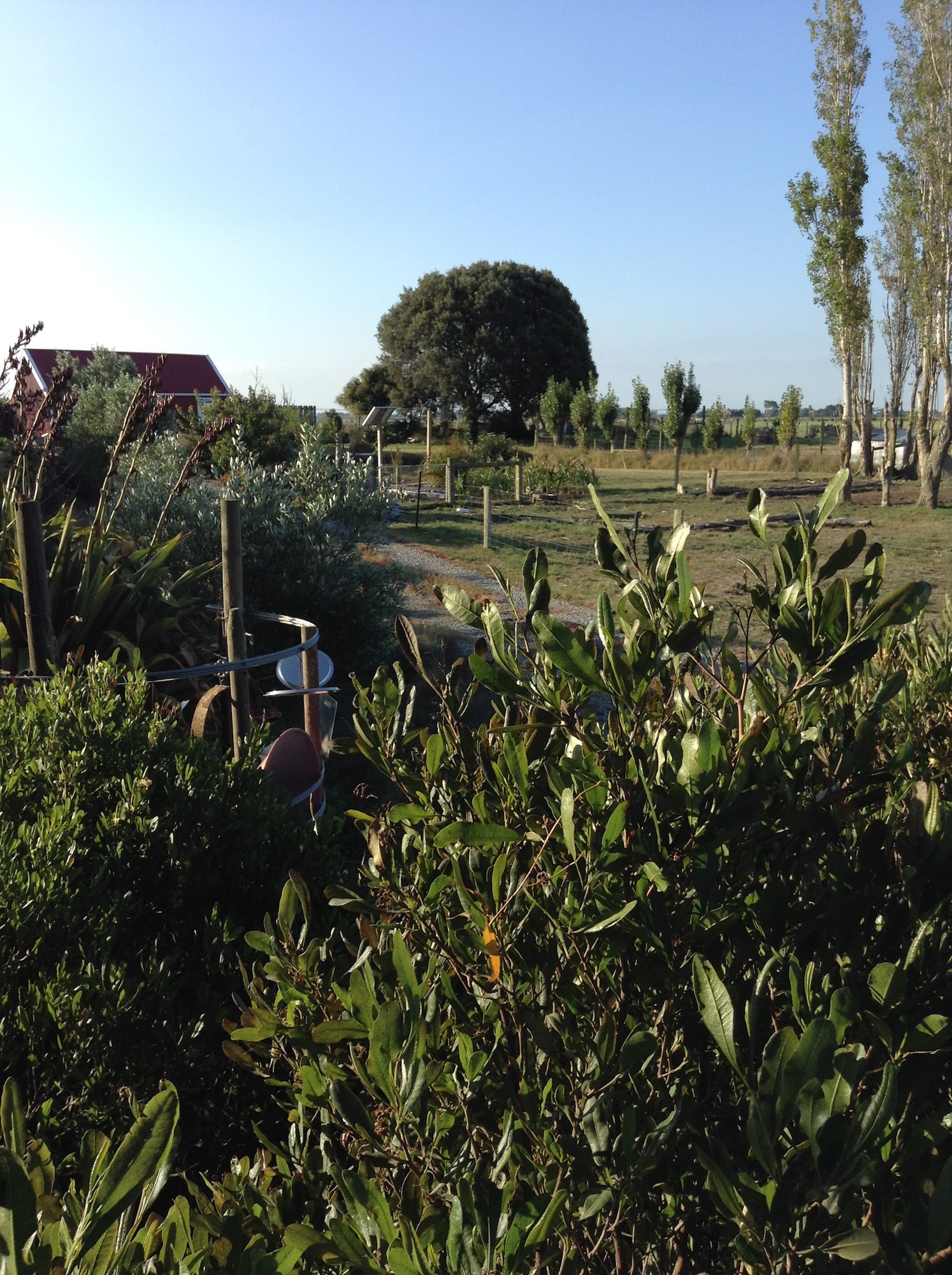
This is the photograph she took. It is of our property, and includes a bit of everything here—trees, paddocks, sheds, gardens, and art.

Her answer doesn’t surprise me, and I echo her sentiments. I, too, am grateful for this piece of land that feeds us, shelters us, and provides us the vast majority of our entertainment.

And though some parents might have wished for her to say that she was most grateful for her family, I am pleased that my daughter has put her roots into the soil. I am pleased that she has developed a strong sense of place. In fact, I would have expected nothing less from the girl who spends every waking minute outdoors.

We develop relationships with places, just as we develop relationships with people. Those place relationships help us shape our identity, and place us in context in the larger world around us. They provide us an anchor, a whakapapa (cultural identity), and a homeland.

Our sense of place gives us a solid foundation from which to explore and learn to love the rest of the world. It makes our relationship to the entire planet more personal.

In order to care about the earth in general, we must first care about a special place.

In order to understand the tragedy of the loss of a rainforest, we must first understand the tragedy of the loss of our favourite climbing tree.

In order to understand the magic of an unknown place, we must first feel the magic of our own special place.

And so, for today, I am most grateful for this piece of land that has rooted my daughter’s sense of self, family and community in the earth.

22 February 2011

100_0076 smToday is the fifth anniversary of the Christchurch earthquake that killed 185 people and brought life as we knew it to a grinding halt.

It was the day my husband insisted we get cell phones.

It was the day I started posting details of my whereabouts on the fridge every morning, just in case I didn’t make it home.

Our house was fine (anything vulnerable to quakes had been destroyed by the September 2010 quake), and we watched in dismay as news of the destruction and death in town trickled out to us. We watched the rescue helicopters fly over, ferrying patients to Dunedin.

When we loaded the car with tools and food and drove to the eastern suburbs two days later to do what we could to help, we were stunned by the destruction.

Five years later, those eastern suburbs are still struggling, and life for all of us is fundamentally changed.

New Zealand sits on the Ring of Fire. It was built by the Ring of Fire. Earthquakes and volcanoes are simply what happens here.

Do earthquakes frighten me? I don’t know if frighten is the right word, but I will admit to a surge of adrenaline with every tremor. I admit that whenever I enter a new room or building now, I immediately assess earthquake hazards, shelter, and exits. I’ve lost my love of cliffs and caves, replaced by wariness and visions of falling rocks. I still pause at the sound of a loud rumble, poised to dive under the table until it resolves into the sound of a truck.

I suppose we could leave New Zealand. We could move back to the U.S., to live on firmer ground.

But, much as I hate to admit it about my homeland, there is an ugly culture of fear in the U.S. When a presidential candidate can preach a doctrine of hatred, misogyny, and racism and gain in the polls, that feels like a betrayal. When schools are patrolled by armed guards, it is an outrage. When violence against each other is considered normal, there has been a failure of humanity and society.

But in an earthquake, there is no malice. Though it may cause great destruction, it is impersonal. It is simply the earth doing what the earth does. An earthquake is not a betrayal. It is not an outrage. It is not a failure of humanity and society.

Not that bad people don’t do bad things in New Zealand—there is racism, sexism, and violence here, too. But here I need not wonder who is packing heat on the street. Children walk to school. Fear of each other does not pervade life.

And so I choose earthquakes. I choose the destruction and stress, the uncertainty, and the inconvenience. And if someday the earth should shrug me off as it shifts to a more comfortable position, I’m okay with that.


Sing to Your Plants

DSC_0006smMy plants are fond of show tunes—Oklahoma!, Pirates of Penzance, The Music Man.

At least, I hope so, because I sing show tunes in the garden.

Sometimes I switch up the words so the song is appropriate to the moment:

Oh what a beautiful eggplant!

Oh what a beautiful bean.

I’ve got a wonderful feeling

I’m going to eat like a queen.


I sing to the chickens and goats, too, though they prefer folk songs.

Oh my chickens, oh my chickens,

Oh my darlin’ little birds.

You’re revolting, you’re disgusting,

You’re obnoxious little turds.


I don’t know if any of my charges like it. I don’t believe that my singing will actually make my plants grow better. But when I’m pulling stubborn weeds, mucking out the chicken house, or trimming goat hooves, I can either grumble or sing. I choose to sing.

Feijoa

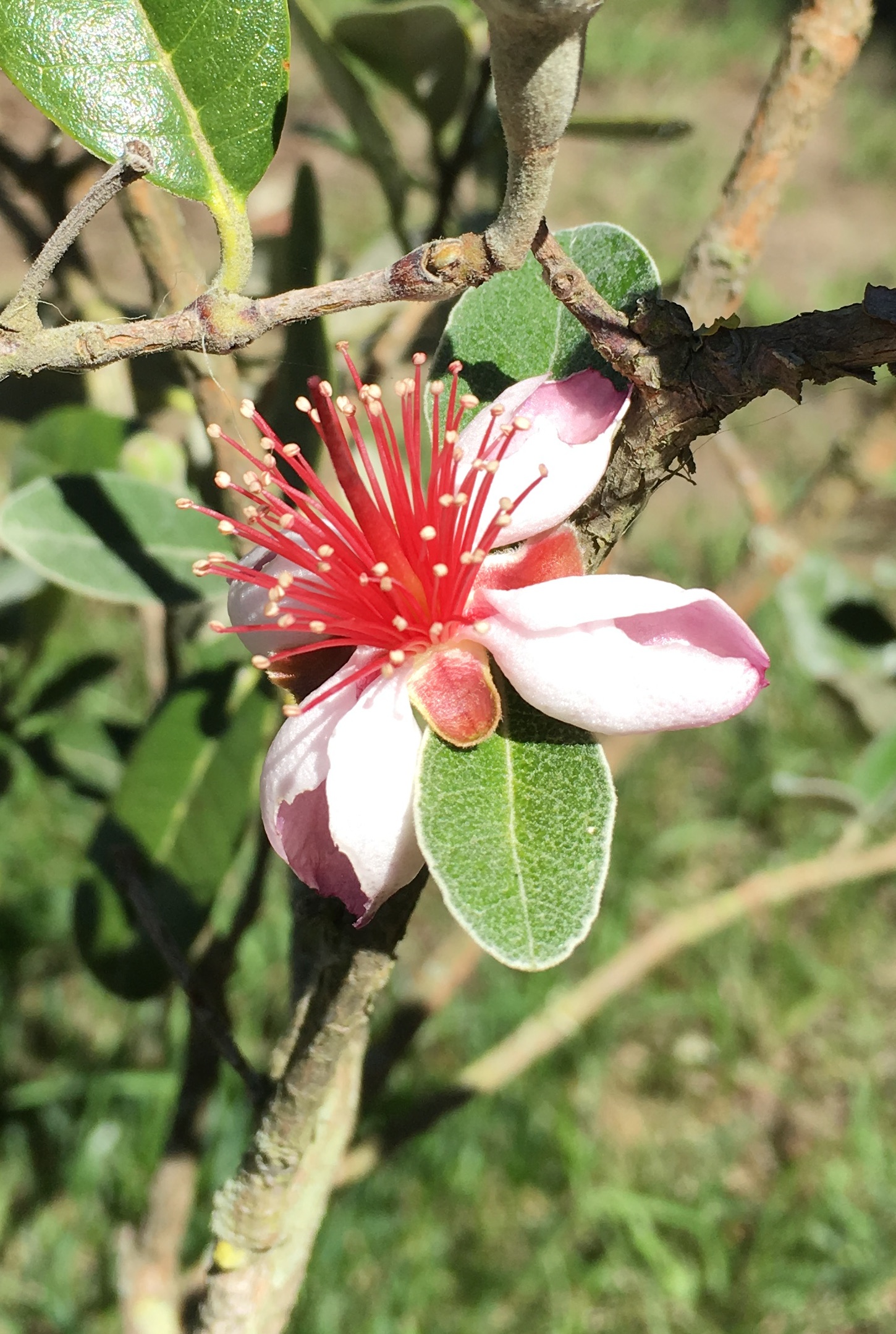
2016-02-01 15.35.52 cropI had never heard of the feijoa before arriving in New Zealand, though it is native to South America and is grown in various locations around the United State. I’m afraid that even after eleven years, I’m still not fond of feijoas. In fact, I can’t even stand having them in the house—the smell alone makes it hard for me to breathe.

Wikipedia says, “Feijoa fruit has a distinctive, potent smell that resembles that of a fine perfume.” Which may explain my response to the smell and the taste, as I have to walk out of the room if anyone enters wearing perfume.

Still, we have two small feijoa trees. Planted too close to our macrocarpa hedge, they have never produced fruit (for which I am grateful), but they do flower. Their flowers are stunning, and I’d grow feijoas any day, just to see these tropical-looking beauties.

Throwback Thursday—Amas de Casa

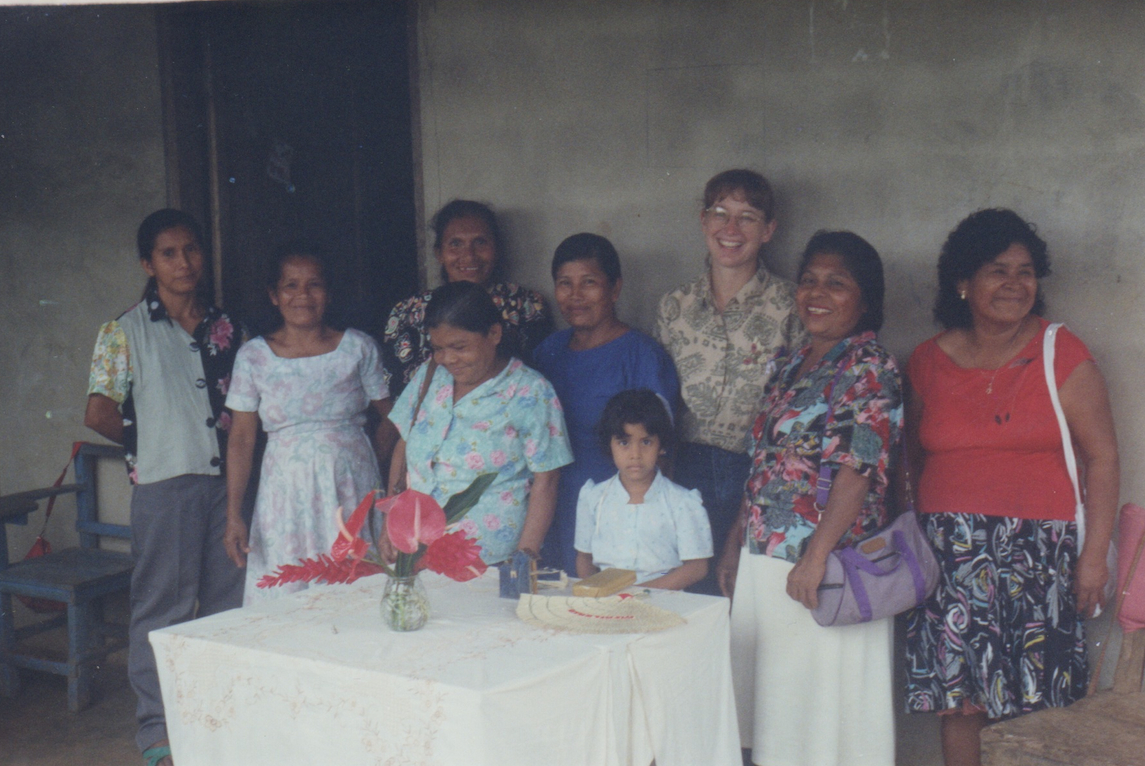
AmasdeCasasmI thought I’d take a trip down memory lane today and share this photo of some of the women I worked with as a Peace Corps Volunteer in Panama.

I regularly joke that this is my favourite photo ever, because it’s the only one in which I look tall (at 5-foot 2, I towered over most everyone in my village). But that isn’t really why I love this photo. I love it because of who is in it.

These women were all part of the Membrillo Amas de Casa (housewives) group. These women welcomed me into their group, and taught me so much. Together we created a tree and medicinal plant nursery. We created a demonstration garden using soil conservation techniques. We made bollo for Carnival. We laughed, we drank coffee, we shared our lives.

Two of the women were particularly special to me.

Onofre Gonzalez, the woman to my right, taught me that when it comes to using a machete, it’s attitude that matters, not size. Onofre could take down a tree in seconds with her little, wickedly sharp blade. She once snicked a palm viper’s head off right in front of me with her machete before I even saw the snake. She carried loads on her head, feeling the path with her bare feet like a cat.

To my left is Francisca Chirú. She and her husband, Cándido, adopted me and my husband into their family, though we did not live with them. They embraced us as though we were long lost friends, and we became a regular fixture at their house. They taught us to weed, included us in their family celebrations, and shared their lives with us.

All these women were incredibly strong, creative, and loving. Even 22 years later, I am still honoured and humbled by their acceptance of the tall white stranger among them.


Apricots…with recipe

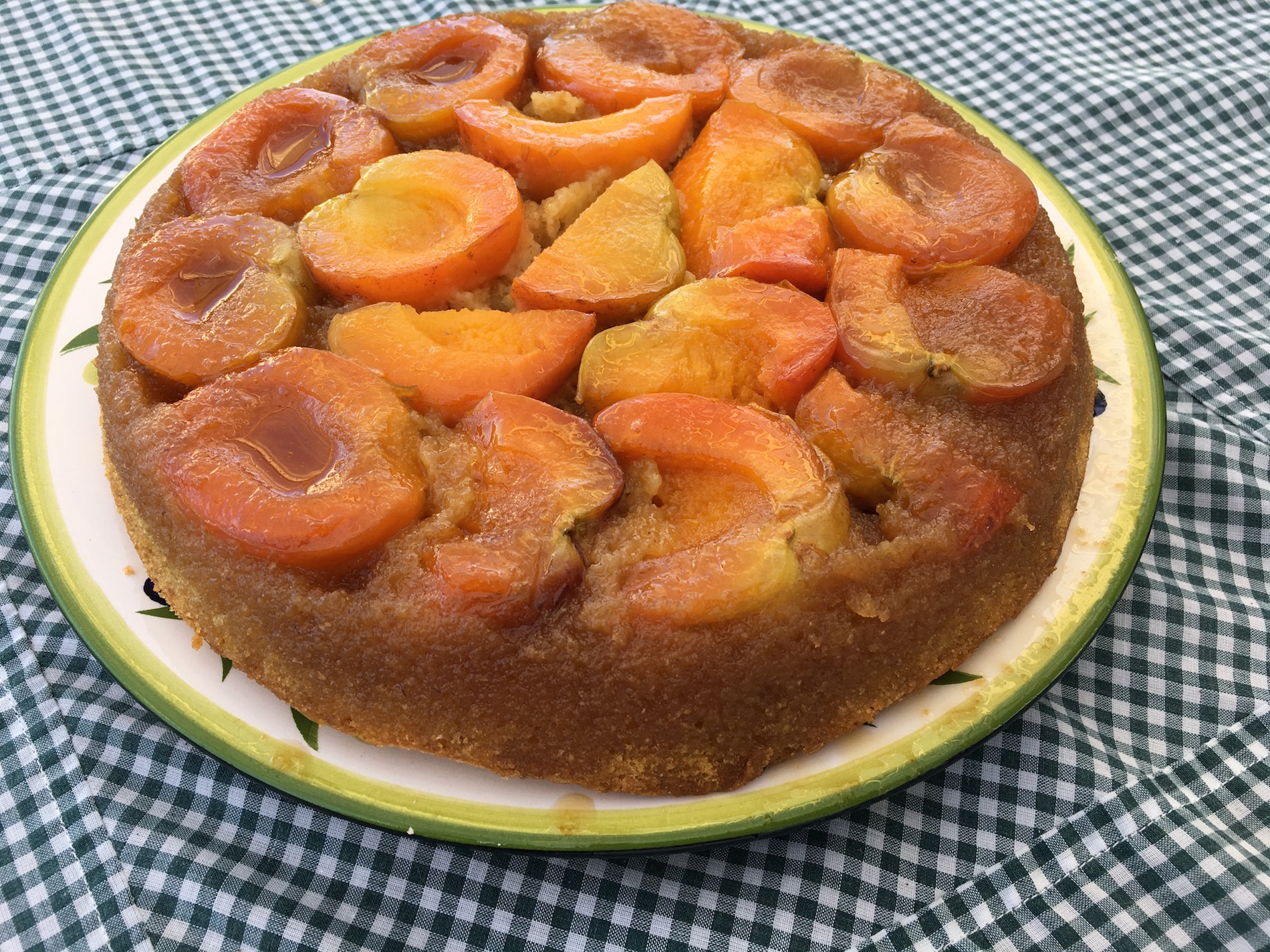
2016-02-16 18.53.39 smAs I wandered through the pond garden yesterday evening, watching the fish and the damselflies, I noticed that the apricots had blushed. I tested one. It was soft and ripe—so ripe, the juice dripped down my arm when I bit into it.

This was the first year the apricot tree has given us anything, and the wind stripped many of the fruits a month ago, but there were still about two dozen on the tree, and they were all ready to pick.

So this afternoon, I made apricot upside down cake—for the second time in a month. This time, I’ll give you the recipe…

This is adapted from a recipe in the 1997 edition of Joy of Cooking.

Melt 3 Tbsp butter in a 9-inch (20cm) cast iron skillet or round cake pan. Tilt the pan to coat all sides with butter.

When the butter is melted, sprinkle ½ cup brown sugar evenly over the bottom.

Arrange apricot halves, cut side down in the bottom of the skillet, completely covering the bottom.

Whisk together in a medium bowl:

2 large eggs

2 Tbsp buttermilk

½ tsp vanilla

Combine in a large bowl:

½ cup all-purpose flour

½ cup whole wheat flour

½ cup brown sugar

Âľ tsp baking powder

ÂĽ tsp baking soda

ÂĽ tsp salt

Add to the flour mixture:

6 Tbsp softened butter

6 Tbsp buttermilk

Beat on low speed just until the flour is moistened, then increase the speed to high and beat for 1 ½ minutes. Add one-third of the egg mixture at a time and beat 20 seconds after each addition. Pour batter over fruit.

Bake at 180C (350F) for 35-40 minutes. Cool in the pan for 2-3 minutes before unmolding. To turn the cake out, run a knife around the edge to ensure the cake has separated from the pan. Place a plate on top of the pan and quickly flip pan and plate together. Carefully lift off the pan.