Cabbage Overload

img_2762When my husband and I lived in Panama, we made the trek to the provincial capital, Penonomé, every week or two. The trip involved half an hour of walking to the closest bus stop, then a bumpy forty-five minute ride down the mountain in the back of a pick-up truck. It wasn’t something to do daily.

In town, we would pick up our mail, phone home, and do some shopping. In our village, we could buy rice, beans, and a few other necessities in small quantities from the little tiendas, but we could only get vegetables from town (we were nowhere close to self-sufficient in vegetables there).

With no refrigeration, and tropical heat, fresh vegetables didn’t last long. We ate well for a few days after a shopping run, but by the end of the week, we were usually down to plain rice.

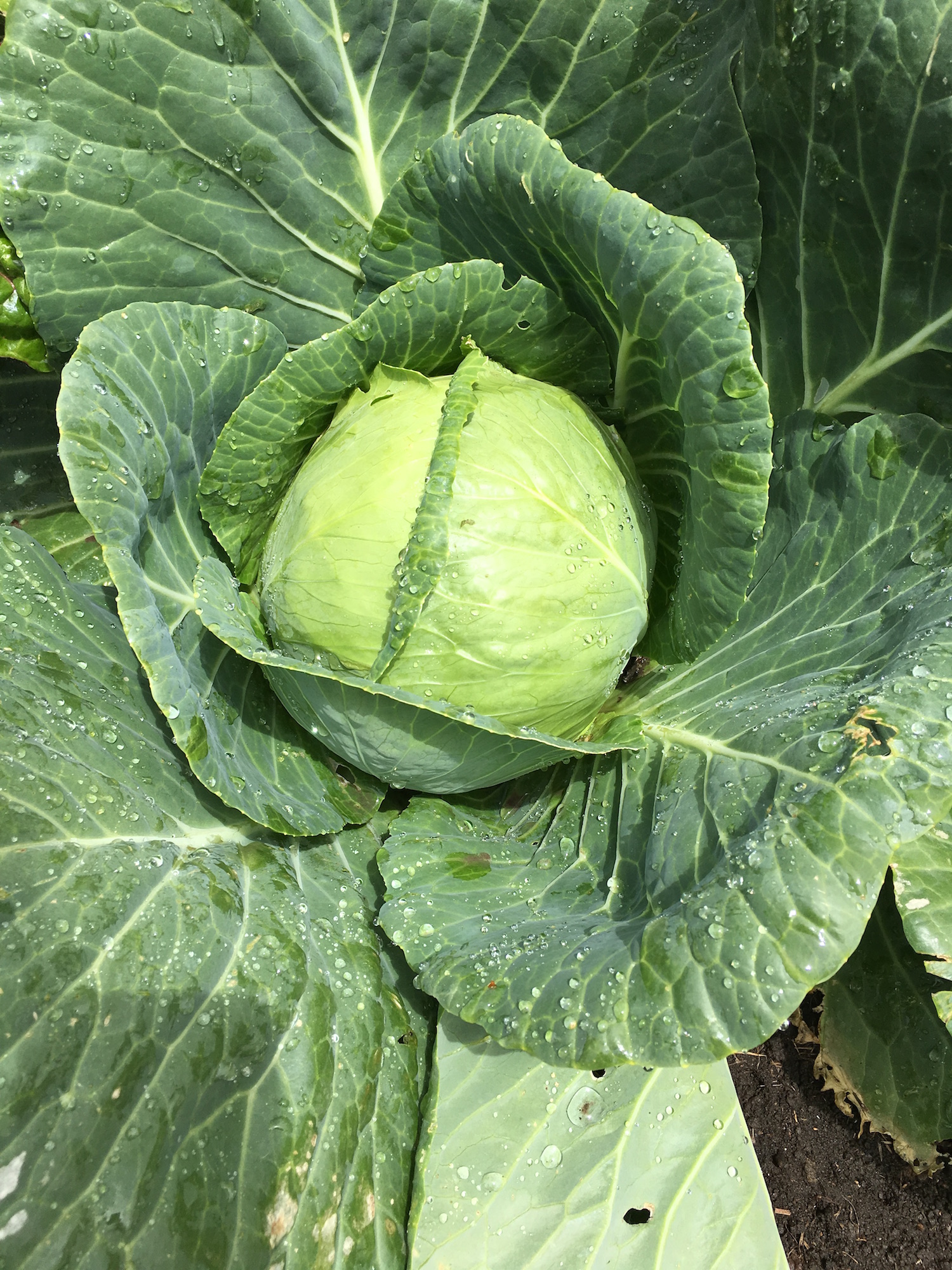
The most long-lasting vegetable we had was cabbage. A cabbage might last an entire week before it was too wilted or rotted to eat. So every trip to town, we bought a cabbage, and for at least two meals a week, we ate cabbage and rice.

At that rate, in our two years of Peace Corps service, we ate about a hundred cabbages. By the time we left, we couldn’t bear to even look at a cabbage. It was several years before we considered eating one again.

Today, we enjoy about a dozen cabbages a year, most in the form of sauerkraut or coleslaw. The idea of cooking up a pot of cabbage and rice is still repulsive, but with cabbage being a year-round crop here, it’s good to be able to make use of it.

When is a zucchini not a zucchini?

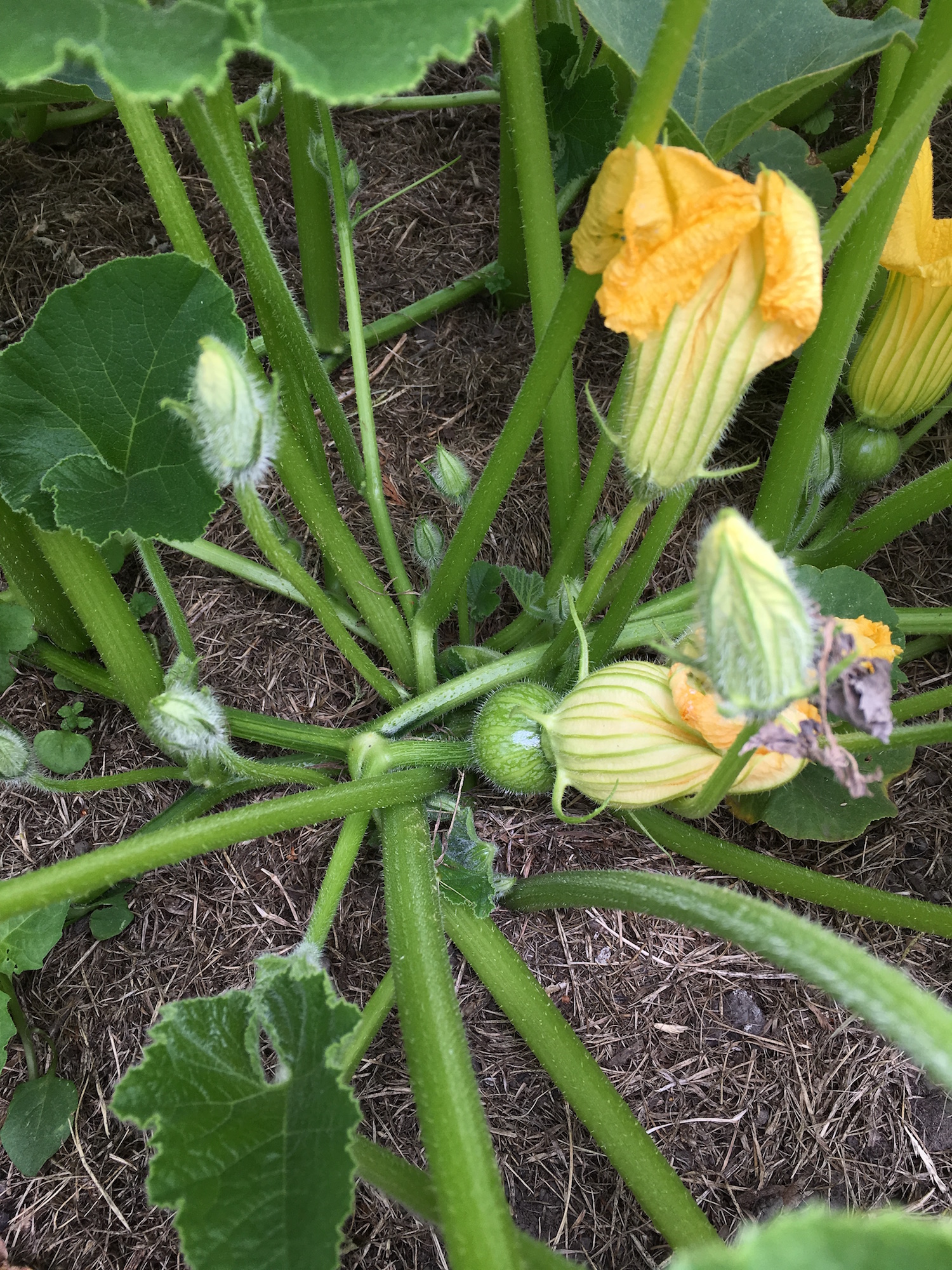
img_2757The zucchinis (courgettes) started producing over a week ago, so I’ve been spending more time among the plants. I noticed that one of the varieties was behaving in a very un-zucchini-like fashion—sending rambling vines out in all directions and forming round fruits. I checked the tag and noted the variety, then looked it up in the seed catalogue. Maybe it was a weird variety I was trying out—I’ve been known to buy some strange plants.

I didn’t find the variety among the zucchinis in the catalogue, and it didn’t take long to realise what I’d done. “Squash” can be winter or summer squash, and when it came time to planting out, “Squash—Jade” sounded like a summer squash. It’s actually a huge sprawling winter squash that replaced my favourite, Kurinishiki, in the seed catalogue this year.

I don’t know whether to be thrilled or annoyed. Winter squash germination was awful this spring, and then the plants got hit by frost. But the summer squash bed escaped the frost. So instead of having none of my favourite pumpkins, I have half a dozen healthy plants. And it also means I have six fewer zucchini plants, which is most definitely a bonus, because I always plant too many zucchinis.

The problem is, they’re growing in the middle of the zucchinis, and I’m going to be tripping over the vines all summer.

*sigh*

The only sensible thing to do is laugh at myself and make the best of it…and write a note on the seed packet, so I don’t make the same mistake next year.

Christmas Sticky Buns

2016-12-25-07-06-02These buns are a Christmas morning tradition at our house. I would love to give you a recipe, but there isn’t one, and I’m not the one who makes them anyway. Christmas is the one breakfast each year that my husband makes. On Christmas eve, he rolls his sourdough bread dough around a festive mix of brown sugar, walnuts, currants, citron, and cinnamon. He slices the resulting log into rounds and nestles them into a baking pan. The buns rise overnight in the refrigerator, and I put them into the oven in the morning. By the time everyone else is out of bed, the whole house smells like cinnamon and burnt sugar.

My only real contribution to them is the icing—a simple mix of powdered sugar, vanilla and milk, drizzled on after they come out of the oven.

Mmmm…best Christmas breakfast ever.

When the pests are cute

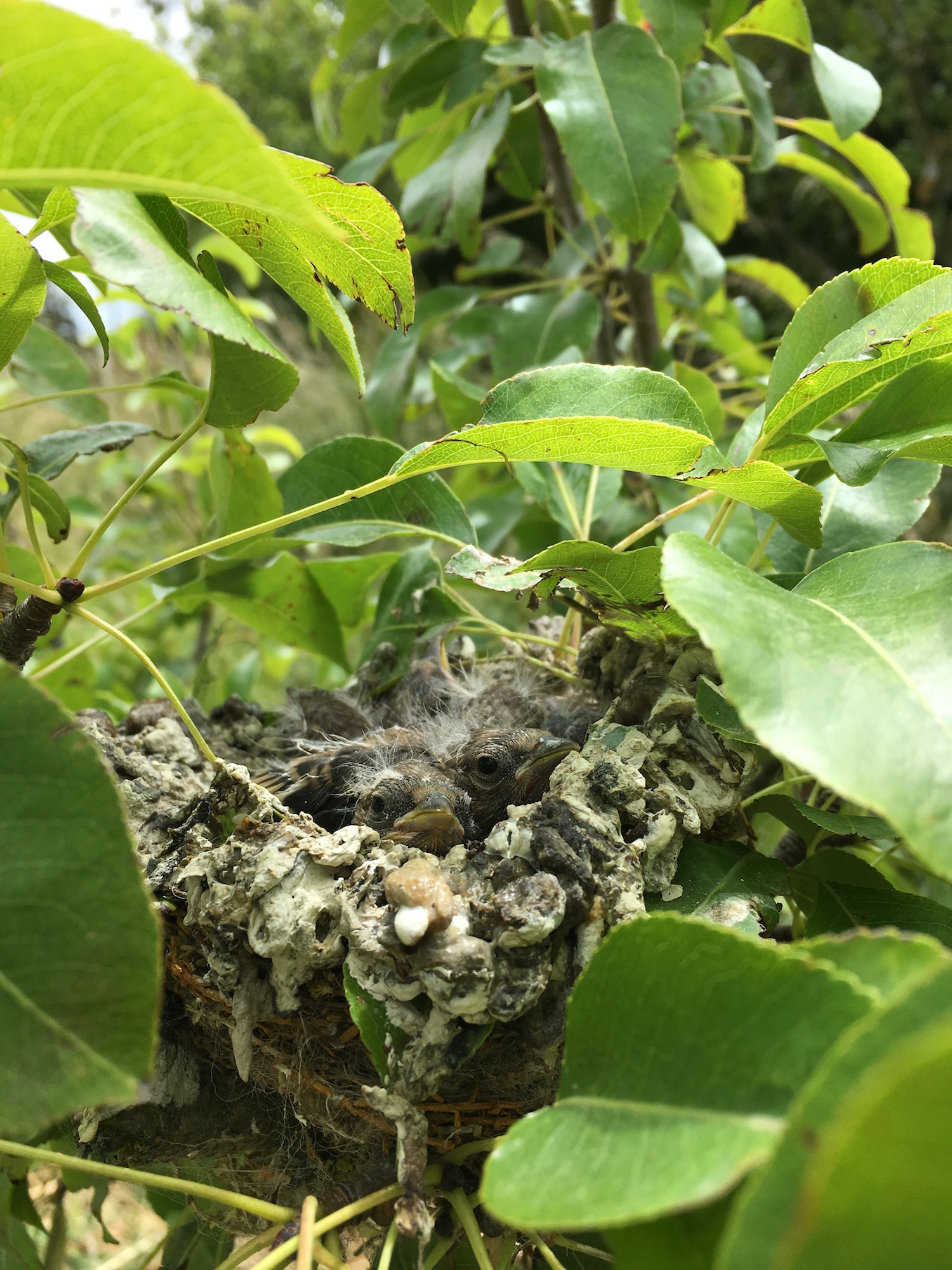
img_2765A month ago, I saw a perfect little bird nest in one of the fruit trees—incredibly tidy, and woven from grass and lichen. It was so pretty, I couldn’t bear to remove it, though I knew it must be the nest of a non-native bird (that’s about all we have here). Starling and house sparrow nests get the heave-ho as soon as I find them. This one…well, I couldn’t possibly disturb something so cute.

I forgot about the nest for several weeks, but today my husband noticed it was chock-full of chicks. Five grey fluffy European goldfinches (Carduelis carduelis)—so ugly they were adorable.

We don’t really need any more goldfinches, but since we don’t grow grain, they’re not much of a pest to us. These five chicks, though, will likely join the flock that descends on the neighbours’ fields in late summer. Sorry, guys. If you’d seen this cute nest of chicks, you’d understand.

Christmas Aspirations

2016-12-25-17-10-50-smAnother Christmas down. Another Christmas in which I feel like I received far better than I gave.

It’s a double-edged sword, at this time of year, to have a husband who is so good at gifts. He puts me to shame every year.

This year it was the two hand-made wooden vegetable baskets (the ones he whipped out in the last couple of days since he finished work for the year) that made me feel wholly inadequate as a gift giver. Add to that the lovely and thoughtful garden tools and kitchen equipment he bought, and I feel like I need to go back and try again on my gifts for him.

I’m not really complaining—how could I possibly complain about a husband who makes gorgeous baskets for me? But I think I need to start preparing for Christmas a whole lot earlier in order to even come close to matching his gift-giving. It is truly something to aspire to.

The Christmas Calzone

2016-12-24-19-21-34-smGrowing up, Christmas eating was strictly traditional stuff—lots of cookies, turkey, mashed potatoes, cranberry sauce, a token vegetable, and lots of gravy. I remember Christmas day as being a frenzy of cooking, starting with my mother putting the turkey in the oven in the wee hours of the morning, so that by 10 am the whole house smelled like turkey. It truly was glorious from a kid’s perspective.

At Crazy Corner Farm, Christmas eating is about as far from traditional as it gets. Except that it has become our Christmas tradition, and as such, it is traditional.

Our big holiday meal is on Christmas eve. With all the wonderful vegetables from the garden, we make calzones. We enjoy them with a fresh salad, or fruit from the garden.

In the evening, my husband makes up sticky buns and puts them in the refrigerator to rise overnight. I pop them into the oven in the morning before I go out to feed the animals, and they’re ready for breakfast by the time everyone else is awake.

We feast on sticky buns throughout the morning, then have leftover calzones for lunch. We hardly need an evening meal Christmas day, so our tradition is a big salad, broad beans, and the first of the season’s new potatoes.

All very low-key and relaxing, yet wonderfully decadent.

Christmas eve eve…

img_2742Surprisingly, a day of calm. It was overcast and rainy. The garden is reasonably well weeded. The berries and peas were picked yesterday.

Tomorrow I will clean the house (because Santa doesn’t visit dirty houses—I’m sure my mother taught me that one), and the peas and berries will need to be picked again, but today there was remarkably little on the to-do list. I’m not sure what happened, because usually the lead up to Christmas is a frenzy, just so I can feel free to take the whole of Christmas day off.

So, I gave myself an early gift—a day of sewing. I managed two new desperately needed t-shirts for myself, and did the finishing by hand while listening to a recording of my far-away family reading A Christmas Carol. Then I picked roses, and played a game with my daughter.

Such a lovely, relaxing day, I hardly need Christmas at all…

Fabulous Flax

2016-12-14-13-33-57-smAbout two weeks ago, a paddock we drive past nearly every day suddenly turned the unmistakable blue of flax. Not New Zealand flax, but linen flax.

At first, I thought it must be something else, because the plants were short—only about knee height. I’d never seen linen flax so short.

I also didn’t think linen flax was grown in New Zealand any more. During WWII, linen flax was introduced and promoted for wartime needs. The first planting was in 1939, and within several years, there were seventeen processing plants in the South Island. But by 1948, it was all over. As far as I can tell, there is no flax grown commercially for fibre anymore in New Zealand.

But flax seed and flax seed oil are a different matter. And, naturally, the varieties grown are shorter and bushier (with more flowers/seeds per plant) than the varieties grown for fibre production. The largest New Zealand processor of flax seeds is just down the road in Ashburton, so it makes sense that one of our neighbours might plant flax.

I hope they find it an economically viable crop—it’s one of the most beautiful crops I’ve ever seen. For the past two weeks, it has been a sea of blue on sunny days (the flowers close when it’s cool or wet). A wonderful addition to the colourful array of crops grown around us.

Think Like an Entomologist

2016-12-21-12-45-56We went to the beach today. It was the perfect beach day—hot, and not too much wind (not at the beach, at least). The waves were big and great for body surfing and boogie boarding, and as usual, we ran into friends who also happened to be there, and had a good catch-up.

But the very best part of the beach today was the bees.

Thousands of native bees on the dunes just above high tide line. Swarming in the air, just 30 cm off the soil surface. I couldn’t help but watch, and I was rewarded with a fantastic show.

The bees almost all had loaded pollen baskets, and at first I wondered if they were feeding on something on the sand, because they would dip down to the surface, take a few steps, then fly away. I watched dozens of bees do this, but still couldn’t tell what they might be collecting.

2016-12-21-12-48-28Then I saw it. A bee landed, then quick as a flash, dove head first into the loose sand. It took her only a moment, and she had vanished, leaving nothing but a slight divot in the sand to show where she’d gone.

Then I knew. They were burrowing into the sand, provisioning nests for their larvae. They had dug the burrows earlier, and the brief touchdowns on the sand were to locate the right burrow. I watched for a long time, and saw several bees dive into their burrows. I even saw one go part way, decide she had the wrong spot, and scramble back to the surface to try again.

Then I saw another insect in the crowd—a wasp. It, too, was hovering over the sand and dropping down now and again to the surface. I surmised that it was a parasite, looking for the hidden bee burrows. I guessed it would enter a burrow and lay an egg on the bee larva, and the wasp larva would eat the bee.

These were all guesses based on my observations. I really didn’t know if there were dune-nesting bees here, or if they were parasitised by wasps.

At home, I was able to confirm my observations. My bees were the native Leioproctus metallicus, and they are parasitised by a gasteruptid wasp that lays its own eggs in the bee burrows.

I was pleased to have pieced together this puzzle by watching bees on the beach. (The only part I couldn’t see was that the bees try to fool the wasps by digging many burrows, not all of which contain larvae.) Entomologist Tom Eisner once wrote, “There is a saying that ‘5 minutes in the library can save you weeks in the laboratory,’ which has considerable merit. I prefer the naturalist’s version, which says that ‘weeks in the field can save you minutes in the library.'”

I’m with Eisner on that one. Watching those bees and trying to piece together what was happening was pure magic.

Bugs in Your Food

2016-12-18-06-46-58Can you find the insects in this ingredient list?

Yep, that’s it, at the very end—carmine—an all-natural food-safe red colouring made from the crushed bodies of the cochineal scale insect (Dactylopius coccus).

I don’t buy much processed food, so I rarely eat carmine, but I was excited to find it listed as an ingredient in the packaged macaroni and cheese I recently bought for a backpacking trip.

The cochineal scale is native to Central and South America, and lives on prickly pear cactus. It has been used as a dye since at least the 15th century, when it was used primarily to colour textiles. For three hundred years, it was one of our only red food-safe dyes. In the late 19th century, synthetic dyes began to replace carmine.

Until the 1820s, Mexico was the sole commercial supplier of carmine to the world, despite efforts to grow the insect elsewhere. At least one of those attempts ended in an environmental disaster. The British tried to establish carmine production in Australia to supply red dye for military uniforms in the 1700s. The insects died, but the cactuses thrived and eventually took over 259,000 square kilometres (100,000 square miles) of the country before being brought under control in the 1920s by the introduction of a moth that eats the cactus.

Carmine production is labour intensive. The insects need to be protected from predators and severe weather, then have to be brushed off the plants by hand at harvest. The insects are dried, crushed, and mixed with various substances to make a range of colours from bright red, to pink, to purple. It takes 80,000-100,000 insects to produce 1 kg of carmine.

Concerns over the safety of synthetic food colouring has led to a resurgence in the use of carmine in recent years, and it’s not unusual (though still not common) to find it included on the ingredient lists of food packages. In fact, you might be surprised how many products on the supermarket shelf contain carmine. Though it is more expensive than synthetic red dyes, it shows up in various cosmetics, candies, alcoholic drinks, fruit juices, sauces, cheese, meat, preserves, and desserts. In the US, the ingredient list is required to say ‘cochineal extract’ or ‘carmine’. In the EU, it might be labelled additive E120, and here in New Zealand, it is usually listed as colouring 120.