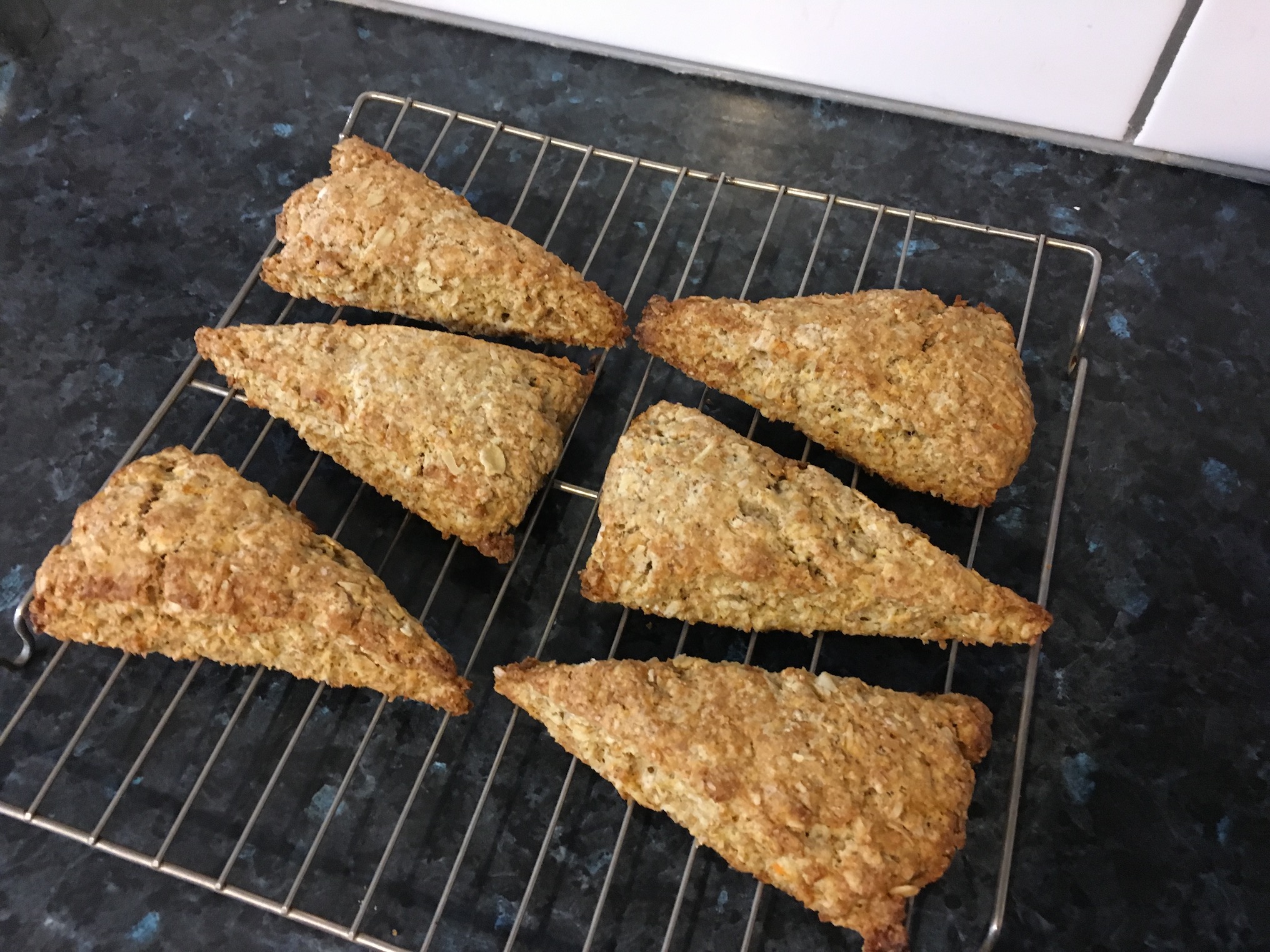
Orange Coconut Scones

Sunday morning breakfasts aren’t always the best planned meals. Sometimes I start baking before I really know what I want to make. Sometimes I decide to make something, only to discover half way through that we’re missing an ingredient.

Both of those happened this morning. I grabbed a recipe for oat scones, not really wanting them, but not having any better ideas. On my way to the flour bin, I passed the fruit bowl, spilling over with oranges. I could make orange oat scones! I grabbed an orange and started considering how the recipe would change with the addition of grated orange peel. By the time my consideration was over, the new recipe bore little resemblance to the one I was technically following.

I was cutting the butter into the flour mixture when I remembered there were no eggs in the house. Well, I’d have to make my scones without an egg. No problem—scones are just biscuits fancied up with egg and sugar anyway. They’d be fine.

They were more than fine.

They were downright delicious.

So next time you think you want to make oat scones, but decide not to at the last minute, and then find you have no eggs in the house, try these lovely, light and tasty orange coconut scones!

1 1/2 cups wholemeal flour
1 cup old-fashioned rolled oats
3 Tbs sugar
2 tsp baking powder
1/2 tsp baking soda
1/2 tsp salt
110 g (7 Tbs) cold butter
grated rind of 1 orange
1/2 cup shredded coconut
1/2 cup + 2 Tbs orange juice
1/2 tsp vanilla

Combine the flour, oats, sugar, baking powder, baking soda and salt in a mixing bowl. Cut in the butter until the mixture resembles coarse crumbs. Add the orange rind and coconut. Combine orange juice and vanilla in a measuring cup or small bowl, and then add to the flour mixture. Stir just until moistened (you may need to add a touch more orange juice). Knead briefly to bring the mixture into a ball. Pat the dough out on a floured countertop into a round about 1.5 cm thick (a generous half-inch). Cut into 12 wedges. Place wedges on a greased baking sheet and bake at 210ºC (425ºF) for 13-15 minutes until golden brown.

Topping the Cake

Red currant jam and coconut on devil’s food cake.

Cake, as I remember it growing up, always had icing on it. Super sweet quick icing, usually, made with Crisco and powdered sugar. I’m sure there was occasionally cream cheese frosting and buttercream frosting. And, of course, frosting came in multiple flavours, including chocolate and peanut butter.

But in my memory, there was always frosting on cake.

I still enjoy frosting, but these days, I’m far less likely to use frosting on a cake than something else, or nothing.

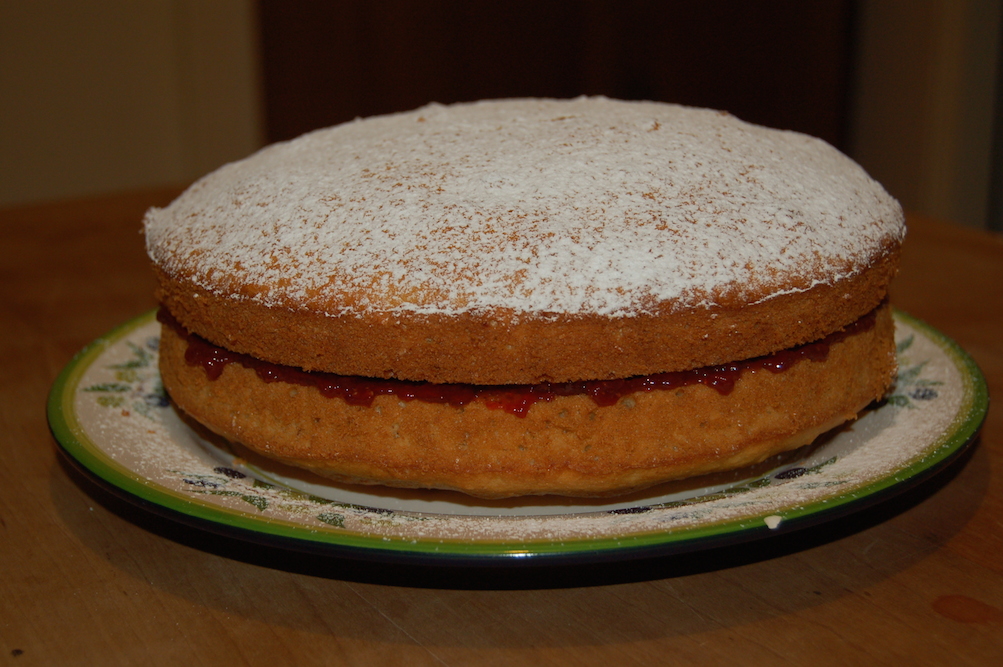
Powdered sugar on top, jam in the middle of a coconut cake.

My current favourite is jam. We always make too much jam in the summer, when fruit pours off the berry bushes and screams out to be preserved. So using a cup of jam to fill and top a cake doesn’t seem excessive.

The best jams for cake are tart ones like currant or gooseberry. I heat the jam slightly in the microwave so it’s smooth and spreadable. Sometimes I just put jam between the layers, but other times I glaze the top with it, too. Once there’s sticky jam on top of a cake, I can’t resist sprinkling things on it—coconut, chopped nuts, grated chocolate—anything that compliments the flavours of the cake and jam.

Straight chocolate is also a nice cake topping—not a continuous layer as you would do with a ganache, but artistic squiggles, dark on a light-coloured cake. They’re pretty and delicious.

I also like powdered sugar sifted onto my cakes. Sometimes I make a stencil out of paper to create pretty patterns with the sugar.

Some cakes need no topping, for beauty or for taste.

And I’m quite fond of cakes with the topping baked on—chocolate chips and chopped nuts sprinkled over the batter before baking is particularly good.

I still like frosting, but other toppings have the advantage of traveling better than frosting does, and I enjoy the variety of flavours and textures along with my cake.

Inspired Red Currant Cobbler

Sometimes you have an idea that simply works.

We have a large quantity of red currants in the freezer from last summer, so we regularly enjoy red currant desserts. Usually, we make crisp with them, but tonight we wanted something different.

I decided to make a cobbler, but I wanted something different from a plain biscuit on top—something sweeter, and with a bit more flavour to complement the intense sour of the currants.

In a stroke of inspiration, I remembered a biscuit recipe in King Arthur Flour’s Whole Grain Baking book. I’ve never made the recipe, but I’ve often looked at it. It pairs cornmeal and maple syrup, and I was pretty sure those were the perfect flavours to go with red currants.

I was right.

The result was perfectly balanced, cake-like, and absolutely delicious (and would probably be excellent with frozen cranberries, if you don’t have red currants).

Combine in a shallow baking dish:
3/8 cup sugar
3 cups frozen red currants

Set aside while you make the biscuit.

Combine in a medium mixing bowl:
1 cup cornmeal
1 cup wholemeal flour
1 Tbsp baking powder
1/2 tsp salt

Cut into the dry ingredients until the consistency of coarse crumbs:
80 g (5 Tbsp) cold butter

Combine in a small bowl or measuring cup:
1/2 cup milk
1/4 cup maple syrup

Add the liquid to the dry ingredients, mixing until evenly moistened. Pat out the dough into a shape to fit neatly over the fruit in your baking dish. Poke steam vents into the dough. Bake 30-40 minutes at 190ºC (375ºF). 

*Like any baked fruit dessert, this gets quite bubbly. Mine boiled over onto the bottom of the oven—you may want to set the dish on top of a baking sheet to avoid a mess in the oven.

New Year, New Garden

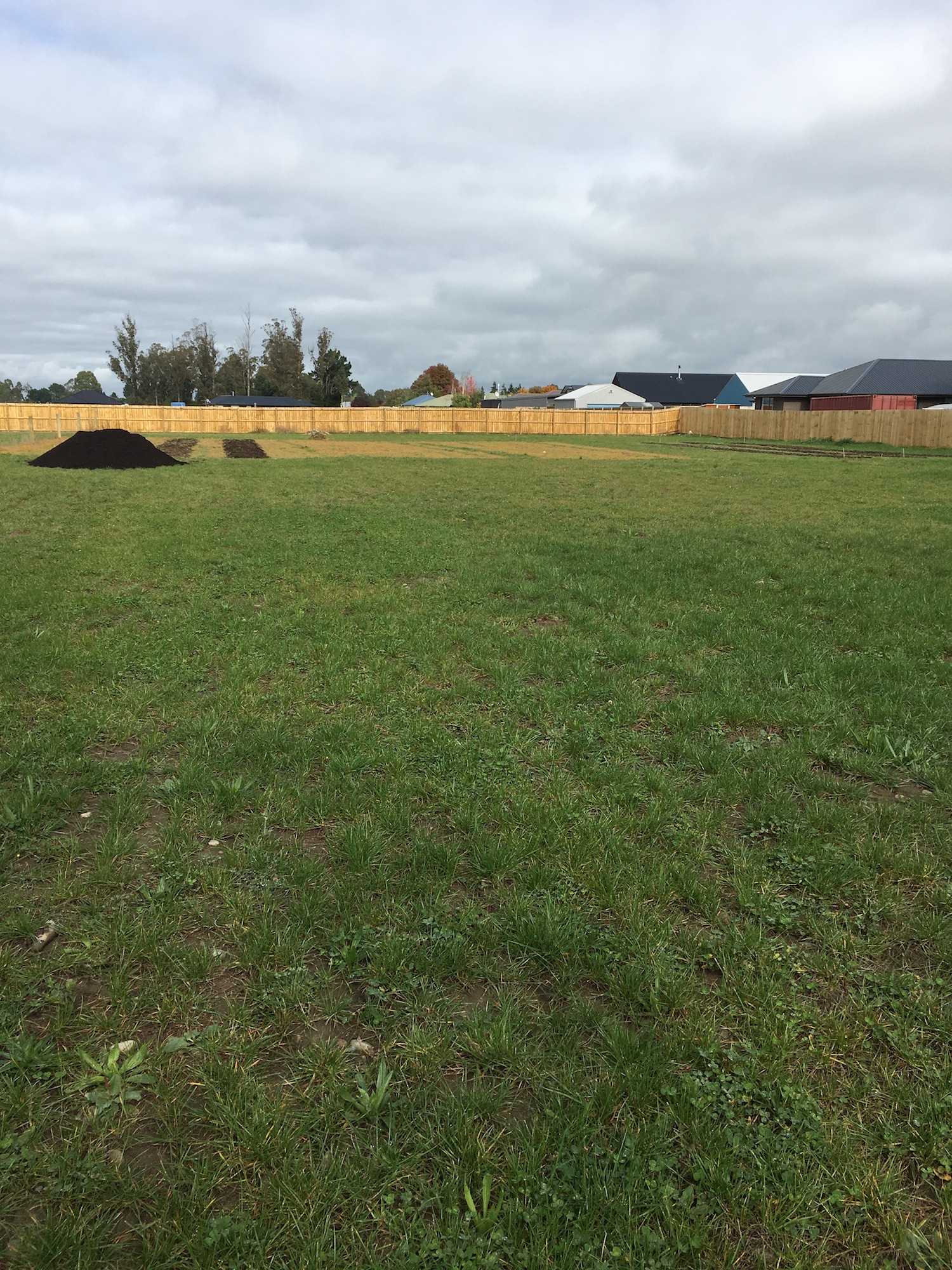
A blank slate for a new garden–10 cubic metres of compost ready to be added to the soil.

Another solstice has passed and we can look forward to more sunlight each day. We celebrated Matariki—the Māori new year—last week, too, so it’s well and truly time to start thinking about the garden for this coming summer.

This year, my garden decisions are more difficult than they’ve been recently. This year we will be moving house mid-summer, assuming all goes as planned with our new build.

We have already marked out and tilled the garden at the new property, and we’ve planted it in green manure crops for the winter, even though the foundation of the house hasn’t even been laid yet. 

But moving mid-summer, it’s hard to know where to plant all the crops. Late-season vegetables like pumpkins and dry beans are easy—they’ll go in the new garden. Early crops like broccoli and radishes are also easy—they’ll go in the old garden.

Unfortunately, a huge number of crops will come on before we move and still be going strong afterwards. I’ll want them at both houses. But the prospect of maintaining two full gardens forty-five minutes apart from one another is daunting.

Add to the challenge the fact that the soil at the new garden is hard clay generously studded with rocks. It will easily take a decade of soil improvements to make the new garden as productive as the old, and it will always be rocky, no matter how much organic material I can build up.

So in my garden planning and calculating this year, I have to lower my expectations. I have had such a glorious garden, with excellent soil, for many years. It will be a challenge to start over, rehabilitating a compacted paddock scarred by years of commercial agriculture and not naturally blessed with loamy soil.

It will mean finding new varieties that thrive in different conditions, pulling out all the tricks I know for improving soil conditions, and learning new ways of working with the soil. I am prepared for disappointment, and excited by the challenge.

Stay tuned …

Footstool Everlasting

Few items from my childhood survive today. No surprise. At age 49, having moved nearly a dozen times as an adult, and ending up half a world away from my hometown, it’s surprising anything remains.

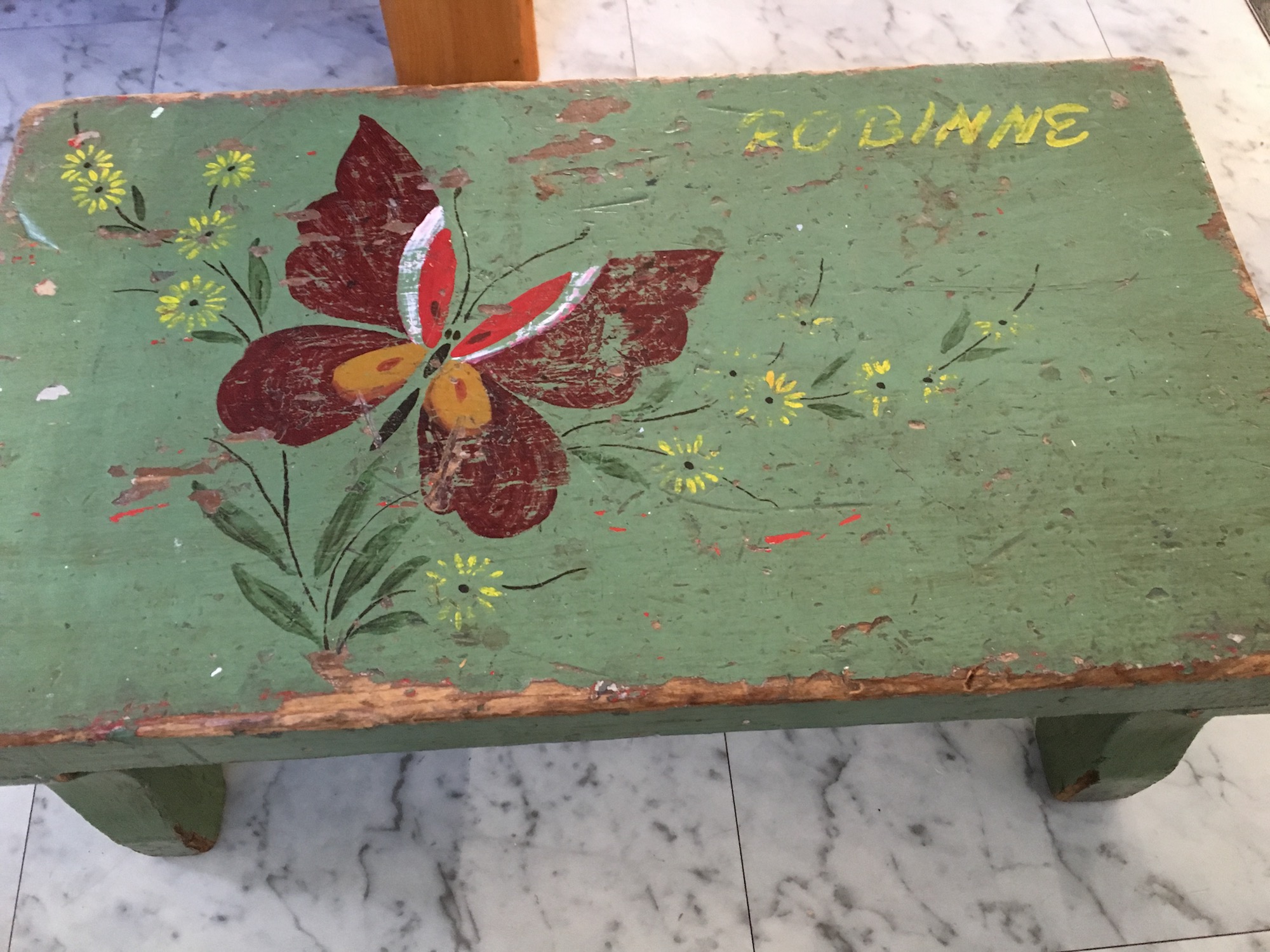
My footstool, however, not only remains, but is still in daily use.

I don’t recall how old I was when it was given to me, but I don’t think I could have been more than four or five.

My grandmother painted it, and I seem to recall some other family member—a great uncle perhaps—had built it years before. So it wasn’t new when I got it, only newly painted with my name and one of my favourite animals. I doubt Grandma ever suspected I’d grow up to get a master’s degree in entomology (and chances are she wouldn’t have encouraged it had she suspected). But I was clearly already headed that way as a preschooler.

I remember using the stool as a table, back when my legs fit neatly underneath it. I remember setting up tea parties on it, doing artwork on it, turning it upside down and pretending it was a boat, setting it on its side to form a battlement for some imaginary fortress.

When I was a teen, it served to give me access to the top shelf in my closet and as a handy homework table.

The stool moved with me when I left home. My husband has employed it in the bottling of beer, and my kids remember standing on it to work at the kitchen counter or workshop bench. Today, I’m the only one in the family who still needs a footstool, but it continues to come in handy as a low computer stand for those of us who like to work on the floor.

After more than fifty years, the footstool is as solid as ever, and just as functional as it was the day it was built. The paint is sadly worn, gone completely from the often-banged edges and corners.

But someday, when I can no longer sit cross-legged on the floor to work on the computer, perhaps I’ll repaint it for one of my grandchildren, so it can have another life as a boat, battlement and art table.

Reprise: Summer Soup

I usually blog about summer soup when we make it. It’s a major point in the garden calendar and deserves a mention at that time.

I’ve never said a word about it during the winter, but this is when it is most appreciated.

Yesterday we all got home late from work and school. It was dark and cold. We were tired and hungry. I was crashing into a miserable head cold I’d kept at bay all day by sheer force of will.

And there was the summer soup, waiting to welcome us home and usher us into summer, if only for a brief time. I heated up a jar of edible summer, and we sat down to eat within minutes of arriving home.

I took a spoonful and shut my eyes. Tomato, zucchini, green beans, corn and soy … all the flavours of summer soothed my raw throat and pounding head. The heat of sun-ripened jalapeños and Thai chilis warmed my sinuses and eased my congestion. For a short time my winter cold was forgotten in the glory of a summer’s day.

I harbour no illusions—summer soup won’t cure my cold, nor will it lessen its severity and duration. But it certainly can make my illness more bearable.

And so again I sing the praises of summer soup, and am thankful for the family effort that makes it possible to ease a cold and enjoy the summer sun in the heart of winter.

Rotorua: a not-so-cool place to be

A steaming stream in Rotorua.

I spent the weekend in Rotorua at GeyserCon, the national science fiction and fantasy convention.  I had a great time hanging out with other writers and learning new things about writing, but being a science geek at heart, the one thing I can’t stop thinking about is a presentation by Peter Brownbridge, the Rotorua Lakes Council Geothermal Inspector.

For those unfamiliar with New Zealand, Rotorua is a town on the North Island known for its extensive geothermal activity. And when I say extensive, I mean extensive. The whole town bubbles and steams and smells of sulphur. There are geysers, boiling mud, hot pools, and hot springs all within the township. In some places, the footpaths are broken, gently steaming, and crusted with mineral deposits.

As you might guess, Rotorua sits inside a volcanic crater. The volcano’s last major eruption happened about 240,000 years ago, and molten rock still lurks below, heating rocks and the aquifers above them. 

It makes for some unique urban planning and maintenance issues.

Peter spoke about the ongoing need to monitor existing and new hot springs and geysers. He spoke about how the layers of ash and sediment overlaying the old magma dome are prone to erosion by hot gassy water, leading to huge underground holes that need to be filled before they become giant sinkholes. He talked about the challenges of repairing ageing geothermal bores when the pressure in them can be as high as 200psi. He mentioned the need to use alternate materials for underground pipes to avoid damage by corrosive gas. He talked about having to evacuate homes and schools due to poisonous gases belched out by hot springs. He described a median strip in the middle of town that spontaneously catches fire every summer because of highly flammable gas oozing from the ground there.

But what I found most remarkable was, after Peter described all the crazy things the city has to do to maintain services, he said, “Yeah, we’ve pretty much got it under control. The only thing we struggle with is delivering cold water to some homes.”

Think about that for a moment. Let it sink in.

I’ve been to Rotorua several times, and have visited stunning hot pools and geysers, but that one little fact has given me an entirely new appreciation for the nature of the earth beneath the town.

Peter Piper Picked a Peck of Pickled Porcini

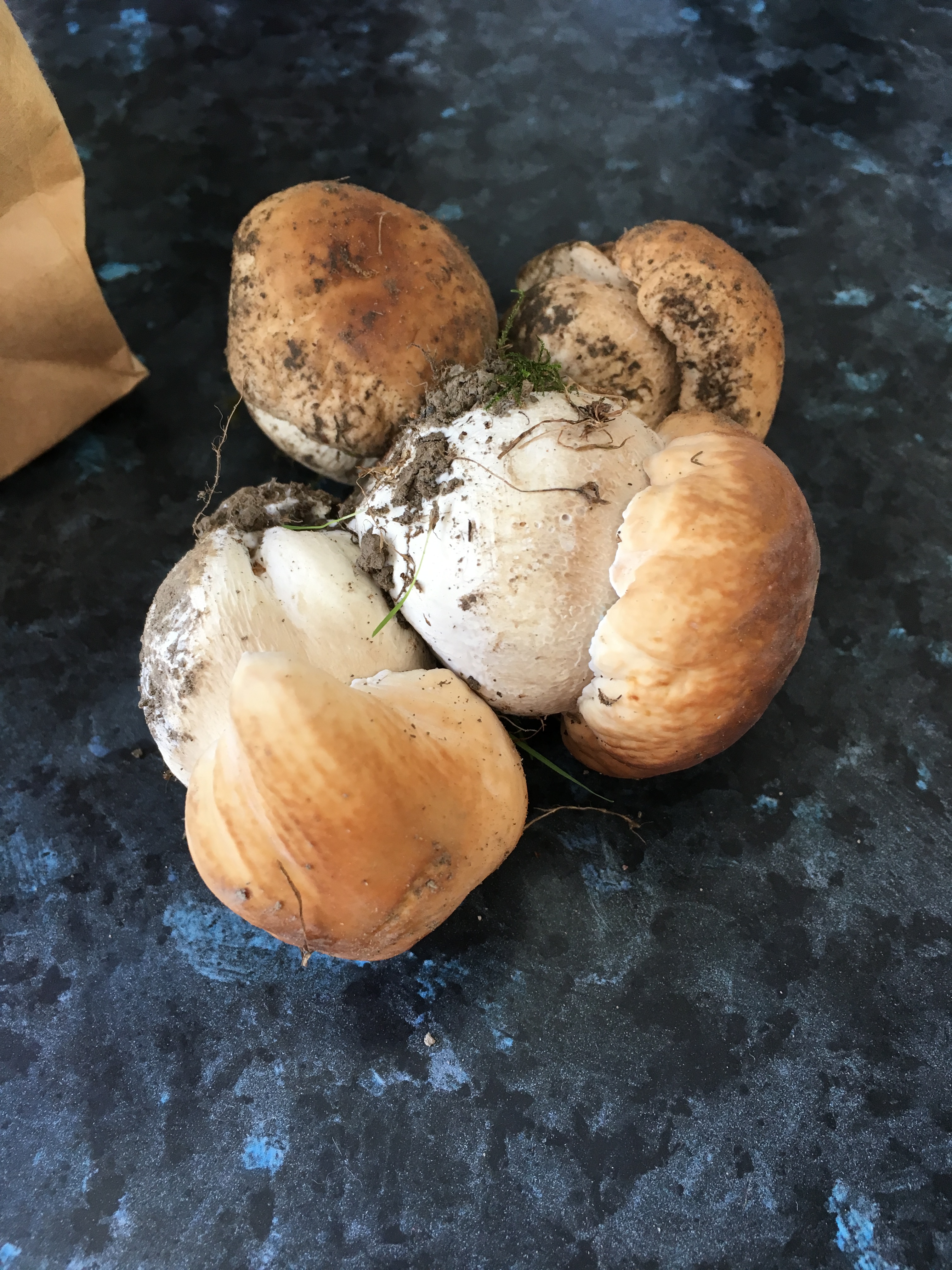
We had excellent porcini gathering this year—we discovered a new foraging location which is apparently overlooked by others. So we were faced with the delightful problem of what to do with so many mushrooms. We dried a lot, ate a lot fresh and still had more.

My husband found a recipe for pickled porcini. I was dubious and encouraged him to make a half-batch, just in case it was no good.

The process was strange—he sliced and salted the mushrooms, patted them dry, boiled them in vinegar, partially dehydrated them, and then packed them in a jar with a flavourful marinade to age.

They looked revolting.

Yesterday we tried them.

I’m not too proud to say I was wrong—totally wrong.

They are amazing—chewy, tangy, and bursting with intense mushroom flavour.

We cut them small and sprinkled them on a potato pesto pizza where they positively sparkled. I can’t wait to try them in all sorts of dishes, or simply slapped whole onto a cracker.

My only regret is that I convinced my husband to make a half-batch.

Music of the Night

Photo: Marcelo Zurita (CC BY-SA 4.0)

One of the pleasures of the short days of autumn is doing morning chores in the dark.

I know that sounds weird. I don’t particularly enjoy tripping over the tools someone forgot on the lawn the day before, nor am I overly fond of the cold wind slicing through my jacket.

It’s the sights and sounds of early morning that I enjoy.

Yesterday morning was particularly spectacular. The sky overhead was clear and star-studded—shimmering glitter strewn across the blackest velvet.

But the stars to the south were blotted out, and lightning flashed and forked far out at sea. The storm itself was silent from my distance, but the surf roared with a storm’s fury.

By the time the sun rose, birdsong, barking dogs and the drone of tractors drowned out the sound of the waves. Sunshine masked the flash of lightning as the storm stalked along the coast. The day dawned serene and mundane.

Other wonders have been revealed to me on my morning chores over the years.

A bioluminescent worm in the chook paddock.

Shooting stars streaking from zenith to horizon.

A bioluminescent sea creature frozen in snow and deposited in the garden.

The aurora australis pulsing green in the southern sky.

Rats tiptoeing along the top wire of a fence (I know, rats, ick. But it was an amazing feat of balance).

Little owls cackling in the treetops and swooping silently overhead.

The graceful undulation of a fence during an earthquake.

The comforting warmth of a goat’s flank on a frosty morning.

The gentle caress of a nor’west gale before it turns violent.

The rhythmic heartbeat of the sea at rest.

The clarity of thought on a crisp dark morning, before the stress of the day intrudes.

Summer’s Final Farewell

I moved the chickens into the vegetable garden last weekend—the final admission that summer is over.

I know it’s been over for weeks, but there have still been eggplants, peppers and tomatoes coming out of the tunnel houses. Before I moved the chooks, I harvested the last of those summer crops. We’ll savour them over the next week or so, and then it will be full-on winter from a culinary perspective, at least.

I’ve stocked up on barley to cook with our dry beans in bean-barley soup. Maybe I’ll add a bit of mushroom stock made from this autumn’s haul of porcini.

I’ve baked up some pumpkins so I have cooked pumpkin on hand for pie or galette later in the week. I’ll add frozen spring peas and summer corn to the galette, and garlic, stored in braids in the shed.

I’m eyeing up the secondary head of cabbage, sprouting from the remains of the summer crop. They’ll make tasty winter salads to complement warming meals.

i’ve planted out the winter crops, too—lettuce, spinach, broccoli, cabbage and cauliflower. They will provide us the late-winter vegetables we’ll crave come August.

So while I farewell summer, I welcome the culinary delights of winter. Not so varied, perhaps, as summer fare, but no less delicious.