Ghosts of Christmas Past

Christmas day dinner–no cooking required.

Much of the world has entered the holiday season under the threat of Covid. Holiday gatherings, a highlight for many, are necessarily smaller or cancelled altogether.

For some, a Christmas without parties and large family gatherings will seem … well, not like Christmas at all. 

I’ve been thinking about this as I talk to my family about their holiday plans, and there’s a lot of similarity in what they are going through to what my husband and I have gone through as expats. We’re used to holidays far from parents, grandparents, siblings, aunts, uncles and cousins. We know how the ghosts of family-filled Christmases past haunt the table set for two on Christmas eve. We’ve learned how to fill the holidays with meaning even if we can’t fill them with loved ones. I imagine most other expats have done the same.

It occurred to me that the lessons we’ve learnt are applicable to those stuck at home due to Covid. So here are some musings on how we’ve navigated (and come to love) solo holidays.

  • Treat yourself the way you’d treat guests. Do you usually make a special dinner Christmas Day? Cook it for your household, even if that’s only two people. Do you stay up late partying to ring in the new year? Well, put on the stereo and dance, no matter how few you are.
  • If the previous idea raises too many ghosts for you, create new ‘traditions’ instead. Throw out the holiday rulebook. Instead of a party, go for a hike with your household. Instead of buying a live tree, get creative and make one with your immediate family out of whatever’s lying around the house. Instead of a formal meal in the dining room, have pizza and popcorn while watching a movie on the couch. The more different the new tradition, the less likely those Christmas ghosts will show up. Just make the new plan as much of a treat as the old (not simply your usual routine). 
  • Dress up. Staying home? Put your party clothes on anyway. It will make the day feel special, even if all you do is lie around reading books.
  • Share with family and friends far away. This is so much easier today than it was 27 years ago when my husband and I had our first Christmas overseas. Then, I wrote letters describing our Christmas punch and mailed photos of our tiny Christmas tree. These days, we share via telephone, Skype, Zoom and FaceTime. It’s not the same as being there, I know, but I am thankful for the opportunities we have to be ‘together’ for the holidays.
  • Focus on what you can gain, not what you’re losing. Quiet time with your partner and/or children. Time alone to do what you want, not what the whole gang wants. Freedom from the intense cooking, cleaning and planning that go into hosting holiday events. A chance to re-think your holiday traditions. A reprieve from that loud uncle who always drinks too much and starts talking politics … I’m sure there are plenty of things you’ll happily miss out on this year.

No question about it, this year’s holiday is going to be different from normal for most people. But that doesn’t mean it has to be bad. Make the most of the opportunities to try something different this year. Who knows? Maybe something you do this year will become part of your holiday traditions for years to come.

Combating Seasonal Exhaustion

The days are long now, and our summer has officially begun. Weeds crowd crops in the garden, and the harvest of spring fruits and vegetables is in full swing.

End of the school year events crowd people’s schedules, and children are restive and eager for the upcoming summer holidays.

Retailers remind us there are only so many shopping days until Christmas. The house still lacks decorations.

The 2020 goals list dares me to get just a few more tasks ticked off, and everyone wants things done and dusted in the next two weeks.

There’s hardly a moment to sleep, and the long summer days encourage us to stay up late and get up early to accomplish our ever-lengthening to-do list.

Add the stress of a year of chaos, disruption and fear, and everyone is suffering from seasonal exhaustion.

I sit down to compose a blog post, and am distracted by an incoming e-mail with an urgent request. I write the day’s to-do list, and promptly lose it in the shuffle of random items cluttering my desk. I have to set alarms on my phone so I don’t forget meetings. I try to do a little editing, and can hardly keep my eyes open.

I see fatigue in the eyes of coworkers and students, of friends and family. I hear it in e-mails from colleagues. We’re all suffering from seasonal exhaustion compounded by a dumpster-fire of a year.

We all need kindness and understanding right now.

Which is why I’ve decided to go on a pay-it-forward spree until Christmas. I’m sure that in the next few weeks at work, I’m going to visit the cafe next door more frequently than usual for a pick-me-up coffee. I’ve decided that every time I get a coffee for myself, I’ll buy one for the next person in line. Hopefully, it will make them smile. Maybe it will inspire them to do the same. Maybe a whole string of exhausted coffee-drinkers will get more than a caffeine hit, but a lift to their spirits as well, as they both receive a gift from the person before them and give one in return. 

And with smiles on their faces, maybe they’ll say a kind word to someone, and that person will pass on the kindness to someone else, who will in turn pass it on to another person.

And maybe I’m being overly optimistic about the impact of giving a cup of coffee to a stranger.

But maybe I’m not.

I’m willing to take that risk and do my best to spread kindness. We could all use it right now.

Giving Thanks in 2020

Thankful for these glorious blue peas with their cheerful flowers.

Thanksgiving is this week in the US and, while we don’t celebrate Thanksgiving here, I do always still pause and reflect on what I’m grateful for. This year, it feels doubly important to focus on the good things. 

So here are just a few of the things on my Thanksgiving list:

  • Top of the list this year has to be all the Kiwis who have responded with maturity and community spirit to the challenges thrust upon us this year. I am truly proud to be a New Zealander this year, and I’m thankful to be here, where our collective action has allowed us freedom and safety much of the world doesn’t have. 
  • Friends and colleagues who have encouraged those around them to approach Covid-19 as a challenge to develop creative ways to continue to pursue dreams, rather than as a disaster to be lamented.
  • I know I’ve mentioned it before, but I’m still incredibly thankful for our new house. It still often feels like I’m living in someone else’s home, but it is a joy to cook in the new kitchen and to live in a well-insulated building.
  • This time of year, while not exactly traditional harvest time, is rich in early summer fruits and vegetables. Though our new garden is quite young, and the soil is truly terrible, we’re still harvesting good food, and I’m thankful for what we are able to produce.
  • I’m especially thankful this year for my husband and children, who have approached all of this year’s many stressors with good humour, fortitude, and a willingness to pitch in and do what needs to be done.
  • I am more than usually grateful this year for technology which has made the pandemic far less isolating than it would otherwise have been.
  • As always, I’m thankful for the proximity of beach, river and mountain. This year, even more than other years, the natural world has been a solace, and I’m thankful to have relatively wild areas within walking distance.
  • The luxury of time. There’s no question that being in lockdown in a cold shed was awful. I look back on those months and wonder how we survived with our good humour intact. At the same time, having that intense time to spend with close family was something wonderful. We invented stupid games to pass the time and stay warm, we went on looooooong walks together, we sat and talked over the state of the world. I am grateful to have had that time.

There are dozens of other things I could put on my list—big things and little. It’s a year in which thankfulness has been a gift all of its own. I am thankful to be thankful for so much, in spite of the crazy year it’s been.

What are you thankful for?

Mount Somers Adventure

The Two Thumb Range with Aoraki peeking up from behind.

The family’s weekend hike took us to the summit of Mount Somers last week. 

We’ve hiked the Mount Somers Track more times than we can remember. Our first visit to the old coal mine along Woolshed Creek was with both children on our backs. Since then we’ve hiked the whole Mount Somers Track both directions and explored all its side tracks and variations. 

Except the summit track. By the time the kids were old enough to do it, we were all bored of Mount Somers. So it was good to tick the summit track off our list.

The summit track isn’t as popular as the other tracks on the mountain. We learned why when we hiked it. At 1688 metres, Mount Somers isn’t the tallest peak, though its volcanic origin is unusual on the South Island. Striking geometric rhyolite columns form cliffs that make finding a good route up or down a challenge and provide homes for an array of unique native wildlife.

The track rises steeply through beech forest from the Sharplin Falls carpark. The climb is unrelenting, taking you over 1200 metres in elevation into the alpine zone to the summit. We reached the summit in 3 1/2 hours, but it’s rated at 5 hours, and I wish we’d taken our time on the punishing ascent. On a hot early summer day, we’d all drunk most of our water by the time we reached the top. Luckily we were able to refill with snow. 

The view from the broad peak was stunning, with the Canterbury Plains spread out on one side, and the Two Thumbs Range jutting into the sky on the other. Aoraki / Mount Cook was visible, looming up behind the Two Thumbs Range.

To make a loop, we took an unofficial route down from the summit following widely spaced cairns to the Mount Somers track’s high point between Pinnacles Hut and Woolshed Creek Hut. It was steep, and involved a fair bit of scree sliding, but it was doable. And once you found the route, there was no getting lost, as you could see the track below.

On the track, we turned toward the Sharplin Falls carpark. An hour’s walking brought us to Pinnacles Hut where we had a welcome rest and chatted to the hut warden.

The track down from Pinnacles Hut follows and crosses numerous streams, and we enjoyed the cool water of the streams and waterfalls on the way. Aside from the relatively short climb over Duke Knob, it’s a gentler way down than the summit track.

All up, it was 8 1/2 hours of pretty steep up and down. Not for the faint of heart, but worth the effort for the views from the top.

Why I Write

When my year eight students first learned I’m a writer, they wanted to know why I was teaching, since I must be rich.

JK Rowling, you have a lot to answer for.

Of course, the reality is, most authors need second and third jobs to make ends meet.

So why do we write?

I can’t answer for other writers, but truth is, I’m trying hard to turn my writing into a viable business. I would love to be able to make a living as a full-time writer. 

But that’s not why I write, nor is it the most important measure of success in my opinion.

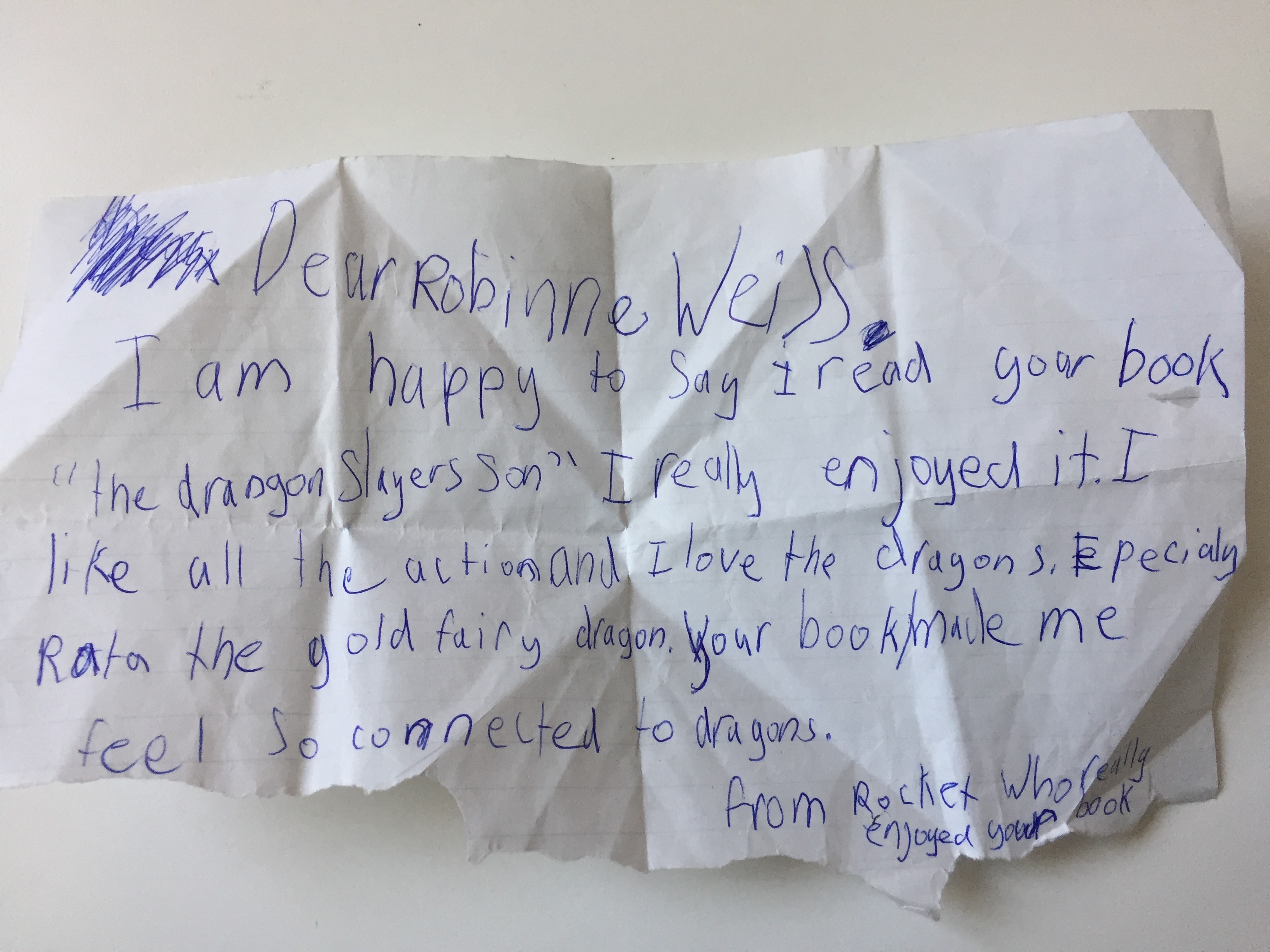
More important to me are comments like these from readers and readers’ mums:

“I haven’t seen my son this excited by a book since Harry Potter!”
“I read your book in one day!”
“Three generations of our family read and loved your book.”
“My son’s not a big reader, but he’s devouring your books.”
“My kids sat with a map, tracing the travels of your characters.”
“You brightened our days.”
“Your books are as re-readable as Harry Potter.”
“You’re my favourite author.”

To me, one positive comment from a satisfied reader is worth a thousand sales. As a writer, I want to share worlds, introduce new friends, and communicate ideas. I want to make people feel things. If I’ve done that, it is enough.

Would it be nice to also be able to pay the mortgage with my writing? You bet. Maybe someday I will.

New Zealand punches above its weight when it comes to writers, and there are lots of local authors writing great books for kids. Come out and support them at the Tamariki Book Festival on 22 November. Who knows? You may meet your next favourite author!

Carrot Surprise

I’m expecting the worst from this year’s vegetable garden. Loosening the heavy clay soil as I prepare beds can feel like chipping at concrete. I fill a bucket with rocks every two square metres. At best, I’m able to loosen the top seven centimetres. And with the soil test having revealed shockingly low levels of NPK, there’s little hope for a bumper crop.

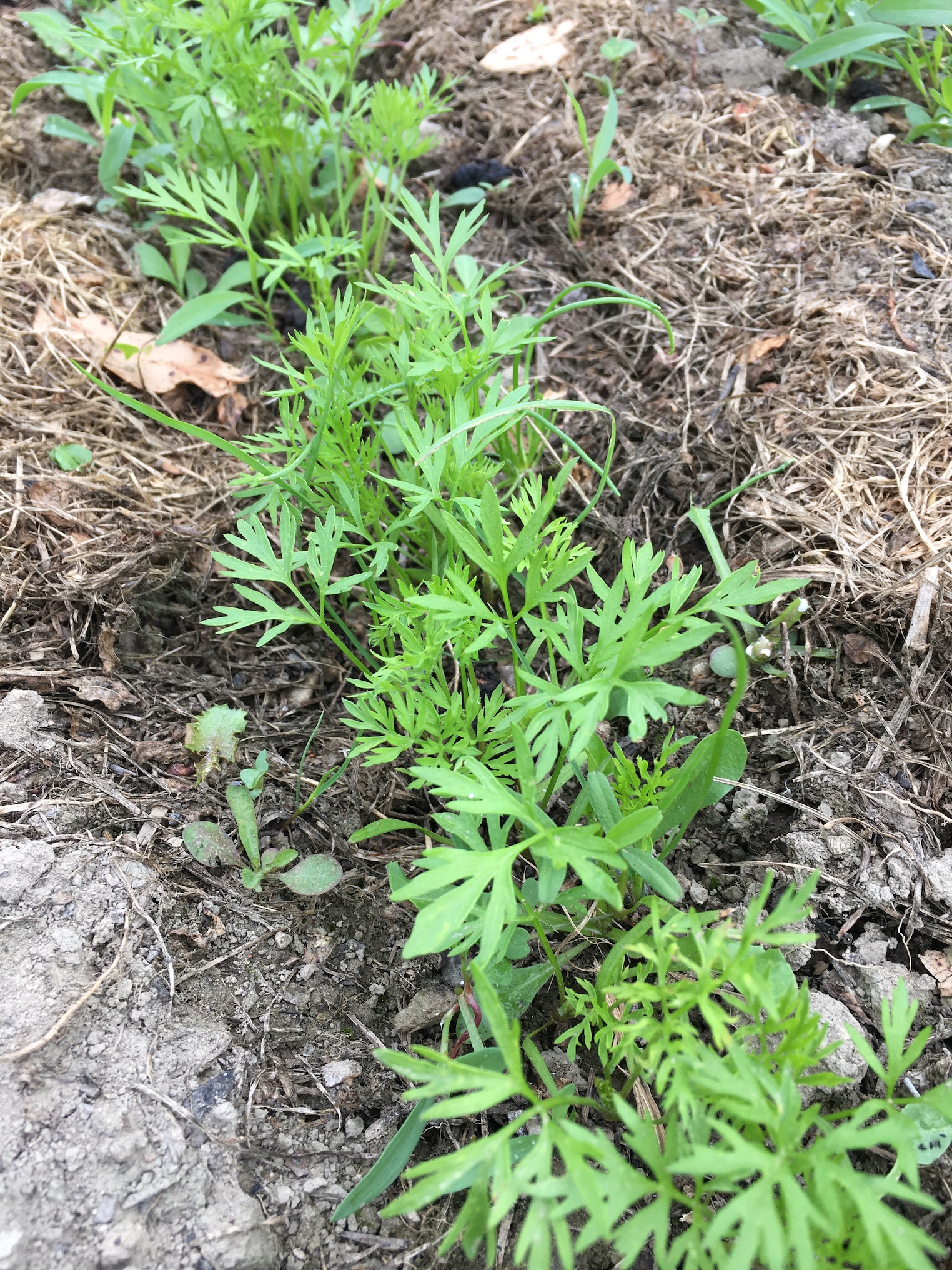
So it was a huge surprise to lift the frost cloth from my carrot plantings to find the best germination I’ve ever had. At the old house, I sometimes had to plant twice because carrot germination was so patchy. Some varieties barely germinated at all.

Now it looks like I’ve grossly over-planted—I swear every seed germinated—all five varieties.

I planted on the same date, with the same care afterwards as I have in the past. The weather wasn’t much different from weather at the old place. The only real difference was the soil. Go figure.

Maybe it was a fluke; I had occasional good years at the old house. And who knows how the carrots will grow now they’ve sprouted.

But it’s nice to have something go better than expected in this sad soil.

Part-Time Ducks

Ordinarily, I’d be annoyed if the neighbour’s livestock made a habit of hanging out in my garden. At the old house, a mob of sheep would occasionally take a detour into the yard while being driven past. And I remember a bunch of cows grazing their way through the vegetable garden once when I was a kid. Those experiences were always destructive.

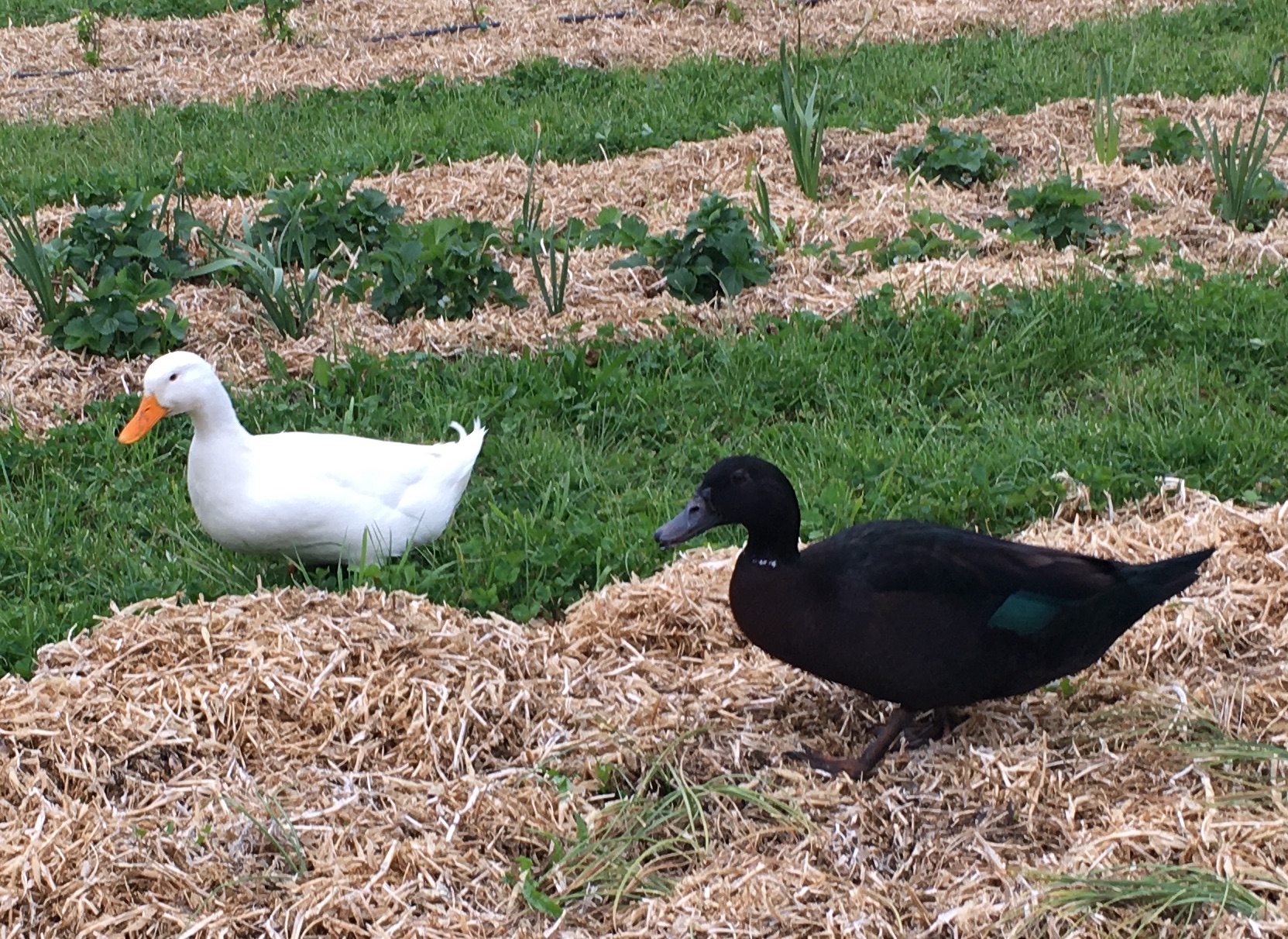
But one of the neighbours at our new place lets her livestock roam the neighbourhood, and I find it quite pleasing. They are a perfect pair of ducks—one all white, one all black (I’ve dubbed them Ebony and Ivory, of course). Watching them cruising the neighbourhood somehow makes me happy. Their owner occasionally comes out to the road to shoo them back home, but most of the time, they roam freely. 

For a long time, they avoided our place, waddling around next door, across the street, down the road … But this week, they discovered the wealth of slugs in our garden. They’ve been spending a few hours every day waddling up and down the rows of perennial crops, probing the mulch and quacking contentedly to one another.

I appreciate their gentle pest control operations in our garden, particularly since they come with no obligations on my part. I’ve seriously considered getting ducks in the past, primarily for slug control, but I never followed through. In the end they were always just more animals to have to care for. So part-time ducks are exactly my sort of livestock. They show up for work, put in a few hours, then head off to someone else’s yard. 

I hope they’re giving their owner lots of eggs.

The Beautiful Banks Peninsula

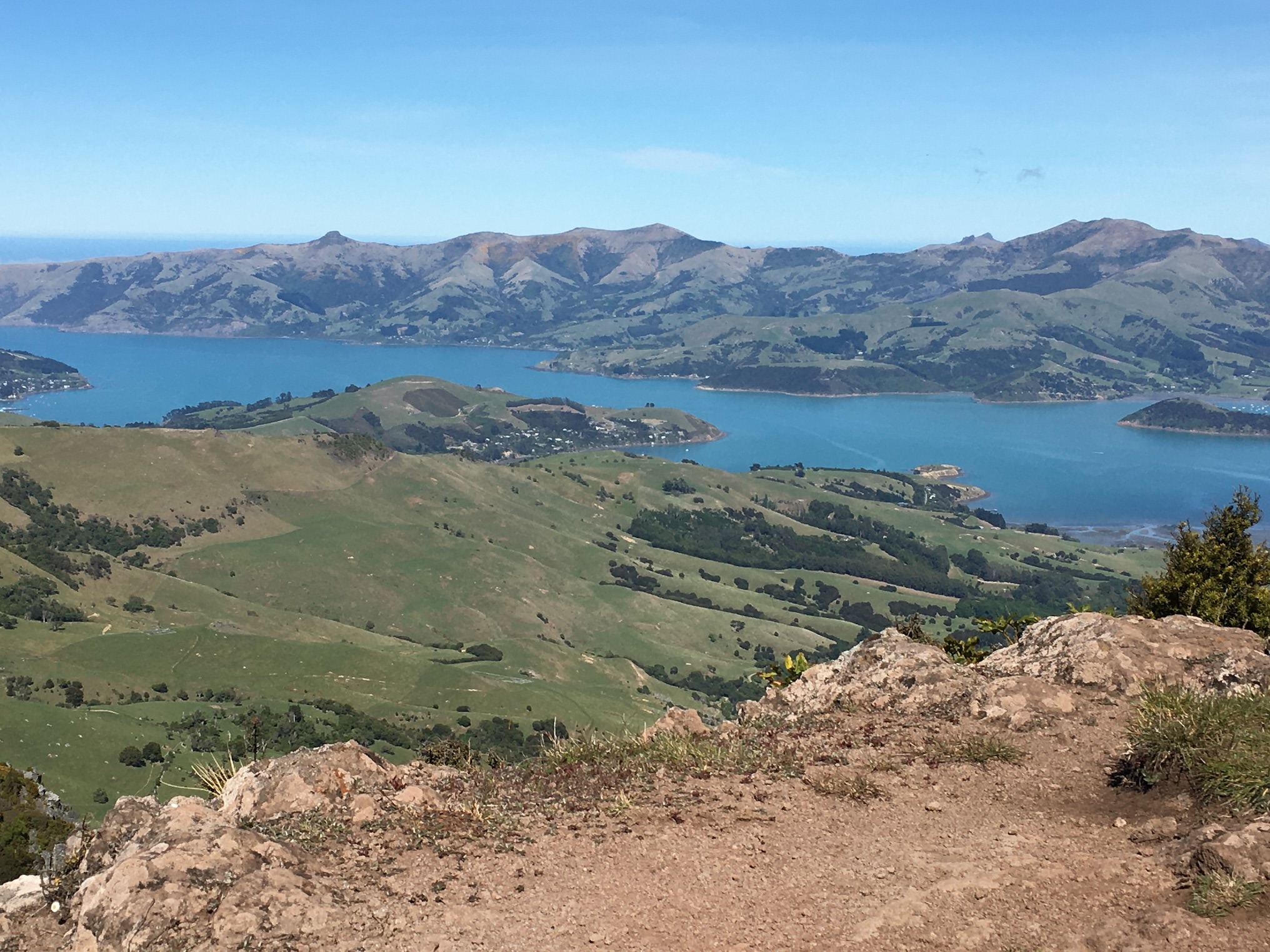
View from the top of Lavericks Peak Loop Track.

I still remember my first trip to the Banks Peninsula. It was probably less than 48 hours after we’d arrived in New Zealand and the only part of the country I’d seen was Hagley Park in central Christchurch.

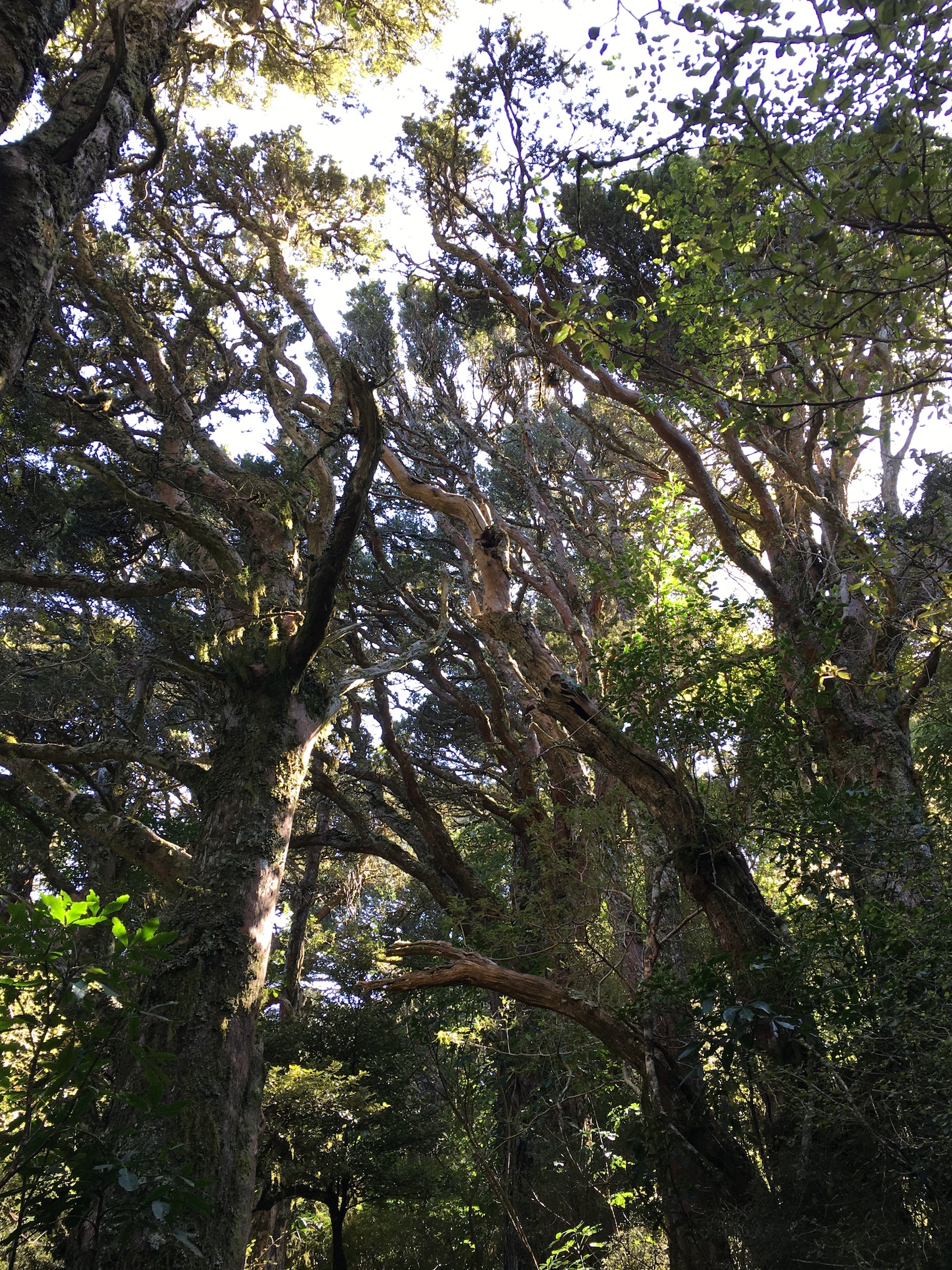
The bush at Otepatotu Reserve

When we rounded the bend and the road sidled up to Wairewa/Lake Forsyth, my face split in a grin. I craned my neck to look up the steep slopes on the left while black swans cruised the sparkling lake on the right.

We stopped in Little River for a toilet break (we had toddlers then—we stopped at every toilet), and I fell in love with the Little River Cafe and the attached Little River Art Gallery.

Carrying on toward Akaroa, we crested Hilltop, and Akaroa Harbour glittered tropical blue down below. Onawe Peninsula jutted like a bead pendant into the harbour and the road wound down through a patchwork of forest and paddock toward the sea.

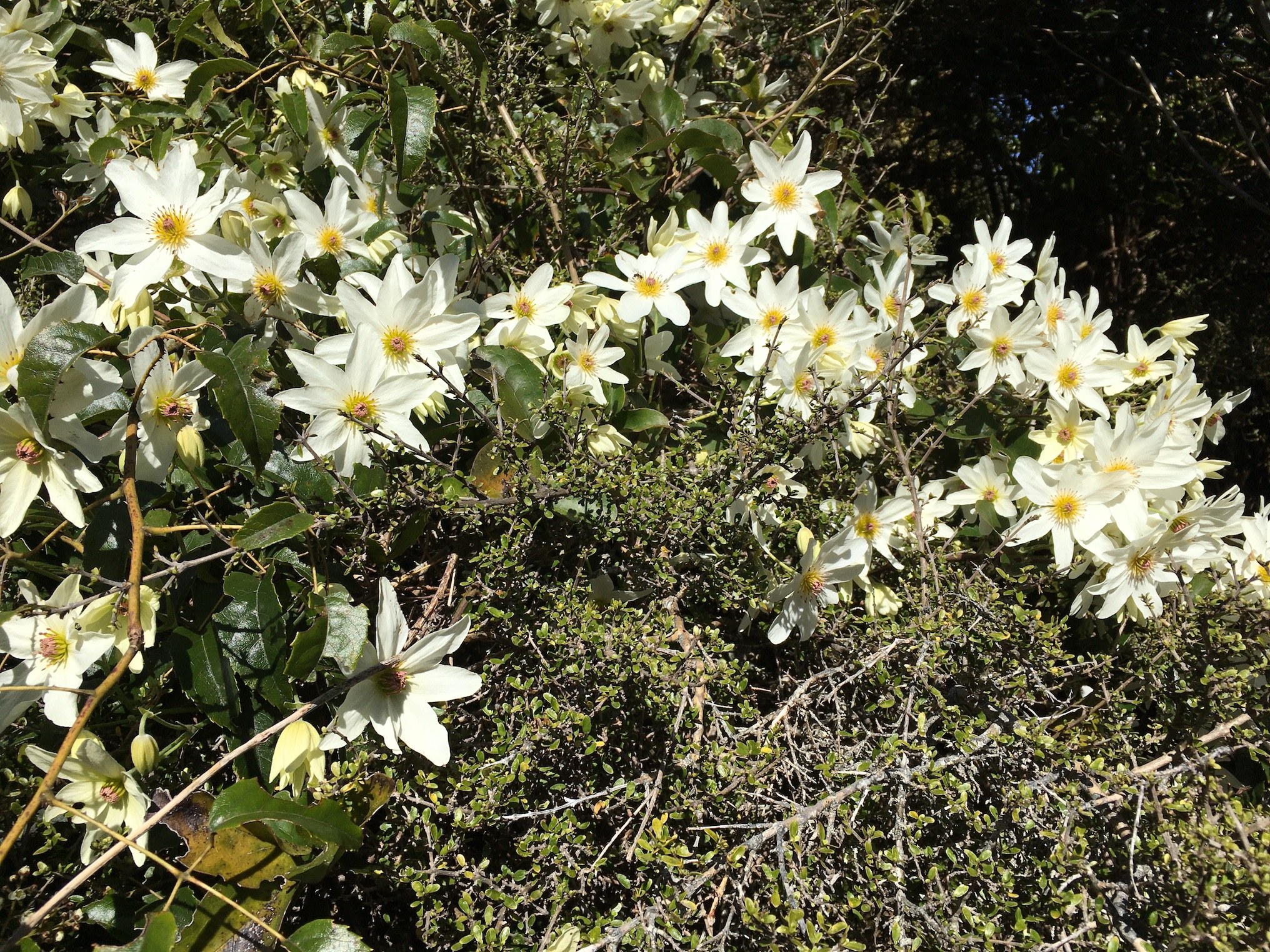
Native clematis in bloom.

I have made that drive countless times in the nearly sixteen years since the first trip. I still get that silly grin on my face. Every. Single. Time. Since that first visit I’ve scaled taller mountains, seen glaciers, stood at the base of Tane Mahuta, cruised Milford Sound … By comparison, the Banks Peninsula is positively dull.

But for me it defines summer in New Zealand. Even in winter, I feel like I’m on summer holiday when I’m out on the Banks Peninsula. I forget the to-do list. I turn off the cell phone. the daily stresses vanish.

Cushion star in a tidepool at Okains Bay

We hadn’t been to the Banks Peninsula since March, before lockdown confined us to home. But last Sunday we ventured out to sample everything we’ve been missing: morning tea in Little River, a lovely little hike through old totara and tree fuchsia in Otepatotu Scenic Reserve, a very chilly dip in the sea at Okains Bay and rock hopping along the coast to Little Okains Bay, and finally beer and chips in Akaroa and a stroll through the Garden of Tane.

We arrived home tired, crusted with salt and sand, and thoroughly satisfied with the day.

This weekend is supposed to be warm and sunny … we might just go and do it all again.

Childhood Literary Inspirations

In the lead up to the Tamariki Book Fest, I’ll be posting a series of blogs about the importance of books from my perspective as a reader, parent, teacher, and author.

I grew up with books, which should come as no surprise to anyone. Because I write fantasy for children, people often expect my childhood literary inspirations were books like The Hobbit, The Earthsea Cycle, The Lion, the Witch and the Wardrobe or other classic fantasy stories.

I read these books as a child, but the ones I really remember are quite different.

Heidi: The natural world has always been my comfort zone, so I immediately connected with a character who prefers a life running around the mountains with a herd of goats over one learning proper manners in the city. Some of the scenes in the book were so vivid to me as a child, I can still see, feel, smell and taste them.

Little House on the Prairie: Another book whose main character is a tomboy—I sense a theme here. Little House on the Prairie appealed to my sense of adventure and love of the natural world. I even learned some gardening tips from it that I still use today. 

Doctor Goat: I can still recite this silly rhyming picture book in its entirety. It taught me about rhyme, meter, and being silly. Yes, Dr. Seuss books did too, but Doctor Goat is what sticks in my mind decades later.

Time Life books: My father had a near-complete set of these non-fiction books. They fed my insatiable desire to understand the natural world for many years. They were written for adults, but I read them over and over again until I understood.

Grimm’s Fairy Tales: Something about these stories sticks with me long past the point where I can accurately recount them. Perhaps it’s the way they hone in on our most fundamental wishes and fears and turn them back on the characters who express them. Perhaps it’s just because they’re freaky and often horrifying.

So, what books inspired my own children’s books? None of them individually, and all of them collectively. My own stories are crazy-quilt patchworks of everything I have ever read, stitched together with my own personal experiences (some of which can blow any fantasy adventure out of the water). My rich reading life, coupled with a ‘real’ life lived to the fullest, has furnished me with an overflowing font of story ideas.

As a parent, I have tried to provide the same rich book life to my own children, and I’m passionate about getting kids reading. Come join me and and a fabulous line-up of local authors at the Tamariki Book Festival (Nov 22 at Tūranga), and let’s celebrate the wonderful stories written right here in Christchurch!