Pandemic Poetry–Part 2, #4

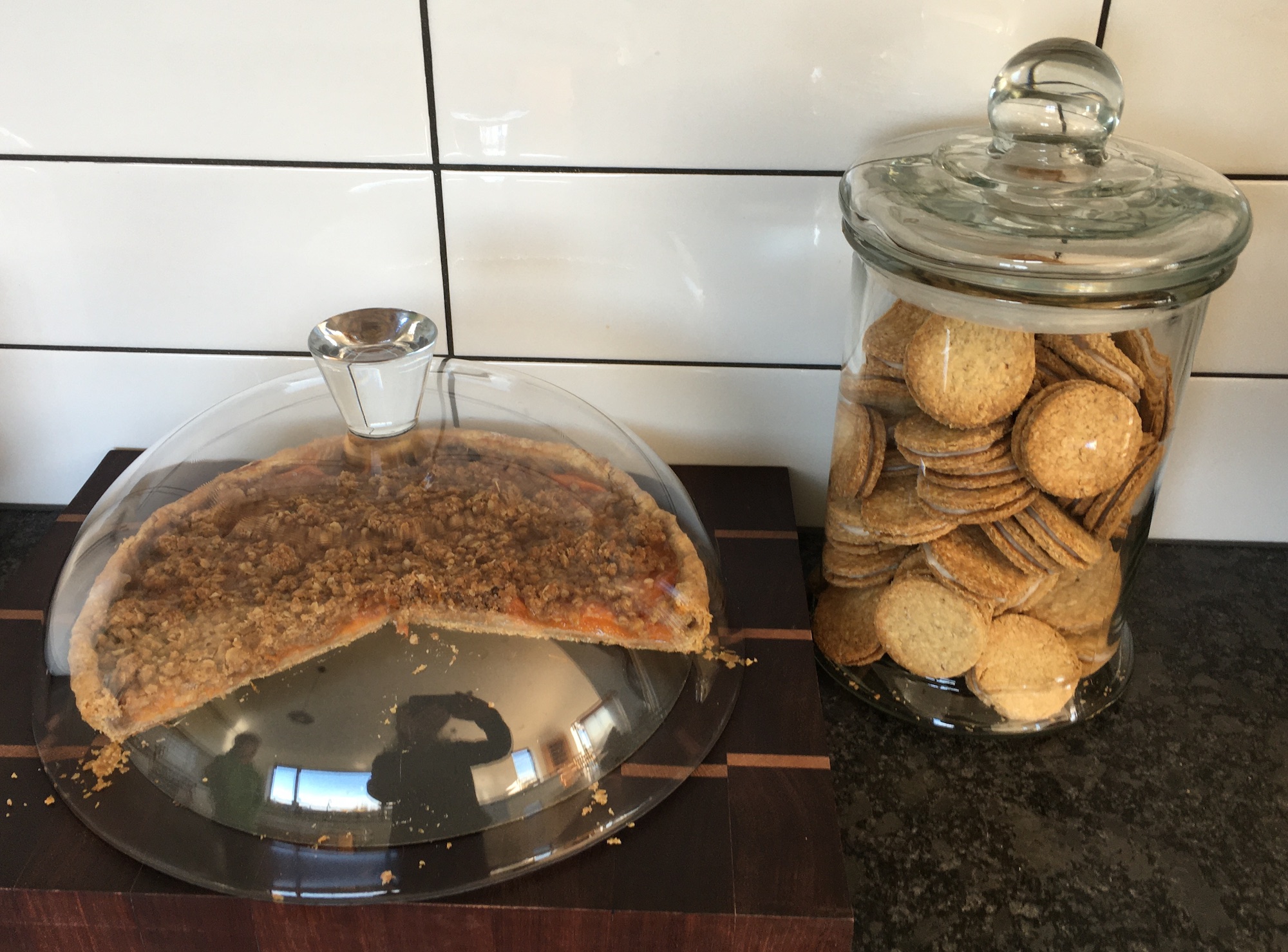
Baking time!

With 11 new cases in one day, and the virus spreading outside of Auckland, we knew what yesterday’s announcement from the prime minister would be. My only surprise was how short the initial extension was. I don’t think any of us really expects to be out of lockdown in less than a week.

Stay safe everyone. Wear your mask and wash your hands!

Three days locked down aren’t enough.
to crush that new virus is tough.
Spend a few days more
Behind your closed door
’Til the virus runs off in a huff.

Pandemic Poetry–2021 edition, #3

cat with ball on its head
We are not amused.

It’s only day 3 of lockdown and the cat is already over it. He’s annoyed that my daughter is sleeping in his bed, and I’m sitting in his chair. We’re disturbing his routine.

The cat wonders
why we are here
in his space.

Don’t you have
somewhere to go?

Go out! Go out!
the dog barks.
Go out for a walk!

The cat flicks his tail
and shows us the door.

Pandemic Poetry–2021 edition, day 2

unicorn pool toy
Photo by James Lee on Unsplash

Yesterday’s writing went poorly, as I might have expected. But the weather was crisp, and our lockdown walk was a highlight of the day. 

Kia kaha New Zealand. Our bodies may be stuck at home, but our imagination doesn’t need to be.

A lockdown walk
Is a great time to talk
Of fantasy, fiction and fun.

If you had useless powers
What would they be?
Where would you go
If travel were free?

If the cat could speak
What would he say?
What would you do as
PM for a day?

If the sky were pink
And unicorns flew
Over lollipop meadows
Could you ride on them too?

If your body was stuck,
As surely it is,
In a physical rut
With your mind in a fizz,

Could you picture a world
Full of magic and light
Where your spirit could soar
On the wings of a kite?

Pandemic Poetry–2021 Edition

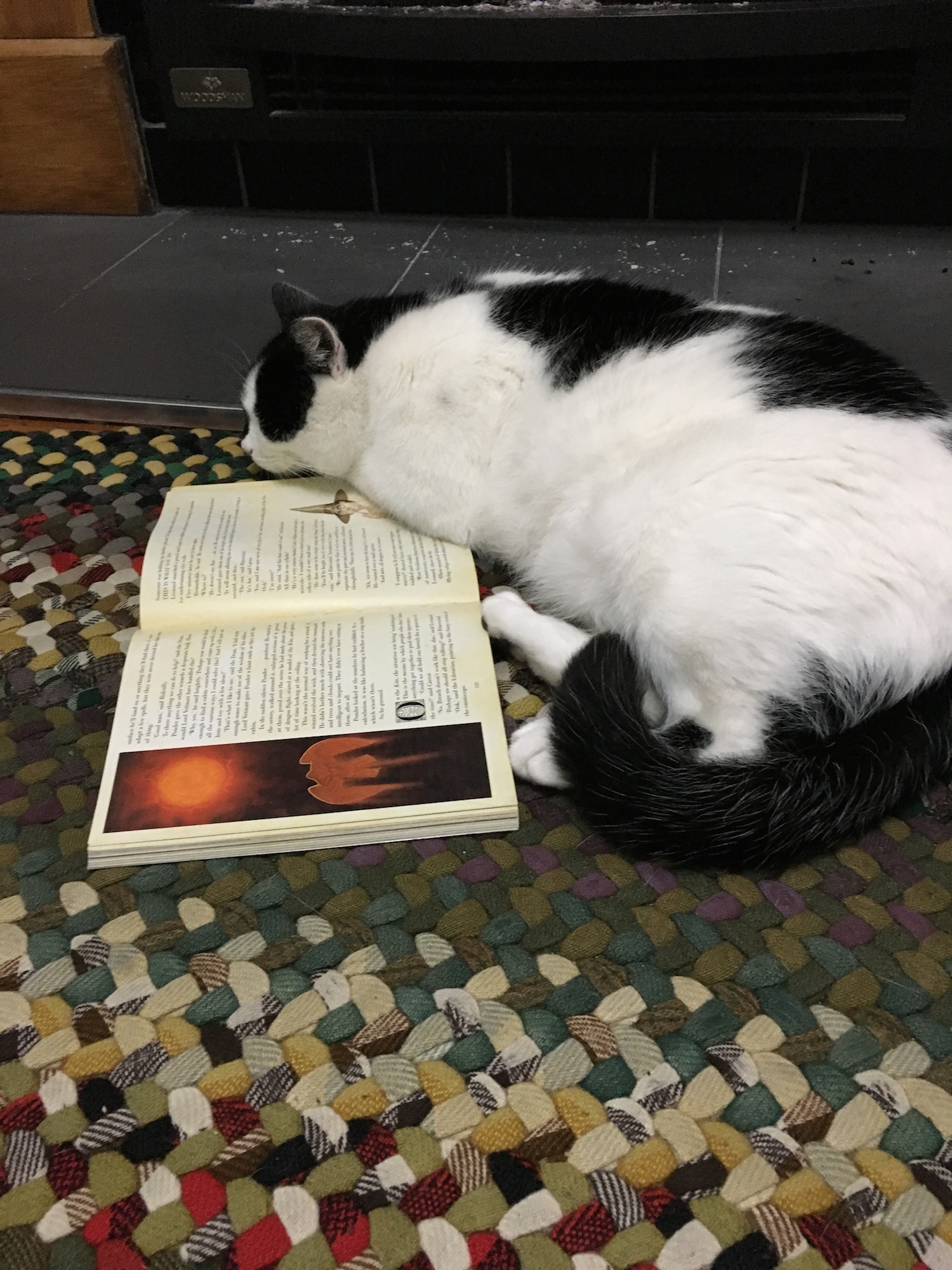
cat lying on a book
The cat illustrating proper lockdown behaviour.

I had a different blog post planned for today, but at 6:20 pm yesterday, the prime minister announced we were entering lockdown today. A case of Covid was detected in the community and, as it is suspected to be the Delta variant, the entire country is locked down.

So here we are again. I am thankfully no longer living in a shed, and there’s no longer a builder’s fence along our front boundary, but this morning I made sure there was a poem posted out front. 

Kia kaha everyone. Stay safe, wear a mask, and wash your hands!

We knew it might happen,
this déjà vu.
With Delta running rampant
our options were few.

We sigh, we might grumble.
It’s surely a pain
To be stuck here in lockdown,
in bubbles again.

But the reasons are sound and
the goal is quite clear.
We’ve enjoyed some rare freedom
for over a year.

If we can hold back the virus
a little while longer,
Roll out those vaccines
so the whole nation’s stronger,

We might just escape
the tragic events—
The overworked nurses
and hospital tents—

That much of the world
has suffered this year
As Delta’s roamed widely,
spreading sickness and fear.

So take a long walk,
join that meeting online,
Just hang with your bubble.
It’ll all turn out fine.

Cauliflower Power

head of cauliflower

A while back, I was searching online for something new to do with cauliflower for dinner. I found plenty of recipes, and nearly every one of them went on and on about how few carbs or calories cauliflower has.

Some of the photos looked delicious, and I’m sure most of the recipes are. But I was so turned off by the low calorie/low carb drumbeat, I lost my appetite.

I love cauliflower. But I love it for its sweet, nutty flavour. I love it for its crunch and the way it breaks into pretty little florets. I love it for its ability to grow year-round here and provide fresh, local produce even in the depths of winter. 

I don’t love it for its lack of carbs and low calorie count. Eating it for those reasons diminishes its value, reduces it to the sum of what it lacks. Here in Aotearoa, you might say it reduces its mana—its spiritual power or strength.

That’s no way to treat food.

I grow vegetables and purchase foods on the basis of what they are, not what they aren’t. Flavour, texture, nutrient content, protein content, and yes, those wonderful starches as well. Even colour is important. My family eats a glorious mix of richly flavoured and textured foods that nourish and satisfy. We celebrate what we eat, because food is what gives us life.

Maybe I’m prejudiced against the relentless messages telling us we must count calories and watch our weight. Raising an anorexic child will do that to you. But my discomfort runs deeper than that, because the focus on calories and carbs speaks to a real disconnect between people and the plants that sustain them. And I can’t help but think that disconnect exacerbates the growing incidence of obesity in modern society.

Counting calories and carbs reduces food to fuel—pump it in, make sure you don’t overfill the tank.

But food is part of our social network, our cultural history, our daily routines. It’s a way to show love and to care for one another. It is part of who we are as humans. And when we acknowledge that, we find ourselves not wolfing down some prepackaged insta-meal while scrolling on our phones, but taking time to make a meal and share it with others. We find ourselves gravitating to foods that make us feel good—foods that nourish our emotions as well as our bodies. We find ourselves reaching back to our ancestors for foods that define who we are.

And we forget about carbs and calories and learn instead to love food for what it provides, not what it withholds.

Youthful Adventure / Parental Angst

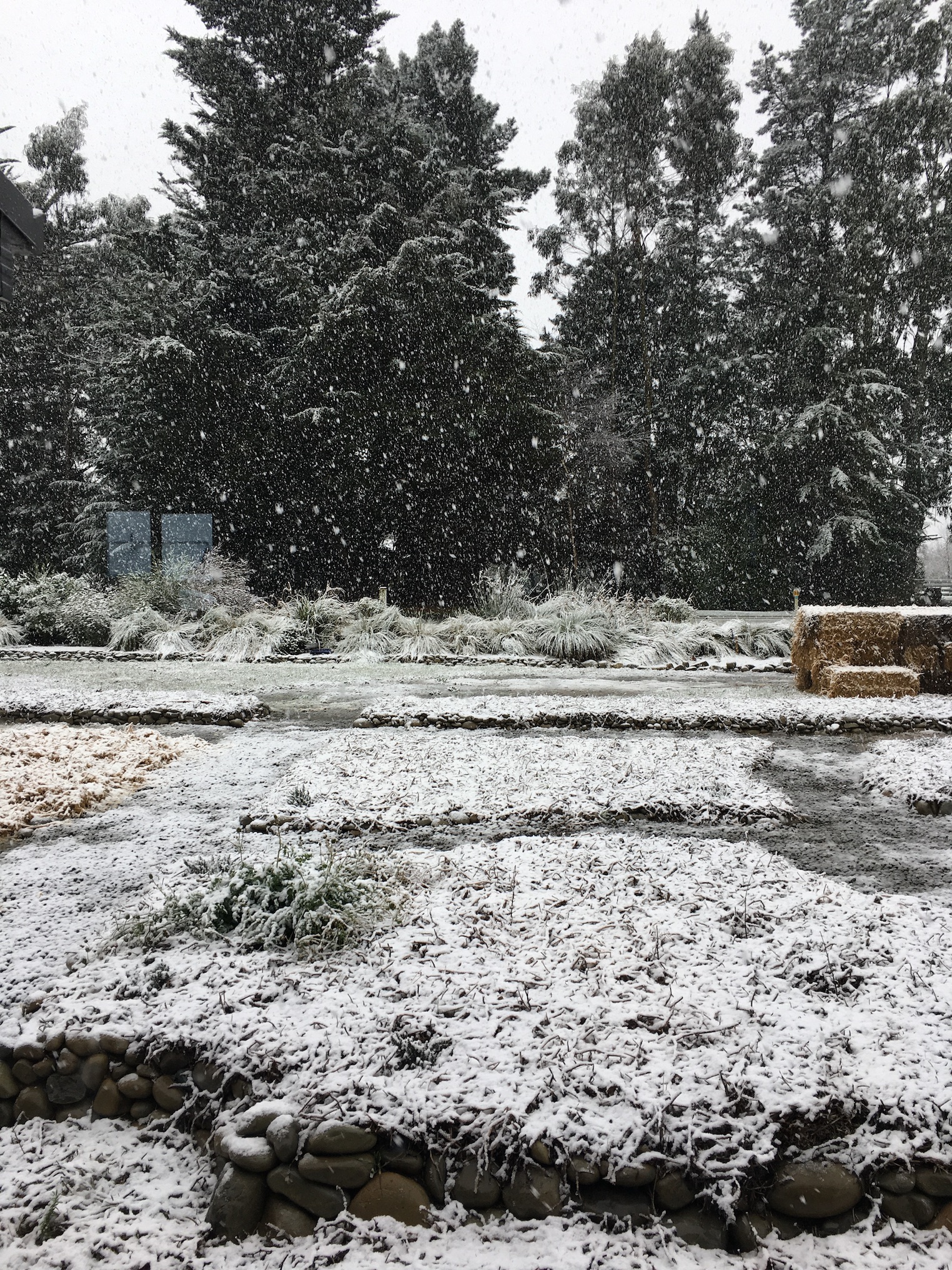
I find myself pacing the living room floor, gazing out the window at the swirling snow.

par

Stop. She’ll be fine.

My daughter is snowed into a cabin in the mountains. Porter’s Pass is closed and I cannot reach her by any means. I cannot supply her with the food I know she does not have for the 24-48 hours it will be until she can escape.

She is with friends. I know the cabin they’ve holed up in—it is warm and dry. There is water and even electricity.

She’s probably having a blast. No doubt they’ve pooled their food and are concocting some strange dinner tonight from instant soup packets and half a package of pasta of unknown provenance and indeterminate age left in the cabin by a previous inhabitant. It won’t be enough, but they’ll make do.

I know this because I remember my own adventures as a young adult. A day of hiking fuelled only by a pair of bananas purchased from a family in a small mountain village. A trek across the isthmus of Panama that involved an ill fated bus, hitching a ride in the back of a pickup, sleeping on the concrete floor of the police station in an unknown village, hiring a villager and his canoe, and begging meals and accomodation in another unknown village. Cowering in a tent as tornadoes ripped through the forest nearby. Carrying a chicken to a friend, on foot, three hours distant. … The list is long.

Every one of those adventures involved hardship—hunger, exhaustion, fear, danger. My mother would have freaked out had she known what I was doing.

Just as part of me wants to freak out right now.

But I know what those adventures did for me as a young adult. I can’t imagine having not had them. They’ve woven their way into the fabric that is me today. They are who I am.

My husband and I have taught our children how to prepare for adventure, how to be safe, how to face the inevitable difficulties, how to enjoy the hardships. The most important thing we can do now is trust that we’ve taught them well, and keep our own worries to ourselves so they don’t dim our children’s sense of adventure.

So I will pace the room, but never tell her I did so. I can’t wait to hear all about her adventure when she returns.

Same Name, Different Drink

saucepan of chai simmering on the stove

If I find myself at a cafe in the afternoon (usually for a meeting), I try to avoid coffee, since the caffeine interferes with my sleep. Instead, I’ll often order a chai latte. At a cafe, that usually means an instant beverage—spice powder or syrup mixed into steamed milk.

I enjoy the occasional chai latte. But it bears little resemblance to the real thing.

I was introduced to chai by a friend who grew up in India. He taught me how to make chai by steeping black tea and whole spies i simmering milk. The process is definitely not instant, and it requires a close eye to prevent the milk from burning.

That ‘slow’ chai, made on a winter evening in a kitchen full of friends was always more than a drink. It was a gift—of time, knowledge, memories, and love. No instant chai will ever be able to deliver the same.

I seldom make chai at home, but a few weeks ago on a cold dreary afternoon, I felt the need for more than a cup of tea. I made myself a chai instead, and enjoyed a drink that not only satisfied my desire for a cuppa, but also wrapped me in friendship and warm memories.

No cafe chai could come close.

Cake is My Love Language

I invited a friend over for dinner last week, and she mentioned her birthday was the day before our dinner date.

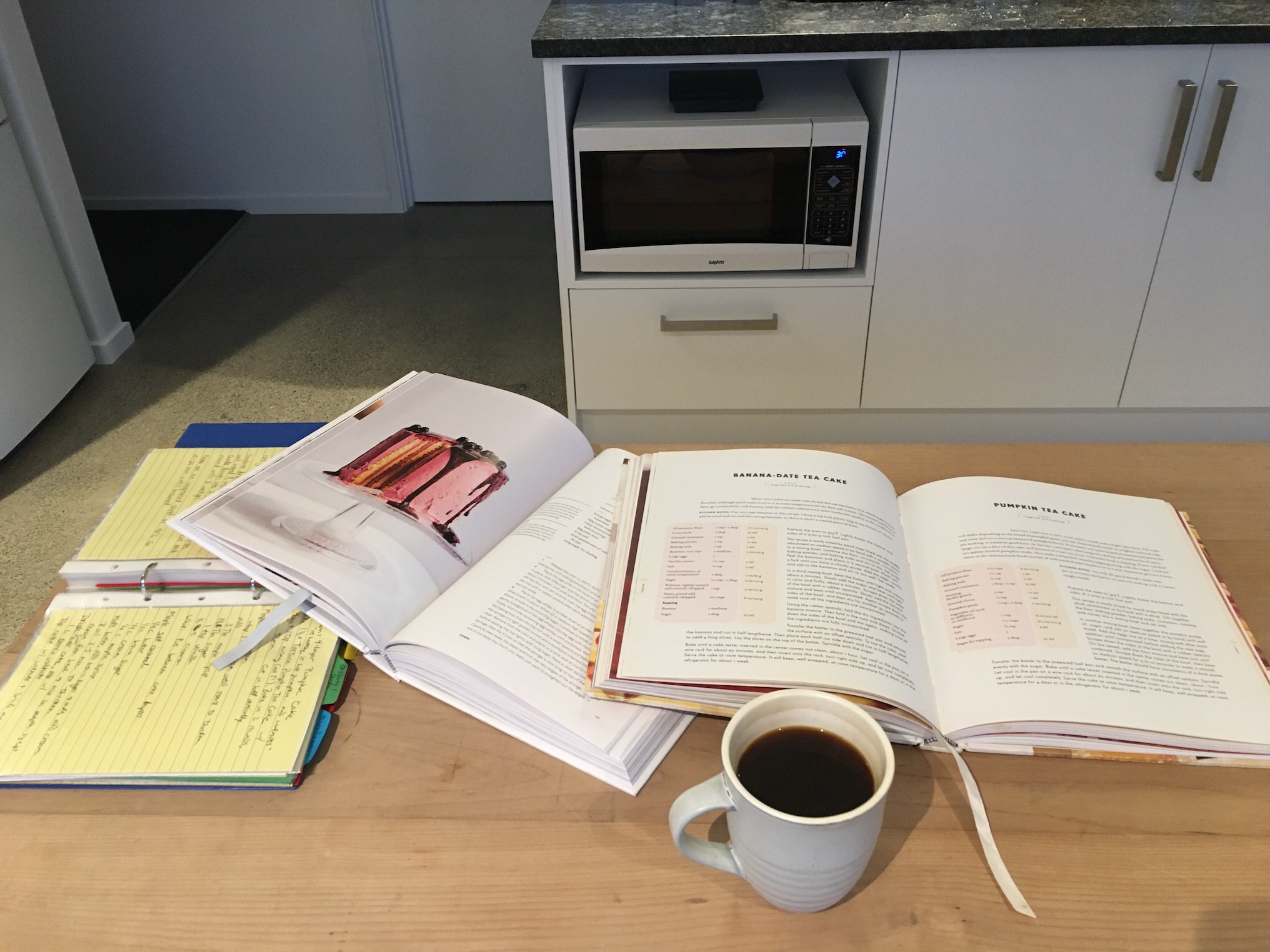
Cookbooks and coffee spread out on a table
Cake planning over coffee

Oh shit! I forgot! was my first reaction. But before I could kick myself for once again forgetting a friend’s birthday, I thought I’ll make her a cake!

I immediately started scheming—trying to pair flavours I thought she’d like with what I could realistically create in the middle of winter (no fresh berries!).

Pretty soon I found myself surrounded by cookbooks, making a grocery list, and wondering if I could roll an oil cake like a jelly roll (the answer, by the way, is no … that’s another story …).

I snapped a photo and sent it to her, laughing at my geeky cake-baking nature.

A while later she texted back, saying how touched she was by the photo.

My first reaction was It’s just a cake.

But then it dawned on me—it wasn’t just a cake. Cake is my love language. I may completely forget your birthday and your anniversary, I will never be able to say the right thing when a loved one dies or you tell me you’re pregnant, and I will laugh at your memes on social media but not even click ‘like’. But if I like you and you give me even half an excuse, I’ll make a cake for you—all the ‘likes’, right words, and birthday wishes baked right in.

It’s no wonder I get giddy when my kids’ and husband’s birthdays come around. It’s no wonder I plan a month ahead and go over the top on their birthday cakes. I think nothing of making a fancy cake when one of the kids comes home for the weekend. And those ‘ordinary’ cakes? Well, of course I make them nearly every week.

So please don’t be offended if I seem to ignore your Facebook posts. Don’t think I don’t care if I forget to ask about your kids. Forgive me if I forget important dates. Just … have some cake.

My First Book

handmade book--Rainy Day Thing

I was going through a box of old stuff the other day, and I ran across my very first ‘book’—Rainy Day Thing—a how-to about paper snowflake making.

I remember creating this book, back in 1979 in the weekly gifted class my school district bussed me to. I remember folding the snowflakes to use as examples in the book. I remember the smell of the rubber cement I used to glue them on the pages. I remember the excitement of making a real cover, and having my About the Author page laminated (Laminated! Can you believe that? This was back in the days when very few schools had laminators—we were still using mimeograph machines and chalkboards.) I even remember posing for the author photo in the school library.

I don’t remember writing my author bio, however, and 42 years later, I’m amused at what I wrote: Robinne Weiss likes to draw, play kickball, read and play baseball and play basket ball. She is 9 years old. She has a sister and a brother.

First of all, the grammar is shocking—no huge surprise there. My 9-year-old students are at least as bad. But writing isn’t on the list. (And basketball is? I don’t even remember playing basketball at that age.)

I know that I published my first poem at age nine, and at age ten I recited my poetry on the children’s television programme, Christopher’s Magic Cocoon. 

I know that somewhere in those years, I wrote a poem for my dentist, and he hung it on the wall in the waiting room (much to my later embarrassment). 

I know that I took a creative writing class in high school, and a poetry class at university. In my junior year of university, I wrote a children’s picture book (long gone, now), and published a few more poems in literary journals that no longer exist.

Author page from Rainy Day Thing

While in Peace Corps, I poured out poems, and even published a few, printed out at the Peace Corps office in Panama city and posted to magazines on my weekly trips to town. I started writing a novel (never finished).

As a Masters student in entomology, I answered essay questions in verse (I’m sure my professors thought I was nuts), and wrote regular articles for the PSU Entomology teacher newsletter, Bug Bits.

After graduation, as a professional heritage interpreter, I wrote articles for trade magazines and local newspapers (one even won an award). I wrote curriculum materials for teachers and other interpreters. I started writing another novel.

I’ve never not written.

But if you’d asked me if I was a writer, I would have said no until a few years ago. And when I did decide to close down my interpretation business to write, the decision was fraught with emotion, because even though I wanted to give writing a go, I wasn’t a writer

I’m about to release my 11th book (not counting Rainy Day Thing). My writing has improved a great deal since 1979, and my covers are no longer made of wallpaper-covered cardboard. I no longer list baseball and basketball in my author bio.

But after decades of denial, I admit I’m a writer. And I’ve been one for a very long time.

Oh, and yes, I still remember how to make a paper snowflake. Maybe I’ll write a book about it someday.