Strawberry Cupcakes

Every now and again, you come across something that is as delicious as it is easy. The other day I wanted to make a cake involving strawberries, because it’s that time of year. I looked at lots of recipes online that involved making a strawberry reduction first, but it seemed like an awful lot of work. I was really looking for simple. 

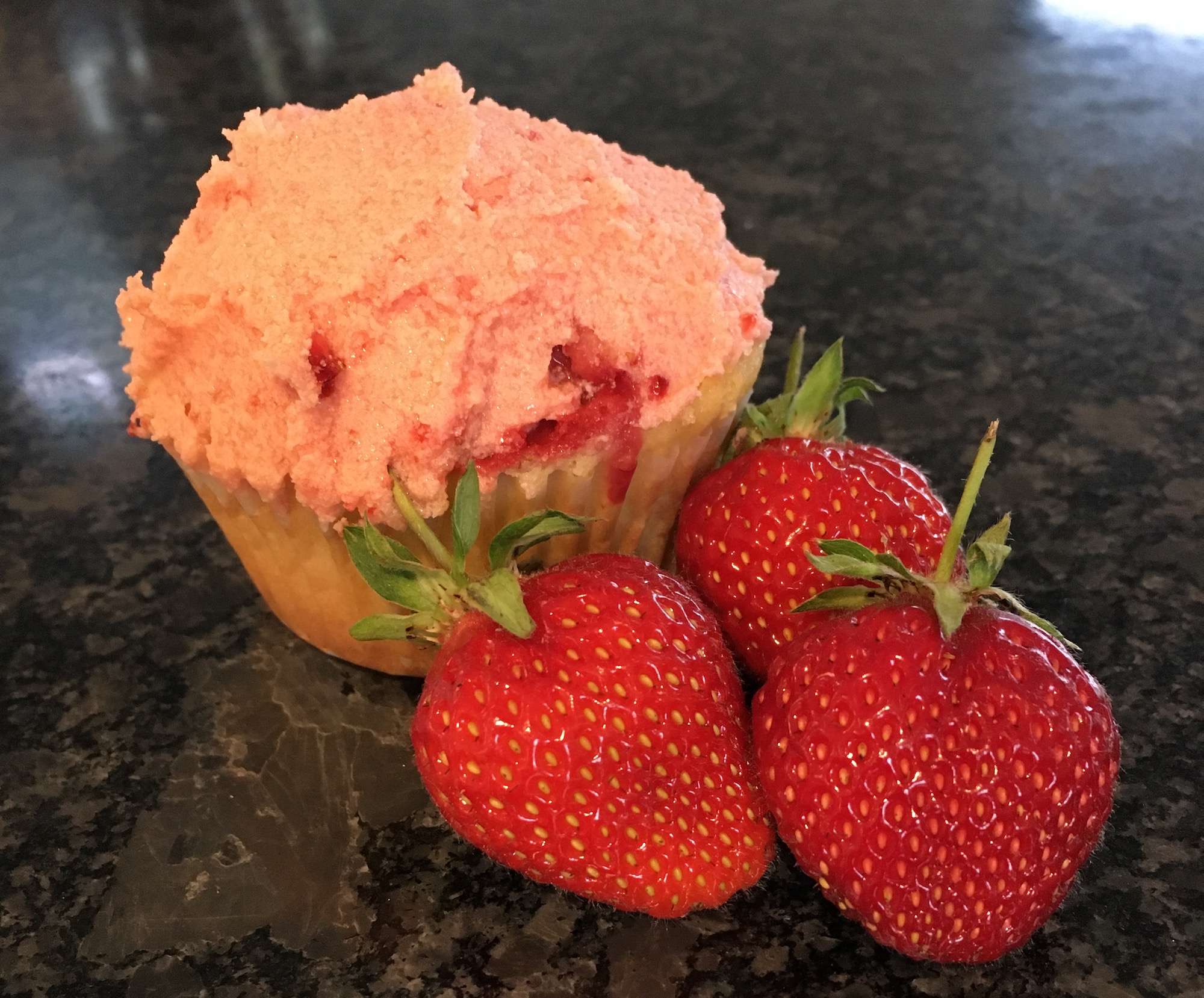
So, ignoring everything I’d seen online, I modified a basic vanilla cake recipe from the Mennonite Community Cookbook, adding sliced fresh strawberries, and whipped up a quick strawberry icing. I baked the cake as cupcakes, as I often do to keep our portion sizes down (because you know I can’t resist cutting a huge slice of cake …).

The result is exactly what I wanted—an easy cake that highlights fresh strawberry flavour. I’ll definitely be making this one again.

Strawberry Cupcakes

3/4 cup butter, softened
1 1/2 cups sugar
3 eggs, separated
3 cups all-purpose flour
1/2 tsp salt
3 tsp baking powder
1 cup milk
1 tsp vanilla
1 1/2 cups fresh strawberries, sliced

Cream the butter. Add sugar gradually and beat until fluffy. Add egg yolks and beat until well incorporated. Sift flour, salt and baking powder together in a separate bowl. Add flour mixture alternately with milk and vanilla, beating well after each addition. Fold in stiffly beaten egg whites, then fold in the strawberries.

Fill cupcake papers, and bake at 175ºC (350ºF) for 25 minutes. Allow to cool completely on a rack before frosting.* Makes 24.

Strawberry Frosting **

60 g (1/4 cup) butter, softened
1 cup icing (confectioners) sugar
1/2 tsp vanilla
3 Tbsp pureed fresh strawberries
Puree strawberries in a blender (I had to puree about a cup and a half of berries in order to have enough volume for the blender to work with—just save the extra puree. There are hundreds of delicious uses for it). Cream the butter. Sift the sugar over the butter and continue to beat. Add vanilla and strawberry puree and beat until well blended. Adjust the icing by adding more sugar or strawberries until it is a spreading consistency. 

* It was a warm day, and I was a little worried my strawberry icing would weep if it sat at room temperature with the cupcakes. Instead of frosting them all, I frosted only what we were going to eat right away, storing the remainder in the fridge, to spread on the cupcakes as we eat them. Alternately, you could store your iced cupcakes in the refrigerator. Mine is currently stuffed full of zucchini and green beans—no room for cake.

** Double this frosting recipe if you want to ice all 24 cupcakes. I put half the cupcakes in the freezer unfrosted, since I haven’t got kids at home to devour them at the moment, so I only made a small batch of frosting.

From Haast to Haast Pass

My husband and I spent the past four days on the West Coast. I was helping him with some field work involving a lot of bush bashing on steep slopes.

The trip also involved a lot of driving–all the way from Greymouth to Haast, and then over to Wanaka before heading north again. It being the West Coast, the road crossed many creeks, each one named by a small road sign. After a particularly waterway-rich stretch of highway, where  we crossed a creek every 50 metres or so, we began to note ALL the creek names. At some point I began writing them down—they were strangely poetic.

I’ve taken a section—State Highway 6 between Haast and Haast Pass—and have written a poem that uses each creek name, in order starting in Haast, and evokes South Westland. The creek names are the only words capitalised.

you swish through the Grassy paddock
to take a Snapshot,
then fossick for Greenstone
on the beach amidst the strewn blossoms
of southern rata, that seasonal Myrtle
Harris says brings out the colour of
your eyes when he tucks a bloom behind your ear.

ankle deep in the Glitterburn
on a tuesday that sparkles with gold
you fire a text to Roy and Joe,
knowing they are stuck in Dismal london,
while you grow Dizzy trying to track
the flitting movement of a tomtit
in the undergrowth, its Gun Boat grey
blending into the shadows, white breast
winking like a Cron command,
Dancing to its own irregular beat.

and deep in the forest, the Roaring Swine
fill the Gap in the silence and find
the Chink between birdsongs.

your Cache of wonder sits at the Depot,
its Square Top a fitting seat
for Orman,
the Imp with Mossy eyes.
his Eighteen Mile hike on Gout swollen feet
has not dampened his spirits.
he recites MacPherson’s translations,
mixing the ancient gaelic with
lines you’re certain came from Douglas adams.

the Serpentine path you wander tumbles
over boulders soft with moss like grandma Evans’ arms
when she would pull you into those hugs you
hated as a teen, when you and your cousin Chelsea
walked the tired streets of town—
three blocks, then Pivot to retrace
the entirety of main street—hoping
for some excitement.

now it is Solitude you crave.
as Douglas said—space is Big—
surely there is enough of it that you
can carve out your own piece of it
here, among the ancient footprints
of Moa, tangled in a Briar,
imagining Haast eagles soaring overhead.

Diana would have been your goddess,
in this wilderness of rain where The Trickle
of water is more like a roar and
liquid is a Cutter of stone.

you would stay here for decades
like Robinson crusoe, study the
ants at your feet as though you
were e. o. Wilson.

instead you Cross the river
and stand dripping and shiny
as a nugget of gold on the other side.

10 Garden Hacks

A few days ago on an online group I’m part of, someone asked about people’s life hacks.

I thought about it for a while and realised that I spend so much time in the garden, that my ‘life’ hacks are mostly garden hacks.

So here is a list of 10 of my many garden hacks:

  1. Cut up empty milk bottles to use as plant tags.
  2. Give your chickens the run of the vegetable garden during winter—they’ll keep pests and weeds down and make springtime garden prep easier.
  3. Recycle old cotton sheets and clothes, and raffia baskets as biodegradable plant ties.
  4. When picking carrots, water well about an hour beforehand—the soft soil will make the carrots easier to pull.
  5. When thinning carrots, remove the largest plants first—the small ones will grow, and you’ll be able to eat your thinnings.
  6. Instead of tossing empty juice bottles in the recycling bin, fill them with water and line them up in the greenhouse—they’ll store heat during the day and release it at night. Paint them black for even more heat absorption.
  7. Fill plant pots with cement to use as weights for things like bird nets and row covers. Give them wire handles threaded with a short section of irrigation pipe so they’re easy to move around.
  8. Whenever you cook something, like pasta, that is boiled and drained, save the boiling water and pour it on weeds to kill them instead of sending it down the drain.
  9. Plant summer lettuces in the shade of tall crops like corn to keep them from bolting too quickly.
  10. Plant rangy crops like pumpkins next to early crops like brassicas—by the time the pumpkins grow large, the brassicas are gone and the pumpkins have space to sprawl.

Black Currant Pie

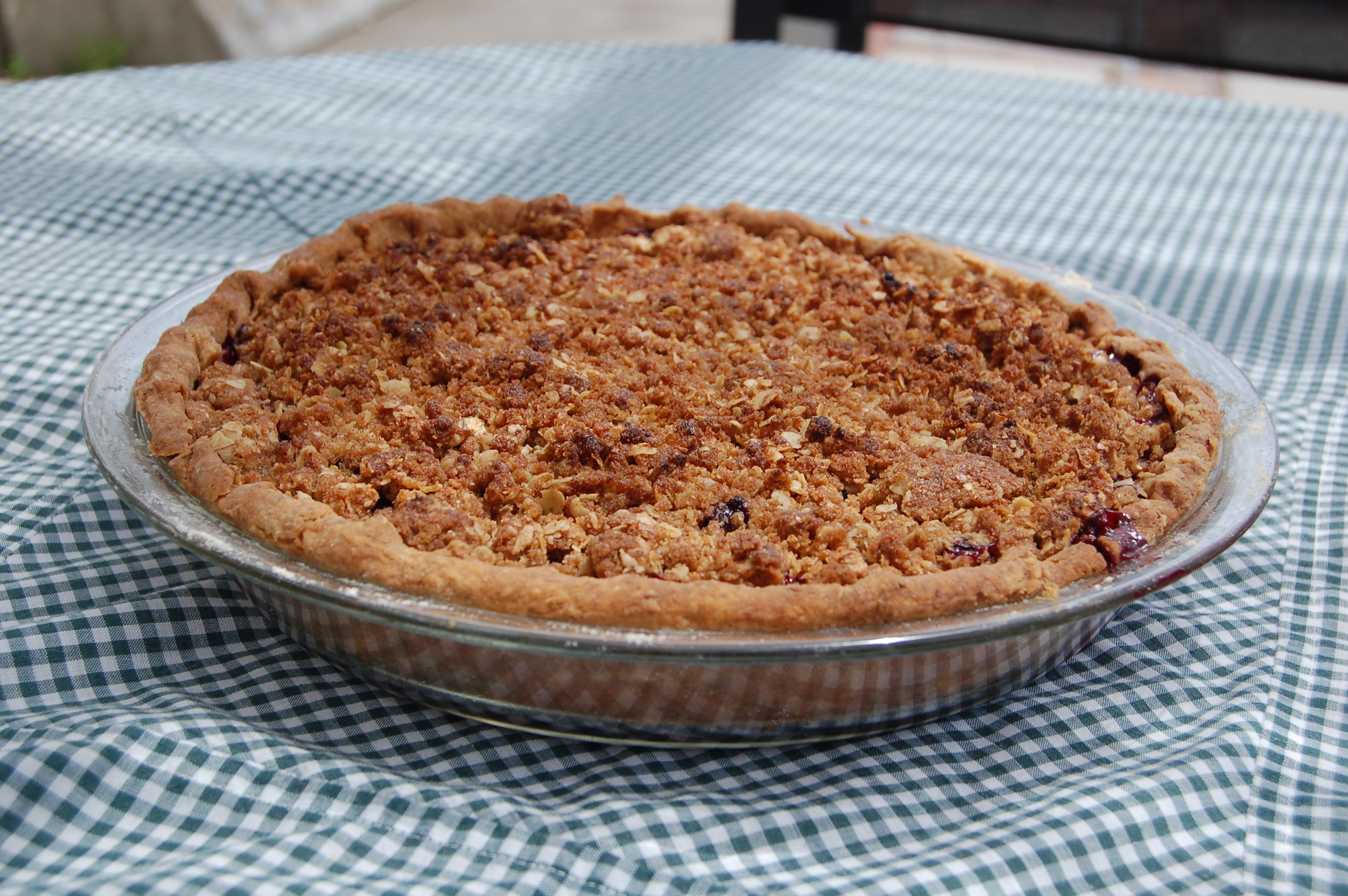
I have blogged about black currant pie before, but it’s worth doing again. This year’s black currant harvest was overwhelming, not just because it came in the two weeks on either side of Christmas, but also because it was huge. It didn’t help that the red currants also gave a hefty crop at precisely the same time. For two weeks, I felt like all I did was pick and process currants.

Well, and eat them, too.

We use currants in ice cream, crisps, cobblers, fruit salads, and smoothies, but my favourite way to eat them is in pie.

Black currant pie is not for the sour-averse—it is a full-bodied, knock-your-socks-off type flavour. To me it is the flavour of summer. And because it works equally well with frozen berries, I always try to save enough so I can make black currant pie on the winter solstice and dream of long summer days in the chill and dark of winter. 

So revel in the intense flavours of summer and enjoy a slice of black currant pie. You can download a pdf of this recipe here.

Crust:
¾ cup all purpose flour
¾ cup wholemeal flour
¼  tsp salt
60 g butter
60 g Olivani
3-4 Tbsp ice water

Filling:
4-6 cups black currants
½ cup sugar
2 Tbsp flour

Topping:
2/3 cup flour
2/3 cup finely chopped walnuts (or rolled oats)
2/3 cup brown sugar
1 tsp cinnamon
75 g butter, melted

Crust:
Whisk together the flours and salt in a medium bowl. Cut in the butter and Olivani with a pastry knife until the largest chunks of butter are the size of small peas. Sprinkle the ice water over the flour mixture and combine with a fork until evenly moistened. Knead lightly, just until it forms a coherent dough (it will be crumbly). refrigerate while you prepare the filling and  topping.

Filling:
Combine sugar and flour in a small bowl. Mix with stemmed, washed black currants and set aside.

Topping:
Combine the flour, walnuts, sugar and cinnamon in a medium bowl. Stir in the butter with a fork until evenly moistened and crumbly.

Roll out the crust and place in a 23 cm pie pan. Pour the filling into the pan and sprinkle evenly with the topping. Bake at 200°C for 30 minutes, then reduce the heat to 170°C and bake another 30 minutes.

Serve with a generous dollop of whipped cream.

Summer Fruits

strawberries and rhubarb

Before our house was even staked out on the ground, we knew where the vegetable garden and berry fruits were going to be planted. We began preparing the garden months before the builders arrived. We took cuttings from berries at the old house, and were planting well-rooted currants and gooseberries as we finalised the design for the house. We tried to avoid mistakes we made at the last house—just one, not two, rows of bushes per bed, to make picking easier, and fewer plants overall. No need to be overwhelmed with fruit.

Last year, we harvested a handful of fruit from the currants, gooseberries, raspberries and boysenberries. The strawberries gushed fruit for the better part of the year. For barely established plants, they did well. 

This year, with most of the plants well established, we’re inundated with berries—so much for not being overwhelmed. The week before Christmas was a frenzy of fruit processing—we froze fresh fruit and fruit puree, made several batches of jam, and ate a whole lot of fruit pie, trifle and fresh berries.

Upon our return from our Christmas trip, there were even more berries ready to pick. We made more jam, preserved more whole fruit, made more pie, and have been eating fruit five times a day. The cupboard is once again packed with jam, and the freezer is stuffed with frozen berries. Thankfully, the currants and gooseberries are nearly done producing, but the raspberries and boysenberries are still going strong. The strawberries are finished with their first heavy crop, but should maintain a level of output we can easily eat for the next few months. I’m thankful the grapes are only in their first year and the blueberries aren’t doing as well as the other berries—not that I don’t want grapes or blueberries, but I’m worried about freezer and cupboard space.

lemon raspberry cake
Lemon raspberry cake

At least the fruit trees are still young—we got a handful of cherries, and will have a few pears, apples, and peaches if we’re lucky, but shouldn’t be overwhelmed.

It’s a lovely problem to have. With the summer vegetables coming on strong, too, there is a real sense of abundance in the house—a great way to start the new year.

Guerrilla Art

We spent a night in Wanaka last week before our tramping trip. While wandering around town looking for a likely spot for dinner, we came across some poems stuck onto a bridge railing. 

Like a Banksy painting, the poems were certainly not ‘legal’ and were no doubt frowned upon by the local authorities. But also Banksy-like, they made passersby smile and think.

Years ago, when my husband and I lived in State College, Pennsylvania, we regularly took our walks in the agricultural fields near the edge of town. Along the path, shortly after leaving the neighbourhood, someone had installed a tiny section of sidewalk. Embedded in the concrete was the poem ‘Where the Sidewalk Ends’ by Shel Silverstein. There was no indication of who had installed the poem, and it was tucked away beside the field as though it had been surreptitiously installed in the dead of night. 

There are municipally sanctioned examples of Guerrilla art—art that appears in unlikely places. The poetry among the rocks along Wellington’s waterfront is one example. But there’s something particularly delightful about the non-sanctioned art—the amazing sand sculptures people create on the beach, the sidewalk chalk drawings that proliferated during lockdown, the splash of graffiti on train cars. It’s an expression of life and spirit, a proclamation of something uniquely human, a statement about human lives.

I think we all could use a little more guerrilla art in our lives. Thanks to the Brownston Street Bard for your lovely contribution. May the ink continue to flow from your pen.

Christmas Adventure–Gillespie Circuit

The family’s Christmas tramp this year took us to the Gillespie Circuit Track in Mount Aspiring National Park. The trip was a good adventure, through a dramatic landscape we don’t often hike in.

Day one started with a jet boat from Makarora to the confluence of the Wilkin and Makarora Rivers. It was my first jet boat ride, and I’ll admit my inner teenager was grinning as we slalomed down the river in a noisy, environmentally unsustainable fashion my adult self disapproves of.

From the mouth of the Wilkin River, we hiked upstream. It was decidedly the least interesting four hours of the trip—the area is grazed, so it was primarily a slog through a cow paddock. The track then turned into the forest and climbed steadily up Siberia Stream to Siberia Hut, where we spent two nights.

On day two, we took a day trip to Crucible Lake. The track to the lake is quite steep, but worth every step. The lake sits in a basin behind a massive glacial moraine. The glacier above the lake drops chunks of ice into the water, making it look like an enormous punch bowl. Apparently it’s popular to take a dip in the lake, but we were deterred by the ice and the cool morning air. The scale of the landscape is deceptive, and photos don’t come close to capturing it.

Day 3, Christmas Day, dawned lightly overcast—perfect for the next stage of the hike, over Gillespie Pass. The track climbs steeply over 1000 metres to the pass, first through the forest, and then into alpine scrub and tussock. Mount Awful looms over the pass, and the surrounding landscape is dominated by jagged peaks and glaciers. The taller peaks, including Mount Awful, were shrouded in cloud, but the views were nonetheless spectacular. We even got a slightly white Christmas, hiking through a couple of snow patches near the top of the pass.

If we thought the way up was steep, the way down proved us wrong—it was even steeper, dropping down a precipitous ridge to the top of the Young River. From there, the nearly flat hike to Young Hut afforded plenty of opportunity to admire the rocky ridges above and the many waterfalls cascading down from them.

Day 4 was a long but relatively gentle hike along the Young River to the Makarora River through the forest. Crossing the thigh-deep Makarora River back to the car was a refreshing end to the trip.

Being a Christmas hike, the trip naturally inspired another bad tramping Christmas song. This year’s song is to the tune of Have Yourself a Merry Little Christmas.

Have yourself a merry tramping Christmas.
Make the trailside gay.
From now on our cars will be so far away.

Here we are as in olden days,
Happy tramping days of yore.
Faithful friends who are dear to us
Sleeping near to us—they snore!

Through the years we all will tramp together
If the joints allow,
Even when we’re eighty, though I don’t know how.
So have yourself a merry tramping Christmas now.

May you all have a lovely holiday filled with your favourite people doing your favourite things!

The Gift of Rain

purple cauliflower
Purple cauliflower enjoying the rain

It’s unusual to have three days of rain in December. Usually, I’m desperately trying to keep the garden watered while the vegetables are in their early summer growth phase. Usually, I’m doing a pre-Christmas weeding of vegetables and perennials that will carry me into January with minimal weeds.

Not this year. It has been raining steadily for three days, after a week or so of showery weather. Every inch of the garden is thick with weeds, and continued rain means I’m not out there pulling them as they grow in size by the hour. I’ve braved the rain to pick vegetables for dinner and berries, which are rotting in the wet weather, but otherwise I’ve stayed indoors for three days.

I’m restless to get outside.

But I’m also thrilled with the excuse not to. Usually in December, I don’t manage to do much beyond garden work. So three days to make Christmas gifts, write, and get some nagging indoor chores done has been a gift.

It’s also been a gift to the garden. Much as I try, I can’t duplicate in watering the effect of a good rainstorm. The vegetables are growing as quickly as the weeds. Broccoli, cauliflower and cabbage  are all ready to eat. The pumpkin and zucchini plants seem to double in size every few hours. The beans have completely filled in their beds, beating out the weeds entirely. And the peas and lettuce have gotten a new lease on life, and will likely last a few more weeks than they would have otherwise.

So while I’d still rather be out in the garden, both me and the garden are taking full advantage of the gift we’ve been given.

cat at a window
The cat is a master of rainy day activity.

Fruits of the Season

strawberries and rhubarb

I made strawberry rhubarb jam last weekend, marking the beginning of the Christmas season. Currants, raspberries, blackberries, boysenberries, gooseberries, and blueberries are also beginning to colour up.

The peas are filling out so fast it’s hard to keep up with them, and every broccoli plant is sporting a ready-to-eat flower head. Carrots and onions are just hitting picking size, adding crunch and colour to meals.

The cabbages are bulking up, promising to be ready for sauerkraut making on Christmas eve (our ‘traditional’ sauerkraut making day). And the broad beans are all ready to eat, and coming to their glorious end.

In short, the summer cornucopia is filling up and spilling over.

We will host fourteen people for dinner tomorrow, and I hardly have to hit the grocery store to feed everyone. Some alcohol and cheese is all I need to supplement what’s in the garden (need being a loosely applied term here, of course). It’s what I love most about a summertime Christmas—the sense of abundance that accompanies the celebrations.

vegetables from the garden

Of course, the garden’s abundance also means there’s an extra pile of holiday work picking and preserving, weeding and watering all that produce. But there’s something festive about the work when you can hum Christmas carols while you’re at it. The piles of fresh vegetables and summer fruit in the kitchen are the reward for every tired muscle and late-evening preserving session. And thankfully, we’ve got long summer days in which to get all the work done.

Christmas Baking Makeover

I grew up in North America, with all the traditional Christmas things—snow, dark days and long nights, crackling fires, Christmas lights, cookies, pies, hot drinks—Norman Rockwell might have painted my childhood Christmases.

Nearly 17 years ago, we moved to New Zealand, to summertime Christmases. Here, strawberries, cherries, and long summer days herald the season. 

I always loved the baking aspect of Christmas in North America—Mum amassed dozens of types of cookies in the freezer in the weeks leading up to Christmas. The kids always got involved in the baking, and we’d gorge on cookies through the holidays.

I still love baking, but I struggle to dredge up much enthusiasm for Christmas cookies here. With fresh early summer fruits in season, it seems ridiculous to bake cookies that capitalise on stored foods like dried fruits, nuts and chocolate. What I crave is strawberry tarts, black currant pie, and gooseberry crisp. Or better yet, fresh fruit salad—forget the baking altogether.

Out of a sense of nostalgia, I’ve continued to bake a few Christmas cookies every year, alongside the fruit desserts, but 2021 might be the year that changes.

As everyone has experienced this year, supply chains are disrupted worldwide. It has led to shortages of various items from foods to electric cars. A few weeks ago, most of the brown sugar in New Zealand was recalled, because of lead contamination that occurred during shipping. We all dutifully threw away our brown sugar, and wanted to buy more. Of course, there was none. There’s still none, weeks after the recall.

It looks like a staple of Christmas baking will be unavailable this year.

I admit I’m not terribly upset by it. I’ve been wanting to move more toward using locally produced honey instead of imported sugar, and this looks like the perfect opportunity to break the brown sugar habit. Also, it gives me an excuse not to make Christmas cookies, but to focus instead on enjoying the fruit that is already ripening in the garden.

This might be the year that my baking finally makes the switch to the Southern Hemisphere.

To make it even more tempting to go full Kiwi, Matariki has finally been made an official holiday. The Māori new year happens near the winter solstice in June—the perfect time for eating cookies and enjoying hot chocolate. I may have to start making Matariki cookies instead of Christmas cookies. I will enjoy them so much more at Matariki.

So bring on the fruit, some icy lemonade, and the sunscreen! Hold the brown sugar—I won’t be needing it. Christmas baking is getting a makeover.